Choosing between different fibres for socks can feel a bit overwhelming. There are many choices, from which wool will enhance durability to the number of singles for the finished yarn. Then there’s the question of add-ins, like nylon, silk and other fibres (alpaca, camel, etc.). And whether to card or comb the fibres to create the blend. These choices can feel paralyzing as one delves into the world of blending in general, but attempting to blend for socks might feel even more so. There are, however, some guiding principles that can help ease the entire process.
Why Create a Sock Blend?
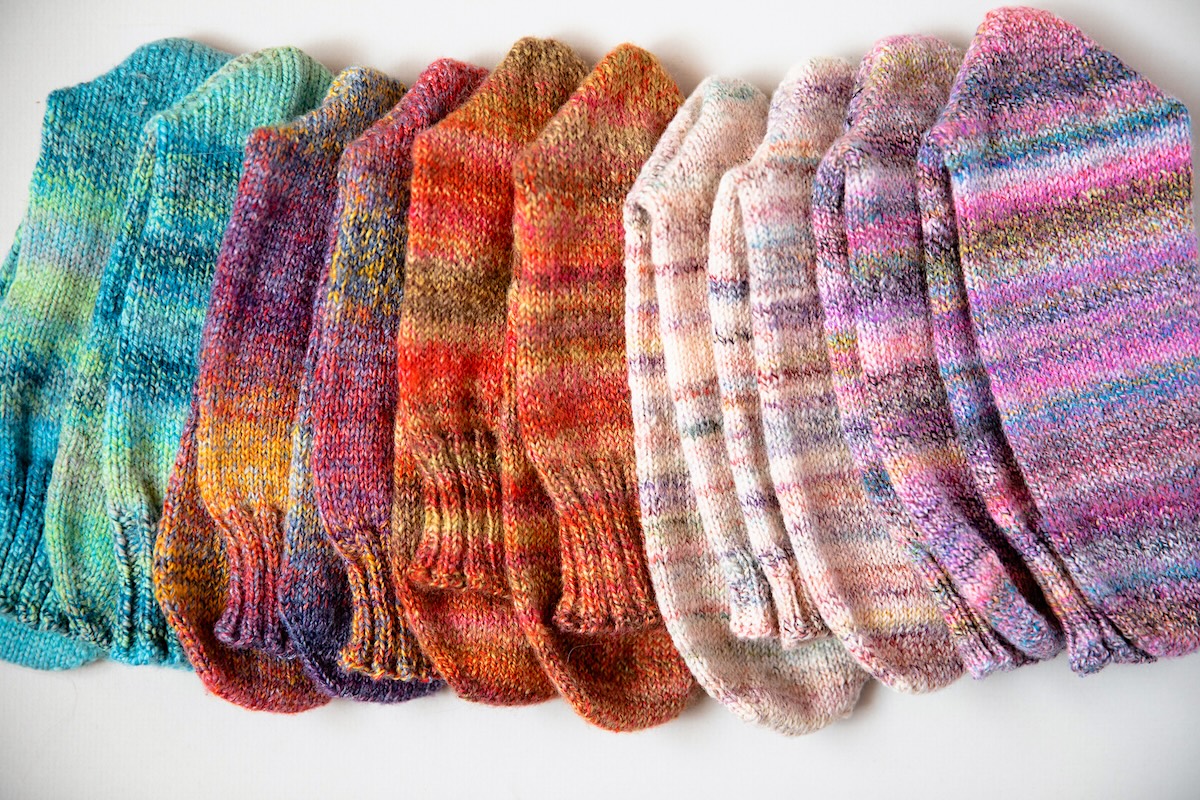
On the market today are many different spinning blends that are advertised as ‘ideal sock blends’, and mostly, they are accurate. The question becomes: ‘ideal’ for what kind of socks? Heavy-duty socks for boots, house socks requiring light wear or something in between? Blends can service a whole host of needs, from experimentation to tried-and-true combinations that work every time. Creating sock blends allows us to find that combination of fibres that meets our needs, from durability to beauty to softness.
In my experience, socks do not last forever, and I gave up that notion. Socks can, however, last a long time and provide much wear. There are a few things that I have found, over time, work really well to create good, high-wear socks.
The Woolliest of Wools
There are so many classifications of wool available to hand spinners today. Which are best for socks? There are a couple of classes in particular that seem to lend themselves to creating great socks.
Down & Down-Like Wools
First, the Down and Down-like breeds. Included in this class of wool are Cheviot, Suffolk, Texel, Oxford and many more. These wools are known for their 3-dimensional crimp that provides both elasticity and strength. The Downs have built a reputation for themselves over the past number of years for their ability to resist felting, albeit unreliably. While these wools can often be treated with less care, they do have the ability to felt and must be treated with some caution. However, this has become a wonderful aspect of using the Downs in sock blends. They are easy to card, have good body and hand, are slightly coarse although not unpleasant, display good durability and resist felting.
Longwools
Second, longwools are often overlooked for socks. While Merino might be next-to-the-skin soft, it tends to break down with prolonged wear. Longwools, such as BFL and Wensleydale, are smooth, strong wools that display lovely sheen and lustre. They are warm, while providing the strength needed to withstand heavy wear and tear. When blending, complete control of the blend means that a little bit of cashmere or yak can be added for softness because the longwool is doing the heavy lifting in providing durability.
This is not to say that amazing results have not been achieved with other classes of wools. The fine wools, like Merino and Polwarth, are often blended with nylon (more on this in a moment) to create stronger blends to assist in durability. If softness is of utmost importance, the fine wools would be something to explore further and determine what add-ins help with durability.
To Nylon or Not to Nylon
Nylon was invented by DuPont in 1938, which was met with great excitement (Wolfe, 2026). Nylon continued to dominate through WWII and into the 1950s and 1960s. It began falling from favour in the 1960s as it made it into the mainstream market and increasingly became seen as “out of date” and “tacky” (Wolfe). Today, nylon continues to account for about 12% of all synthetics manufactured. Littlefield (2026) points out in her writing that part of the infatuation with synthetics in the mid-twentieth century was a lack of history. These products did not have the history that cotton and wool had, and they were seen as inherently better. There was a ‘magic’ associated with synthetics because they were invented by science and chemistry that were not associated with cotton and wool at the time (Littlefield).
Increasingly, nylon has been maligned in the fibre arts world, which is interesting since we continue to see it in many of the yarns and fibres we regularly purchase. The reason it continues to be used has to do with its tensile strength. The tensile strength of nylon is high, along with fibres like silk. Have you ever wondered why they are nearly impossible to pull apart by hand but instead need scissors? The answer is tensile strength! In socks, this is a wonderful attribute to enhance wearability and durability.
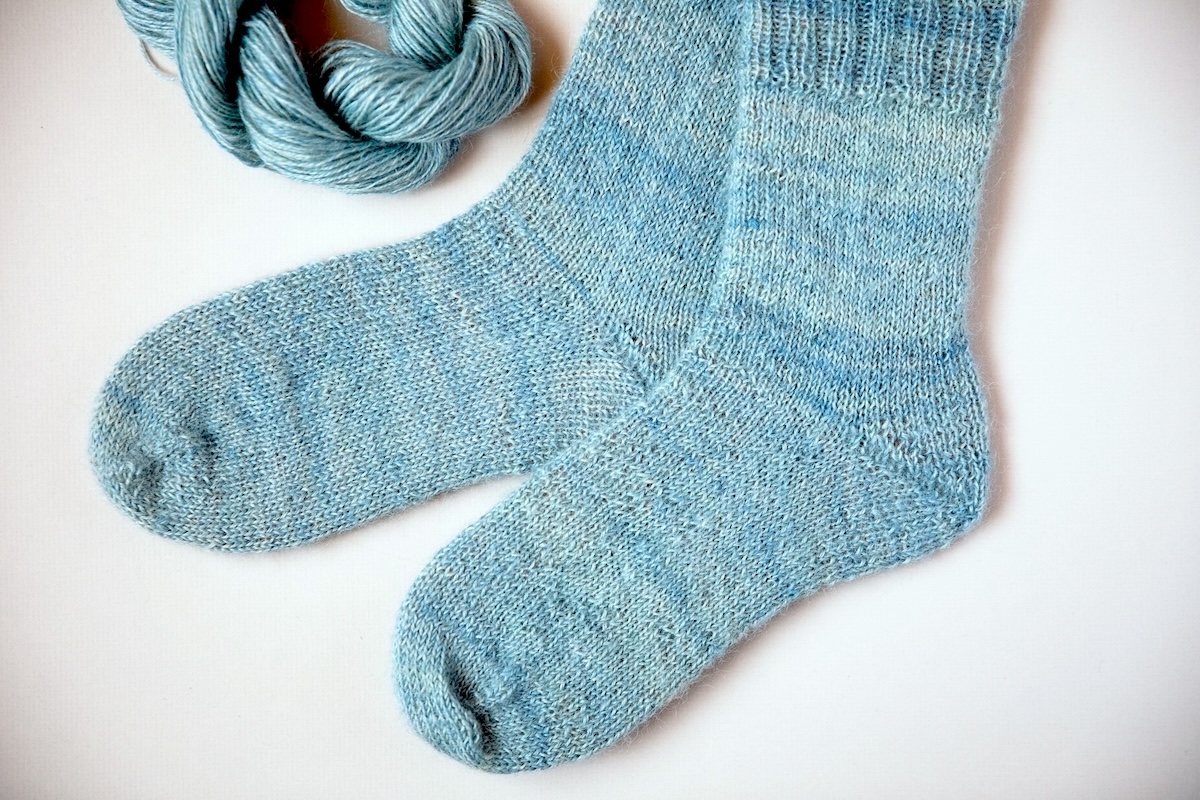
A wonderful alternative to nylon in sock blends is silk, which also increases sheen, takes dye beautifully and adds warmth. It is possible to purchase small packets of nylon fibre to blend. Starting with a sample and comparing it side-by-side with silk and other add-ins might be a good place to start to decide whether to include it or leave it out.
Additional Fibres: Durability & Warmth
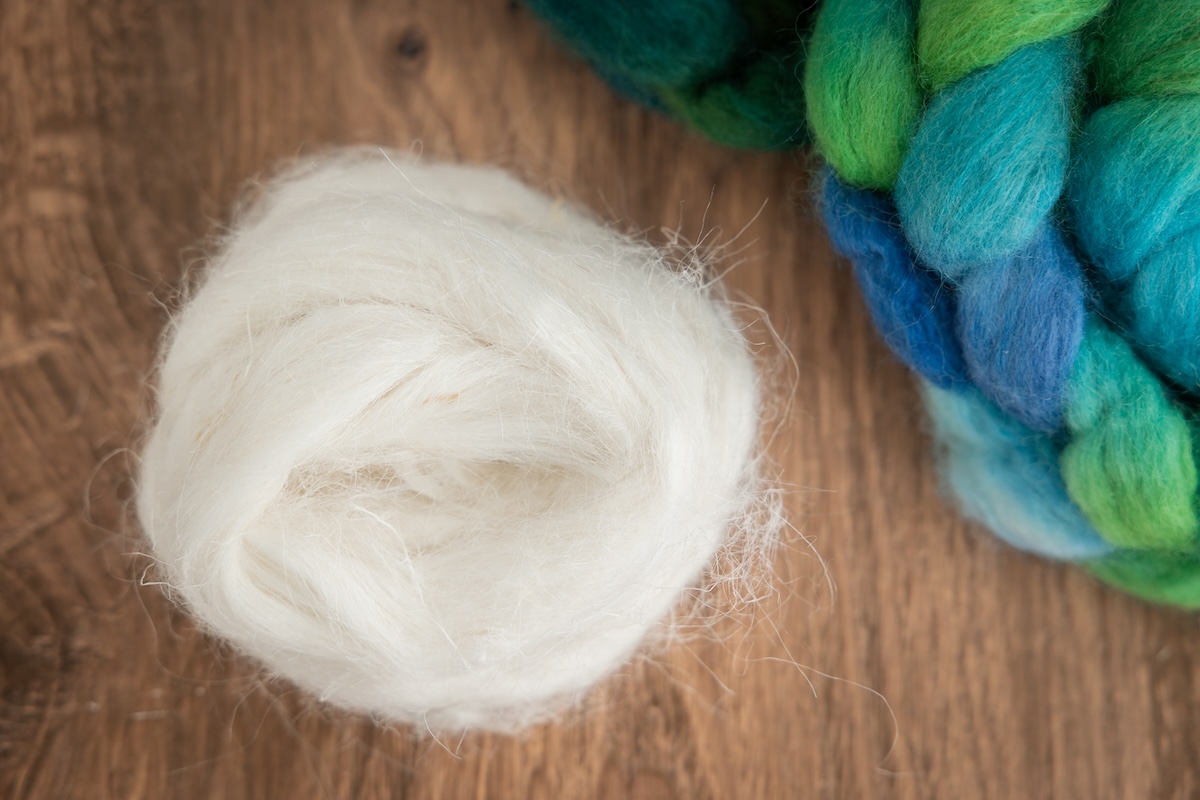
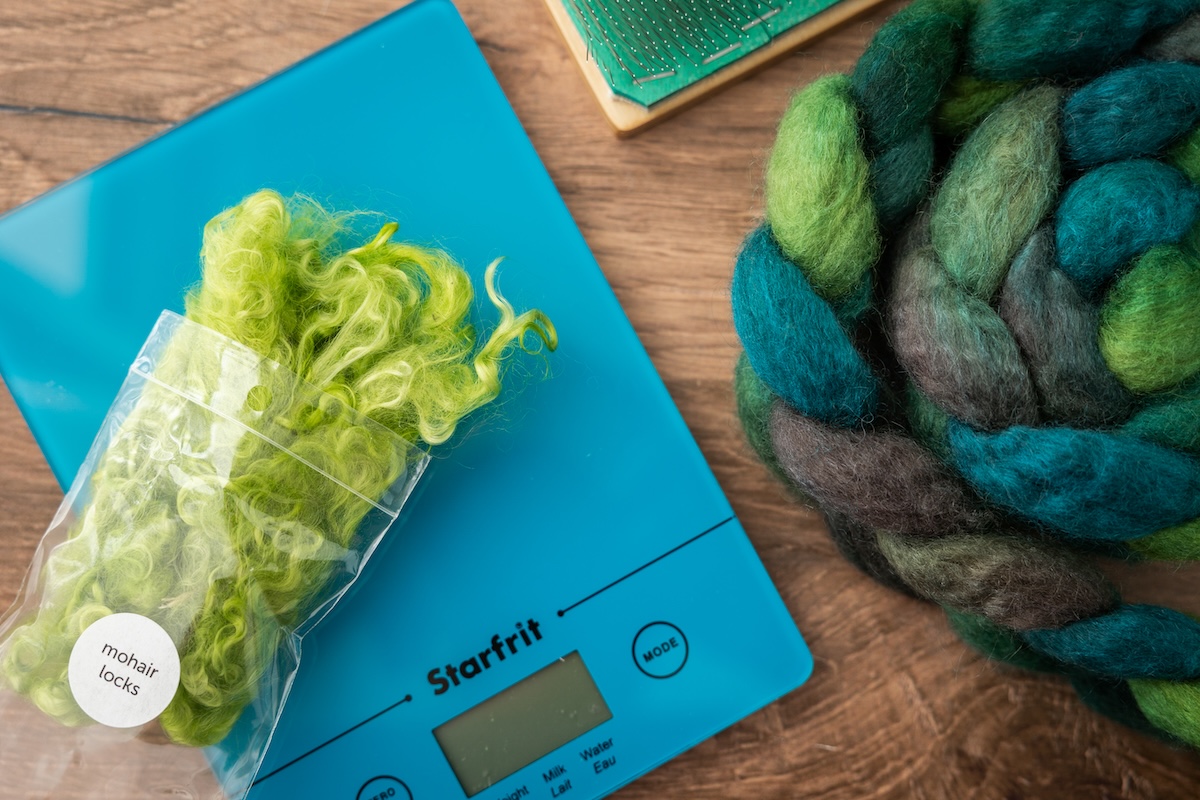
Nylon and silk are not the only fibres one can think about adding to a sock blend for good durability. Alongside these fibres, mohair is an excellent fibre to enhance durability. Once again, tensile strength is high in mohair, making it one of the strongest fibres available to us. Mohair is easy to prepare and increasingly easy to find for hand spinners. A protein fibre, like silk, mohair takes the dye very well and, due to its long fibres, adds lustre and sheen. While mohair can appear slightly haloed, similar to the longwools, it sometimes requires a sweater shaver to clean up the high-wear surface areas that may pill. There are different qualities of mohair on the market, so it is important to check with the seller whether it is adult or kid mohair. Kid mohair is incredibly fine and soft, while adult mohair is coarser but more robust.
Another possibility that many are just starting to explore includes the bast fibres. Nettles in particular are becoming more easily available and offer strength. The nettles, such as Himalayan Stinging Nettle, often offer even more tensile strength than flax. They are hard-wearing and durable, softening with use, which increases comfort without lost strength. They take cellulose and natural dyes very well, with lustre, and leave fibres heathered when dyeing with acid dyes since they are not protein-based. This adds dimension in the finished yarn. These fibres resist rotting and breakdown, which traditionally made them incredible choices for certain uses (think a ship’s sails) but for the modern hand spinner offer great long-time wear.
Blending through Carding
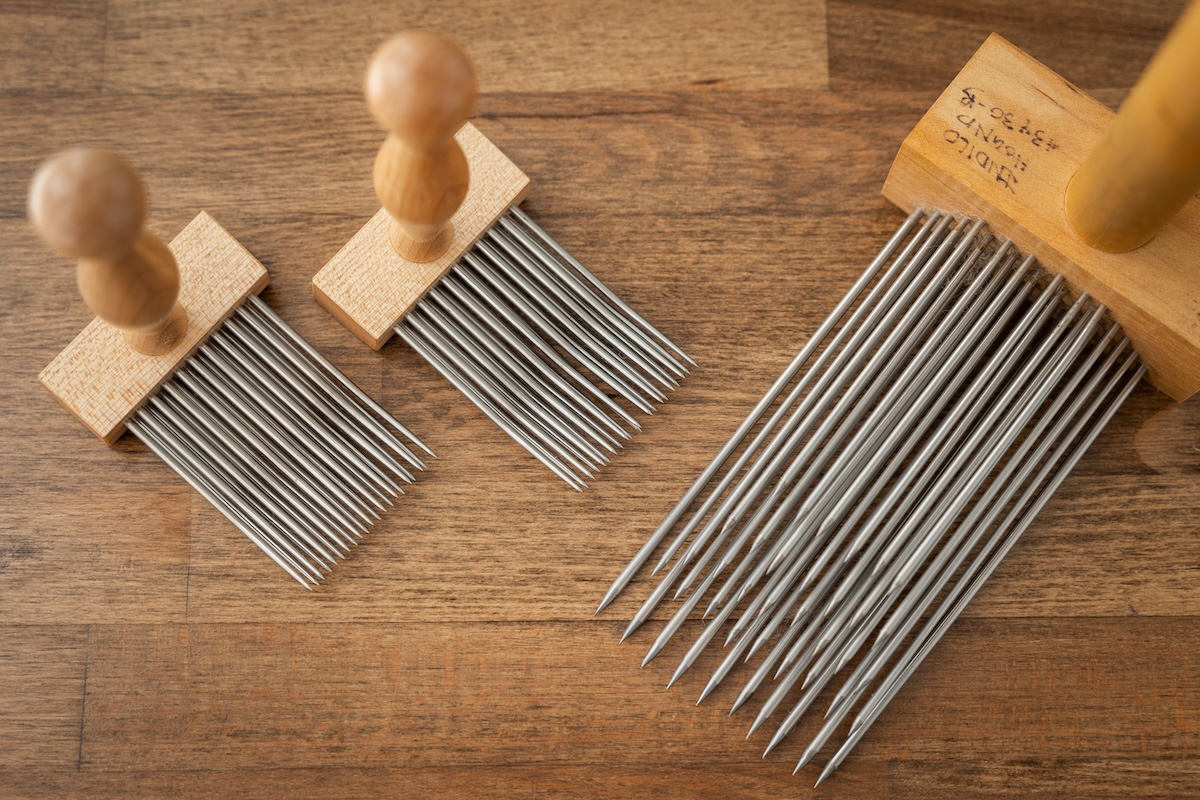
Blending fibres generally means carding, either on a drum carder, hand cards or a blending board. These tools lend themselves really well to being able to combine different ratios of fibres together with good results. Assuming, for our purposes, that we are going to be blending on a drum carder, everything applies equally to hand cards and blending boards, and the preparation will be a woollen-style preparation that creates a lighter, airy yarn.
Some prefer a combed preparation for sock spinning to create smoother, slightly denser yarns. There are a few things that can be done on a drum carder to ease the blend towards slightly smoother spinning (discussed below). If combing is the preference, it is highly recommended to check out Kim McKenna’s course, Working from Fleece, and explore in particular lesson 1.2 Combed Fibre. The discussion around planking the fibres prior to the final dizzying off is particularly important for blends since the fibres combined will be of different staple lengths. This does not mean combing isn’t possible; it just means extra care and attention is needed to ensure the shorter fibres aren’t left behind on the comb or hackle!
Weighing, Measuring & Sampling
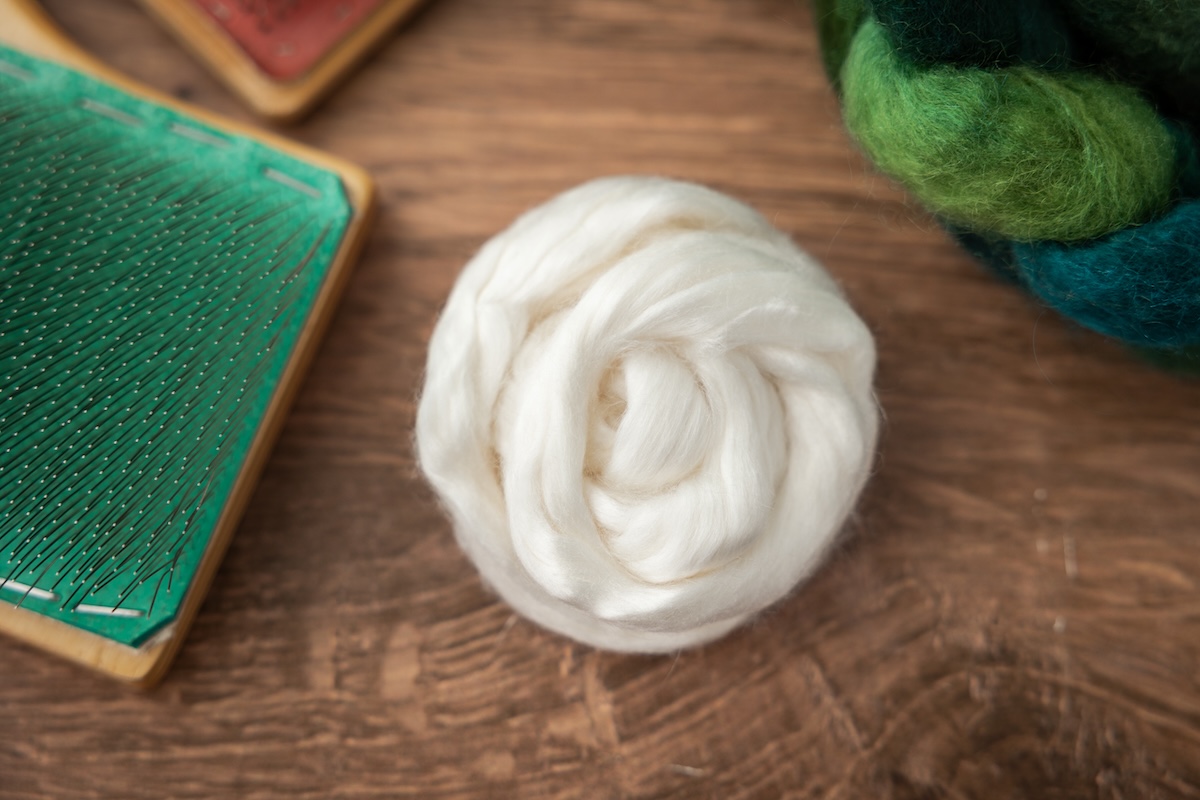
Assemble the wool and add-ins that will be included in this particular project. A jewelry scale helps as you begin preparing the fibres for carding. Using a small bowl or sieve can act as a receptacle for the fibres as you weigh, adding and removing fibres to obtain the correct weights. Working in 100-gram increments, I tend to start with at least 60 – 70% wool. As more non-wool fibres are added, the yarn will feel and act less and less like wool.
From there, the percentages of add-ins depend on personal preference. For strength, mohair or silk could be added. If we were to add both, we might do 70% wool (BFL or Cheviot), 15% each silk and mohair. Maybe a plant fibre like nettle is to be added, so instead, I might choose to do 70% wool with 15% each silk and nettle. There are infinite combinations, and your imagination is the limit!
Keep notes as samples add up. Sometimes a blend that is created might not be great for socks but would make a great sweater. Label the sample skeins before you forget the percentages and fibres included – we all hope to remember, but after a few samples, it is really hard to keep track.
How Many Passes on the Drum Carder?
The first pass through the drum carder should be the woolly base – whatever wool or wools, if multiple were chosen, were chosen for the sock blend. From there, add the fibres that will assist with strength and durability, whether that’s nylon, mohair and/or silk. Keep these fibres sandwiched between the wool as it is fed on the tray to the licker-in and onto the swift (large drum). This prevents too many of the add-in fibres from being caught on the licker-in and staying there, resulting in being lost from the blend.
The first batt that is pulled off is just the first pass. Each subsequent pass will result in a more cohesive blend, until the benefits of continuing to card are outweighed by the work needed to continue carding (usually 3-5 passes, depending on the carder). Break the batts down each time into strips to feed to the carder to ensure continued blending.
Tips & Tricks for Sock Blends
There are a few pointers that are incredibly helpful for blending fibres with the intention of spinning and knitting socks. First, when removing the final batt from the carder, gently draft the fibres of the batt to smooth them slightly. This slightly aligns the fibres parallel to one another and creates what is referred to as a ‘smooth batt’. This lends itself, once stripped down, to smoother spinning. While still creating semi-worsted yarn, the draft can be worsted in nature, disallowing twist in the drafting triangle and keeping it forward of the front hand.
Second, the texture of add-ins can sometimes take an extra pass to create a cohesive batt. Be sure to strip the batts down after each pass and continue carding until the batt appears well-blended post-carding. Socks need smooth, strong yarns to wear well, and multiple passes on the drum carder are always needed.
Lastly, be sure to sample the blend before committing to an entire sock spin if this is the first time trying these particular fibres together. Sampling 10-15 grams takes no time at all to prep, card and spin, but 100 – 150 grams take much more time. Knowing the ratios are correct, that the weights of each fibre will work together nicely, and that there’s enough wool to keep things cohesive and woolly will pay off when the actual spinning starts. The blend will be exactly what you were hoping for when you started the project!
Spinning, Plying & Knitting Sock Blends
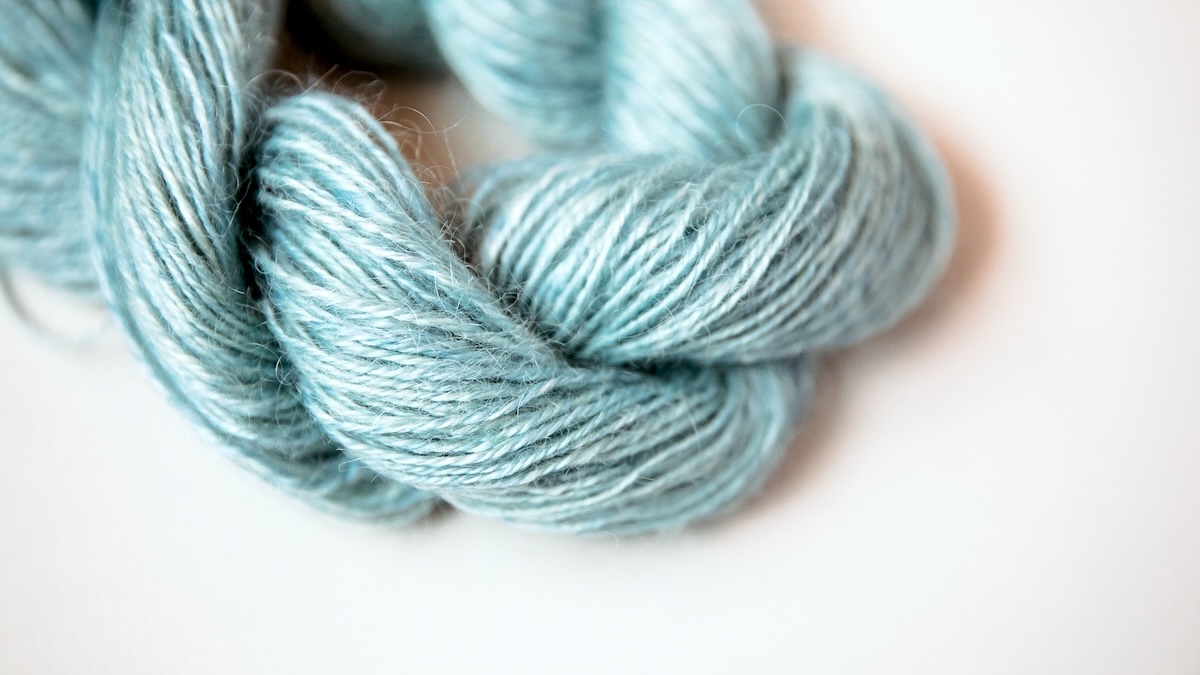
Blended fibres sometimes have different staple lengths in them from the various fibres added to the blend itself. Some initial sampling will let us know if this is the case or not. Keep the grip on the fibres light while spinning and allow the fibres to draft through, leaving none behind. A slightly more woollen draft can assist with this as well, and spinning over the fold can help to prevent shorter fibres from being left as well.
Sock yarns that are slightly higher twist in the singles and ply seem to withstand slightly more wear-and-tear compared to lower twist yarns. A semi-worsted or worsted draft lends itself to smooth sock yarn, which seems to be reported to be more comfortable for wear. Again, prepare enough fibre to be able to sample and knit some test swatches. Rough up the fabric swatches a bit to assess for wear.
A dear friend, Glenda Sedgwick, who is a prolific sock spinner and knitter, has often said that she attributes her success with socks to how tightly she knits the fabric. While her sock yarns are usually higher twist, they are then knit into tighter-than-usual fabric. While the fabric may feel slightly stiff upon first feel, it wears incredibly well. Think about downsizing one needle size next time you spin and knit for socks to see what the results are and whether this small change helps with durability. Based on experience, this might be the change that helps with increased durability of handspun, hand-knit socks!
Reflections & Conclusions
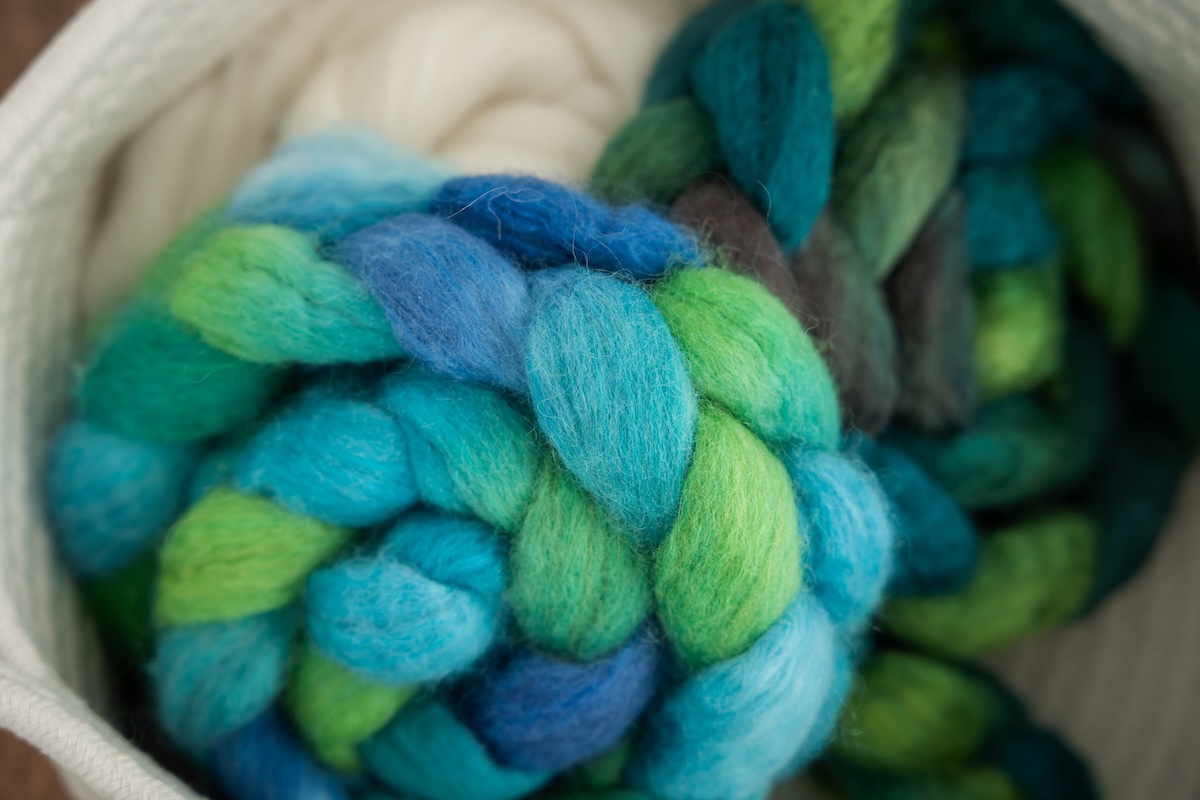
I remember a dear friend, Diana Twiss, saying to me years ago that socks and mitts make great samples. She was absolutely correct! Two socks do not have to be equal. Play with colour in one and change the approach in the other. Try a blend and knit a sock, then change something and spin and knit the other. Which one wears well? How do they compare with continued wear? Striping different blends up the length of the sock can create two equal socks with different yarns. (*Two rows of Yarn A, two rows of Yarn B, repeat from * throughout the sock). How do they knit? Are they quite different? Does one area of the sock wear better than another?
Approaching socks in the spirit of experimentation and wondering about what might create the ideal sock. Trying those ideas and experimenting with various fibres really is limitless. Rather than focusing on the immediate sock needing to be perfect, experimenting might be a great place to start. If a pair of socks is seen as a stepping stone to another great pair, and another, and another, the pressure for this pair to be perfect—and to last forever—is released.
Places to Find Rachel Smith
- Find more of Rachel’s articles here.
- Explore her School of SweetGeorgia courses here.
- Join her Wool ‘n Spinning Patreon Community here.
References
- Littlefield, M. M. (2026). Reinventing Wool: How a Natural Fiber Survived the Synthetic Revolution. Johns Hopkins University Press.
- Wolfe, A. J. (2026). Nylon: A Revolution in Textiles. Science History Institute. Retrieved August 24, 2026, from https://www.sciencehistory.org/stories/magazine/nylon-a-revolution-in-textiles/
The post Blending Fibres for an Ideal Handspun Sock Yarn appeared first on SweetGeorgia Yarns.