
As spinners, we often start with a braid of fibre as our goal. If you like structure, you may have tried spinning for 10 or 15 minutes per day, and you may have noticed a big difference between your first session at the wheel and your tenth. After a few spins, when your yarn starts to look more consistent from one skein to the next, you may be ready to sink your teeth into a new goal.
If you like using larger amounts of yarn for bigger projects, whether knitting, weaving, or crocheting, spinning a larger amount of fibre requires a few different strategies than working with a single braid.
Planning Stage
Create a wish list. If you use a bullet journal or a spinning notebook, start a wish list of big spins you would love to tackle one day. For each idea, note what you will make once it’s spun (knit, crochet, weave), the amount of yarn (or range of yarn) you will need to produce, and any specifications: 2-ply yarn or singles; worsted or woollen spun; approximate yarn weight or wraps per inch; yarn colour. If you have more than one idea, keeping them in the same place is a great way to revisit your wish list when you are ready for your next big spin.
Choose Your Next Big Spin
On a new page, write the details again and expand as much as you can on the kind of yarn you would like to spin. Consider choosing a yarn weight similar to what you have been spinning most often, your signature yarn.
Sample Time
- Whether you are fibre prepping from clean wool or using braids from your stash, take the time to make a sample. You will need about 10 to 20 g (0.35 to 0.7 oz) of ready-to-spin fibre.
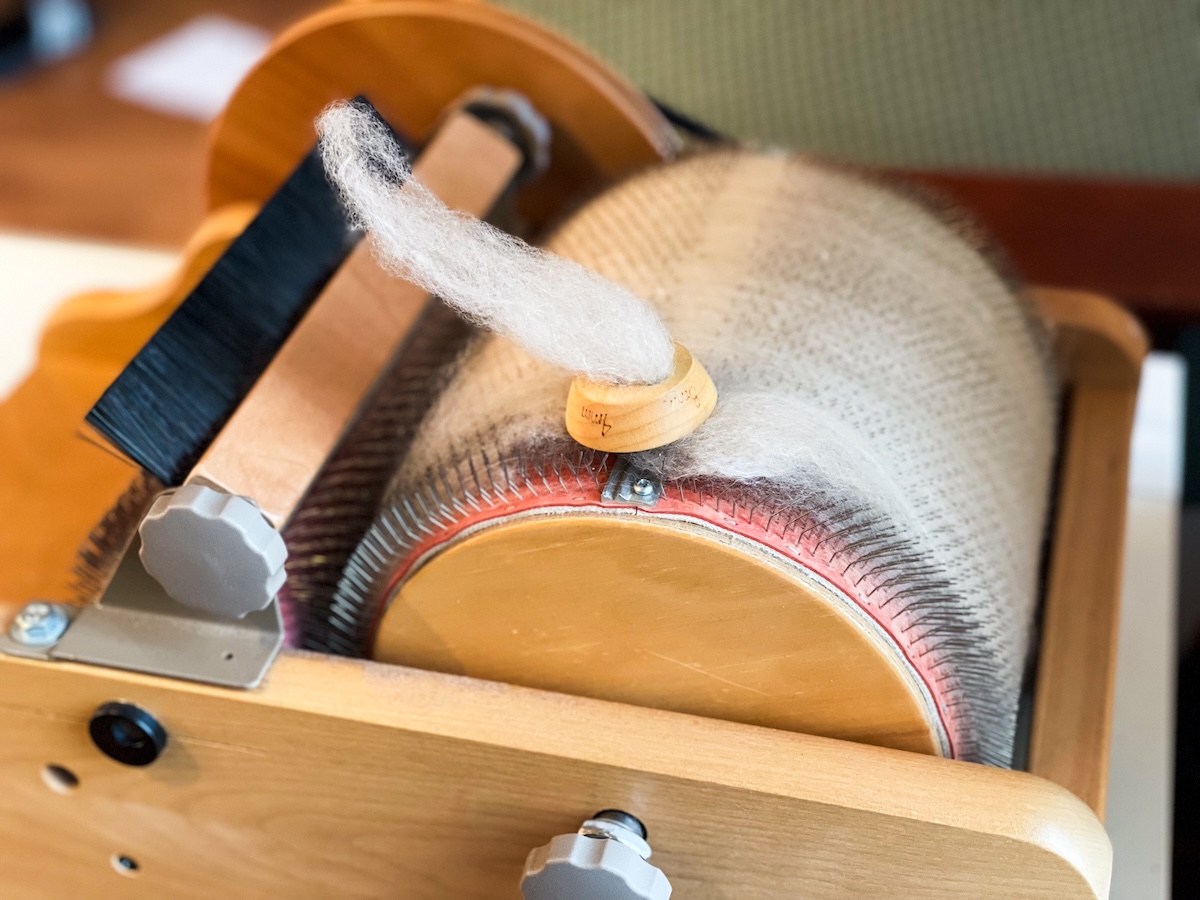
- If I am going to blend fibres for my project, I will use my hand cards, blending board, or mini combs to prepare the fibres and add any mix-ins. If I plan to use rolags, I will prepare my fibre as rolags.
- If your goal is to create a yarn similar to a commercial yarn from your stash, attach a sample of your target yarn to a card and separate the plies so you can more clearly see the thickness of the singles you need to spin.
- For short samples, if you are still deciding what yarn you want to spin, I use controlled plyback. Tie knots at the end and keep a card with the spinning details for each sample. Wet-finish the samples and choose your favourite.
- Once you have your favourite plyback sample, make a larger sample using 10 to 15 g (0.35 to 0.53 oz) of fibre. Divide it into as many bundles as you will have plies in your planned yarn.
- I separate the fibre, spin the first fibre bundle as singles onto a bobbin, add a length of commercial yarn (I use 8/2 weaving cotton yarn), and repeat. I like to spin all the singles onto one bobbin, then rewind them onto secondary bobbins before plying through the rings. I use this set-up for my samples as well, because it’s how I always spin my yarns.
- Spin your sample the way you plan to spin your yarn. If you usually spin half the fibre onto one bobbin, half onto a second bobbin, and then ply straight from the bobbins, do that.
- Remember to create a control card with singles taken from the bobbin, a plyback sample, and details of how you spun and plied the yarn.
- Wet-finish your handspun yarn and hang it to dry. Once dry, weigh it, measure the yards (or metres), and check the wraps per inch.
Calculate Yards Per Pound (YPP)
Even though you can calculate this from a very small sample, I have found that a larger sample (as above) tends to be more accurate for large projects because it lets me settle into my spinning. See Debbie Held’s The Dish on Grist: Yards Per Pound in Handspinning article for more details.
Swatch with Your Handspun
While you may want to do this step once you have the full 900 g (31.75 oz) spun and finished, if you want to knit or crochet a sweater with your handspun, now is the best time to swatch.
I have gone ahead and prepped, handspun, finished, and knit a full sweater without careful swatching. I ended up with one sweater that fits, and another sweater that sheds fibres and is used for sleeping because it has not stood up to wear. Rachel Smith’s Knit a Wrist Distaff to Test Your Handspun Yarn’s Durability article is a great little pattern for this kind of swatching and to learn if your handspun yarn will withstand wear and tear.
Calculating & Sourcing the Fibre You Need
For any large project you want to spin, determine how much commercial yarn you would need. Then, use your yards per pound to calculate how many pounds of fibre you will need to source or set aside from your stash. If possible, I like to add 30 to 35% extra fibre to account for changes in my spinning.
Say you want to spin for a sport-DK weight sweater, and you usually use about 914.4 m (1000 yds) in 400 g (14.11 oz) for a commercial sweater. I would source 520 g (18.34 oz) of fibre to be safe. Read Felicia Lo’s Calculating Fibre Quantities for Spinning article for more information.
Fibre Prep Time
Your fibre prep may be as simple as spinning straight from the end of a hand-dyed braid. Or you may start with raw wool and scour it yourself. Even if you are starting from clean fibre, there will be waste in the process of preparing it. I like to start with twice as much clean fibre as I think I will need.
When dealing with a large amount of fibre I like to do the steps one at a time:
Step 1: Tease or Lock Pop the fibre so it’s all ready for the carding tools once I am done. I keep the fibre in plastic bins in between every step of the process.
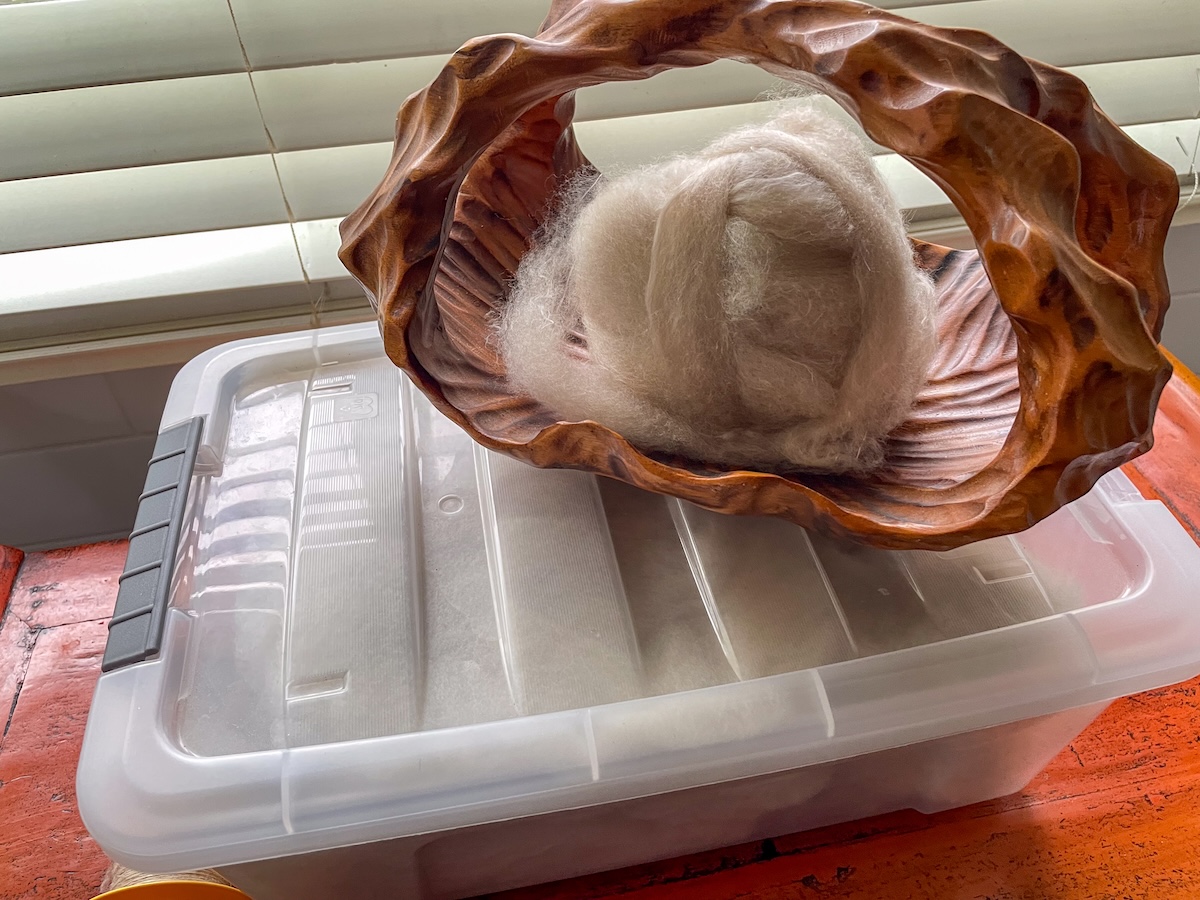
Step 2: Comb or card my fibre or fibre blend. Again, I keep my fibre clean and undisturbed by kids, pets or critters in plastic bins in between fibre prep sessions.
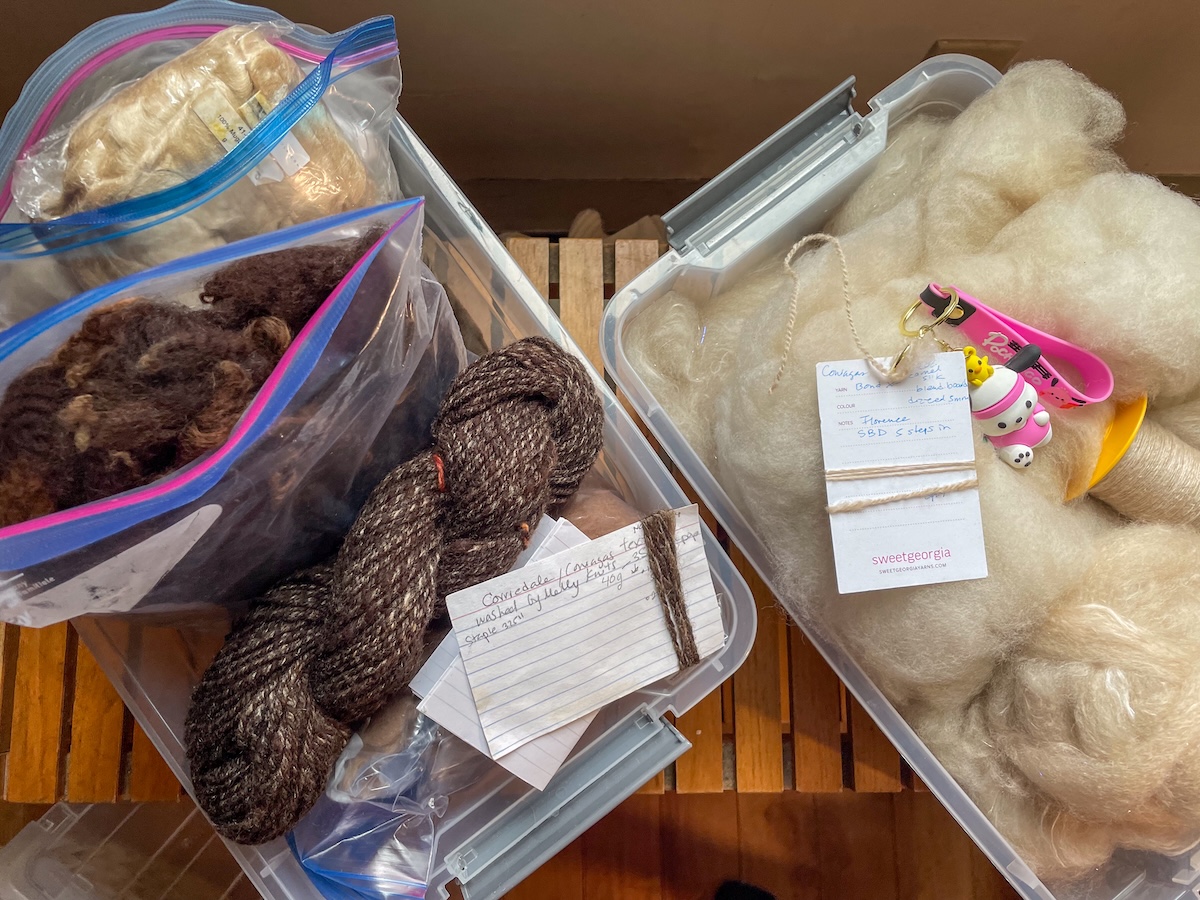
Sometimes I will break my fibre prep time and start spinning my project. I keep resealable bags with the fibre to be blended, together with the sample yarn and any control cards, in the plastic bins, so I can remember my process next time I set time for fibre prep.
Once you have all your fibre, prepare it the same way you prepared the fibre for your sample. I like to use plastic bins, buckets, and resealable bags for this step. Getting your fibre ready for spinning is a fantastic way to set yourself up for success.
Big Spin Time
You are all ready to start. Congratulations on preparing for your big spin.
- I keep my control card close to my spinning tool and check that I can spin singles similar to my card at the beginning of each session.
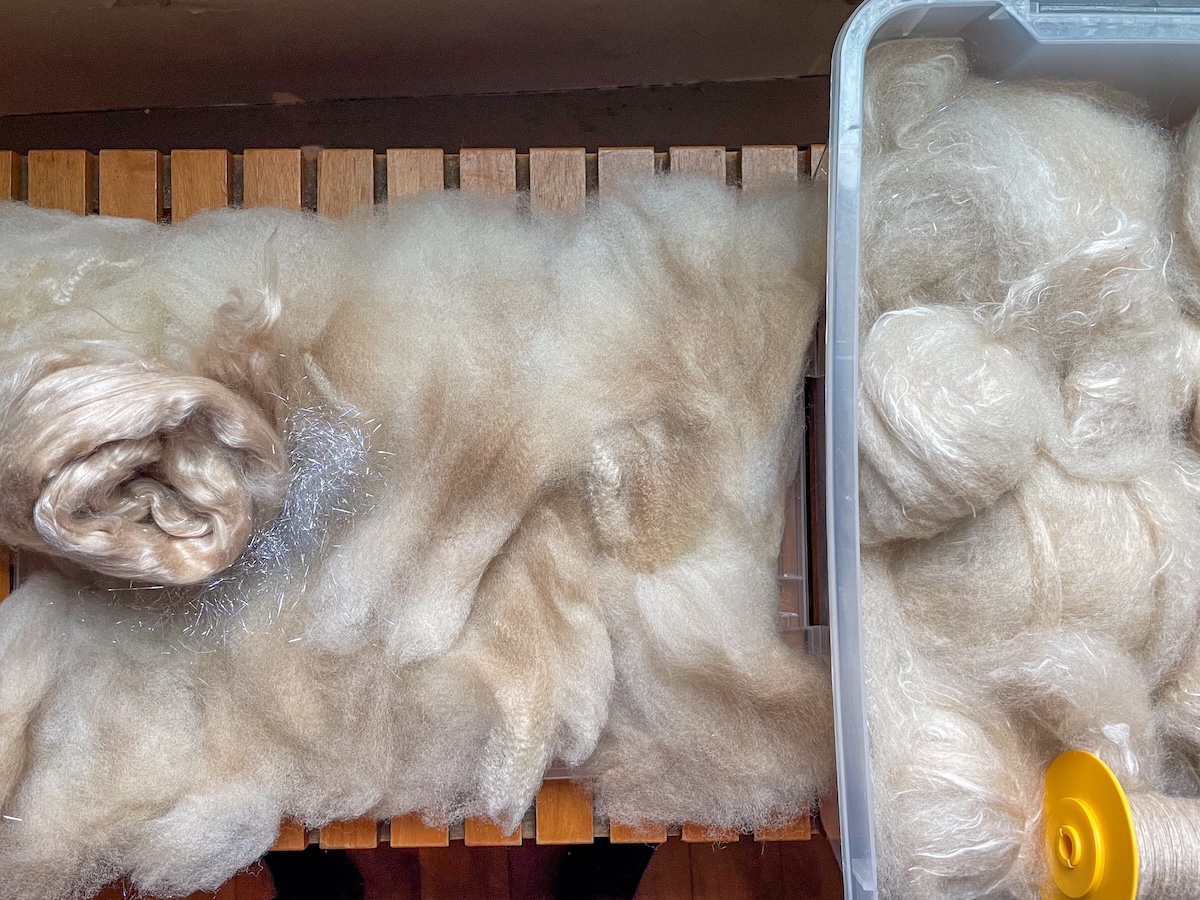
- Once I settle in, I like to put on a podcast or audiobook in the background, with my bin of prepped fibre open and ready to go.
- So, as Dory would say in Finding Nemo: “Just keep swimming, just keep swimming…”
- A big spin takes stamina, and you may get bored doing the same spin over and over with no changes. That may be one reason to have more than one spinning tool. If you are working through a big spin, it can be nice to have a designated tool for the whole project.
- If you need a break from the big spin and want a short, exciting spin to cleanse your palate, remember to keep all your bobbins of singles, prepped fibre, and control cards together so you can return to them when you are ready.
- Another strategy is to set a weekly fibre quota. Whether it is a set amount of rolag or roving, this keeps your big spin moving forward while still leaving time for other interests.
- Using a spin-along event, such as Spinning Guild meetings, Fibre Prep Month, or Tour de Fleece, can help you make visible progress as you turn all that fibre into full bobbins.
Big Plying Time
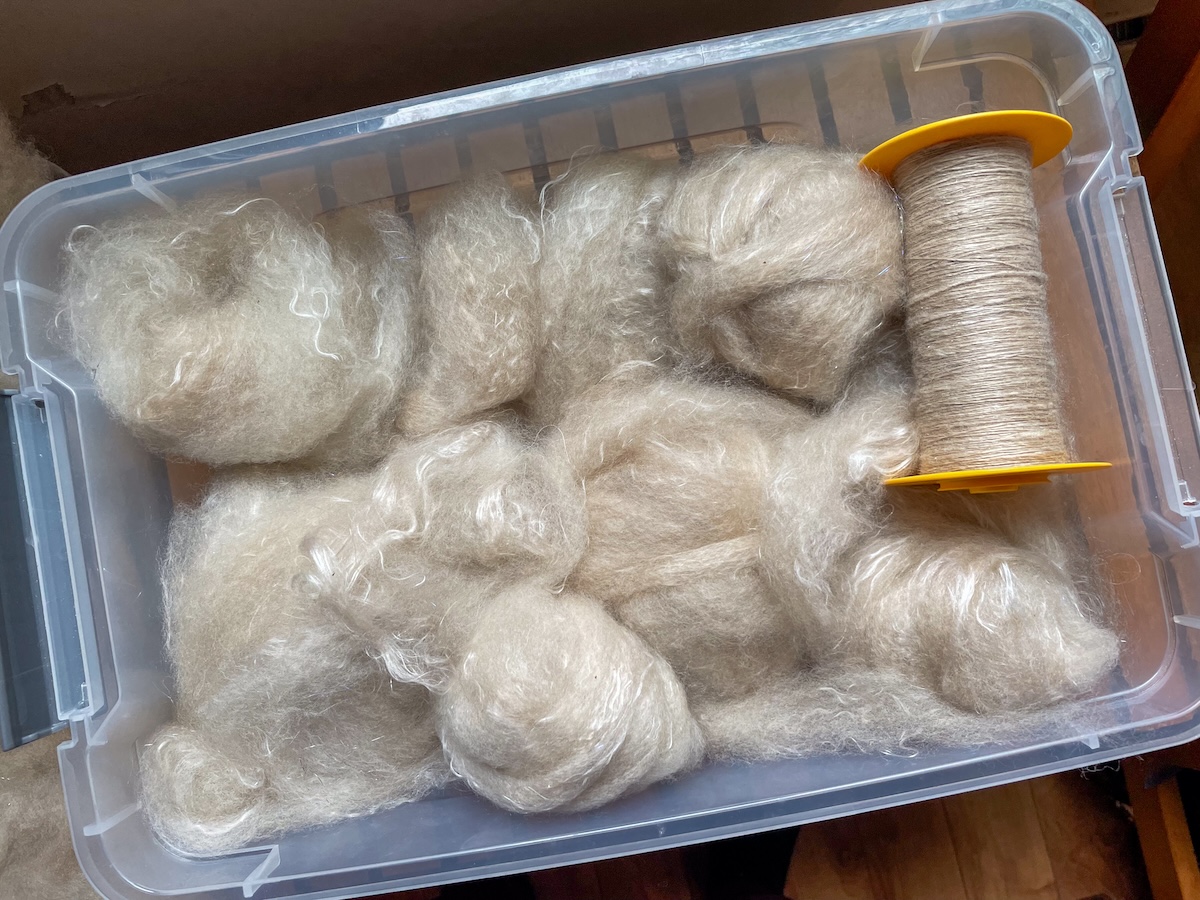
Once all the singles bobbins are full, it’s time to ply. Some spinners like to ply as soon as they have enough singles for a finished skein, sometimes because they do not have many bobbins. I like rewinding my singles onto storage bobbins because plying is a pleasure when the singles have been evenly distributed. This also allows me to mix bobbins so the final yarn is more even. Even though I check my singles often with my control card, I have still ended up with bobbins that are a bit thinner, so I like to mix them as much as possible.
Sometimes we think plying will take no time. I like to think it will take what it takes, and to enjoy the time I spend spinning and plying.
Celebrating, Finishing & Measuring
If you have all your yarn spun and plied, take a moment to celebrate. That is a huge accomplishment, and it feels amazing to build new skills and strategies in a craft we love.
Finish your handspun the same way you finished your sample, and enjoy seeing all those skeins drying. I love taking a photo of my yarn before finishing and another afterwards, because the transformation can be so dramatic.
Once your beautiful skeins are dry, take the time to weigh them, measure yardage or meterage, and check WPI in at least 3 to 4 places per skein. I calculate the average YPP across all my skeins, then choose the skein closest to that average to swatch for my planned project.
While the spin is still fresh in your memory, document the process. Make notes about what you would change next time. This information can be very useful when you are planning your next big spin or working with the same fibre again.
Use Your Handspun
You have just finished the first part of an epic project. Now, try to use your handspun sooner rather than later. We cannot wait for you to share what big spin you are planning next, or how you are using your big-spin handspun in SweetGeorgia + Co. Happy spinning!
The post Managing Big Spins appeared first on SweetGeorgia Yarns.


