
There’s something about moving into a new season that invites a look back through the stash. Pulling out braids, rediscovering fibres, and noticing what still feels exciting—and what doesn’t quite anymore.
Over the years, I’ve collected braids that I wouldn’t necessarily choose today. Colours that no longer draw me in, fibres I’m less interested in spinning, or combinations I’m unsure how to approach. Rather than letting them sit, I’ve started turning to combo spinning as a way to work through them—bringing different braids together to create something new.
What I’ve found is that successful combo spins don’t rely on colour alone. They sit at the intersection of colour, fibre, and yarn structure, with each element influencing how the yarn comes together and how it behaves in the finished fabric.
In this article, we’ll look at how these elements interact, and how you can begin to approach your own stash with a fresh perspective.
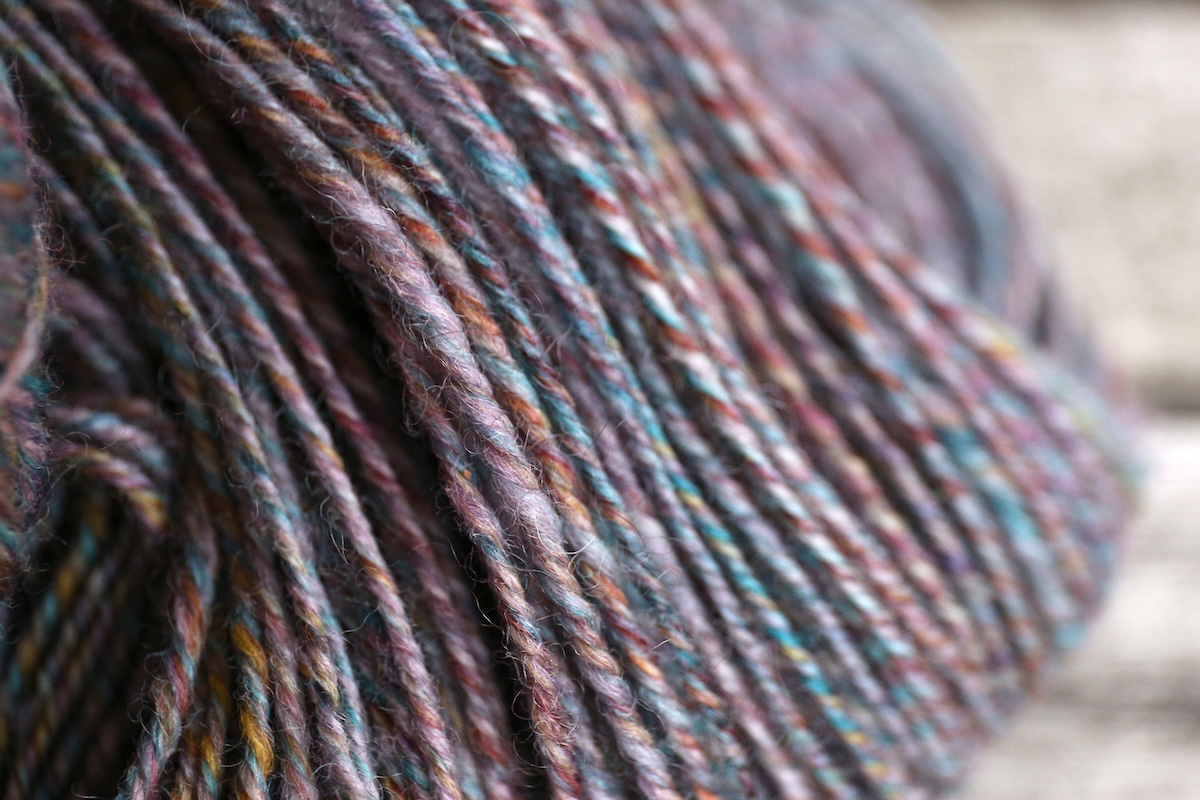
Colour Dynamics
Colour is often the first thing we think about when approaching a combo spin—and for good reason. It plays a significant role in how the finished yarn (and fabric) will feel. That said, colour doesn’t work alone. It interacts constantly with fibre and structure, so it’s helpful to think of it as one part of a larger system.
Same or Different Dyers
When I’m planning a combo spin, I’m often looking for a balance between cohesion and interest. One of the easiest ways to achieve cohesion is to work with braids from the same dyer. Most dyers develop their colourways from a consistent set of base dyes, which means colours across different braids tend to relate to one another naturally. A blue in one braid will often echo a blue in another, even if the overall colourways are quite different.
When combining braids from different dyers, things can become more complex—in a good way. Colours may not match as closely, which can introduce more variation and surface texture in the yarn. Rather than blending seamlessly, the colours may sit alongside one another, creating subtle shifts and visual movement as the yarn is spun and plied. This isn’t a drawback, but it does change the overall feel of the yarn.
Colours in the Fibre
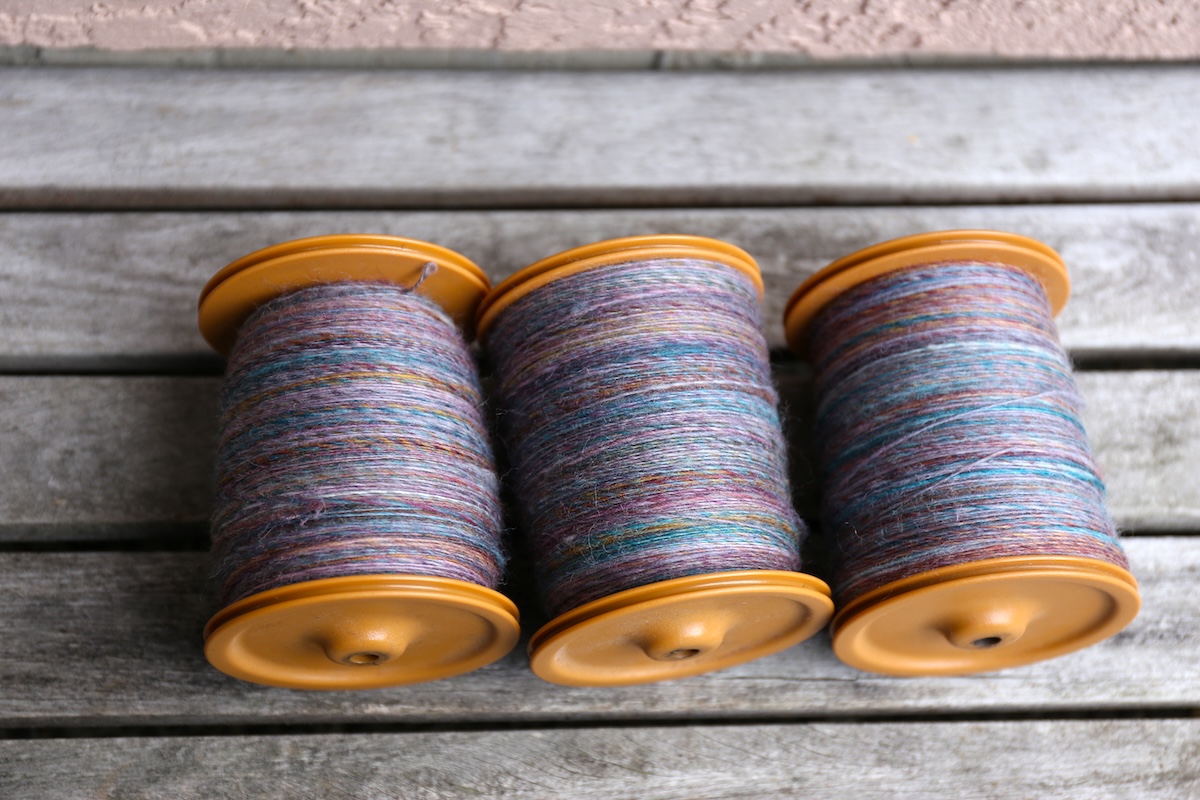
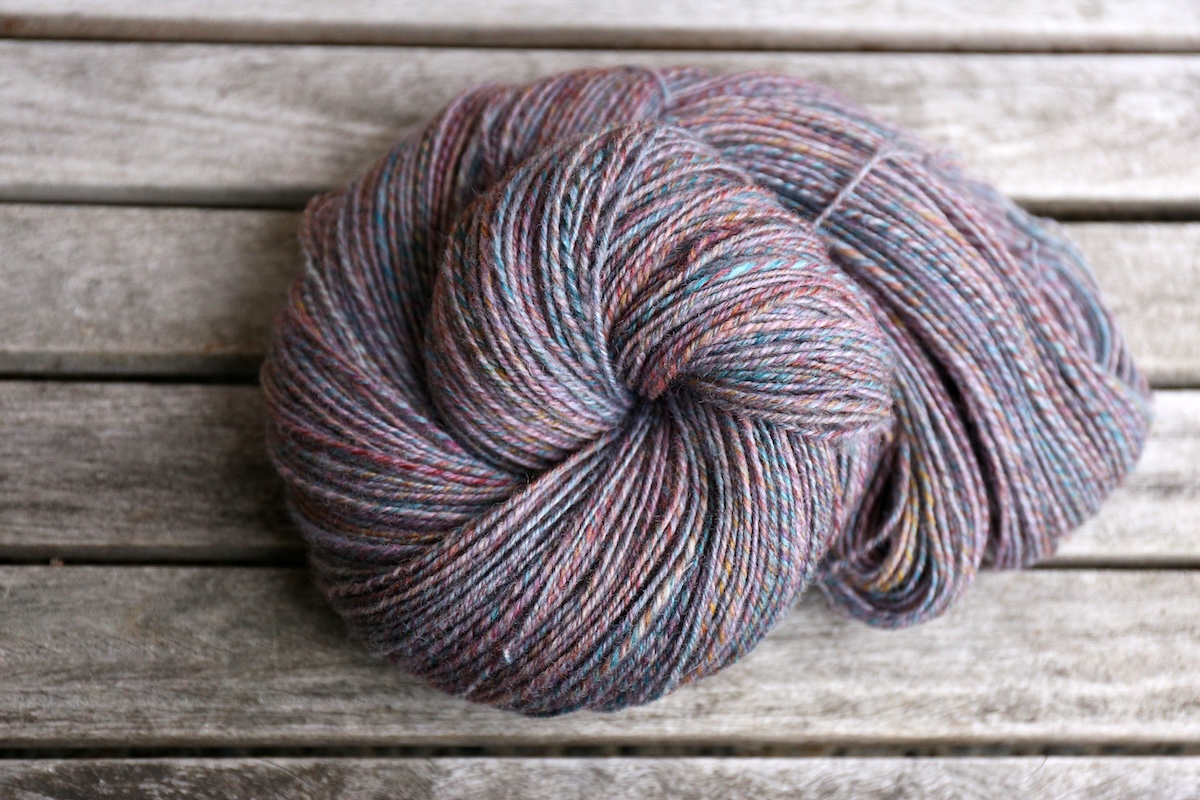
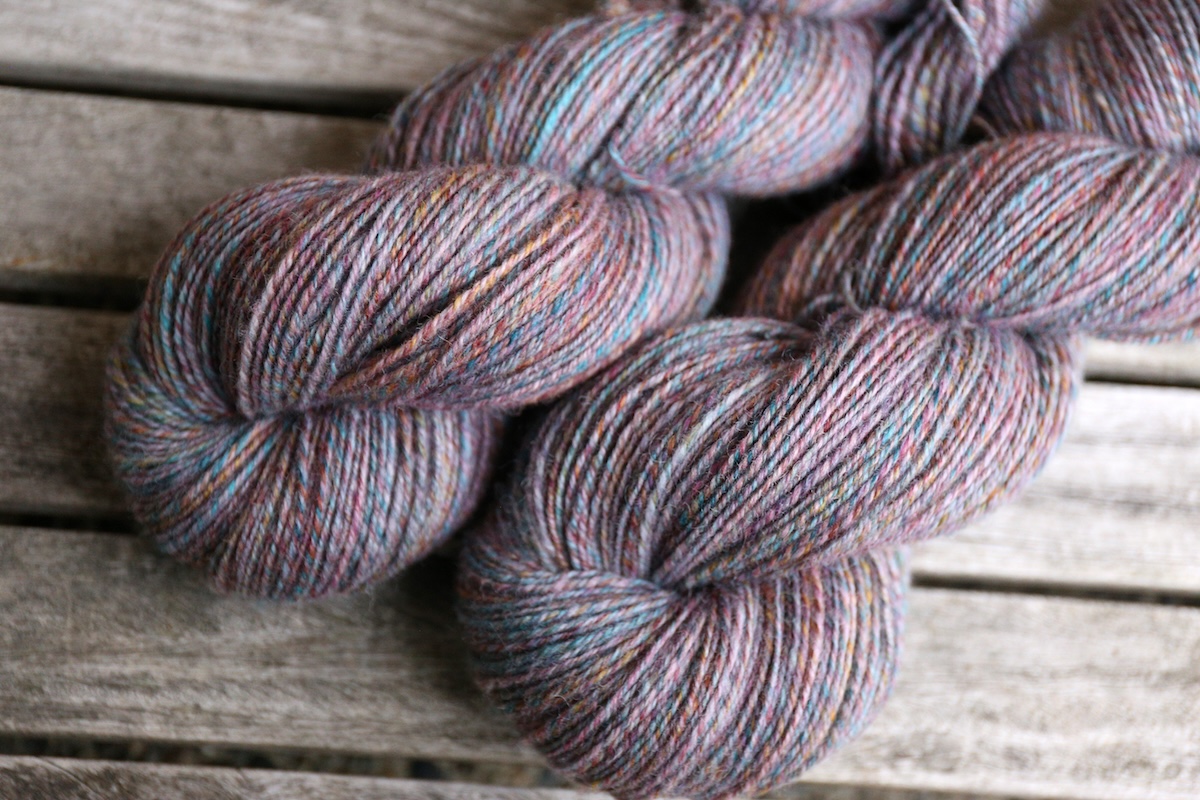
For this project, I combined SweetGeorgia Yarn’s Patchwork Quilt, Stormchaser, and Snow Angel. What stood out immediately was how certain colours carried across the braids—the greys in Stormchaser and Snow Angel, and the purples in Patchwork Quilt and Snow Angel. Because these colours were so closely matched, they created a sense of continuity throughout the yarn, even as other colours shifted and blended around them.
Another thing I pay attention to is how many primary colours are present across the braids. When all three primaries are included—even indirectly through secondary colours—there is a greater chance for colours to soften or mute as they combine. You may notice this as a gentle greying or toning down in parts of the yarn. Sometimes this creates beautiful areas of rest in the fabric; other times, it may dull colours more than expected. Being aware of this ahead of time helps set expectations for the finished yarn.
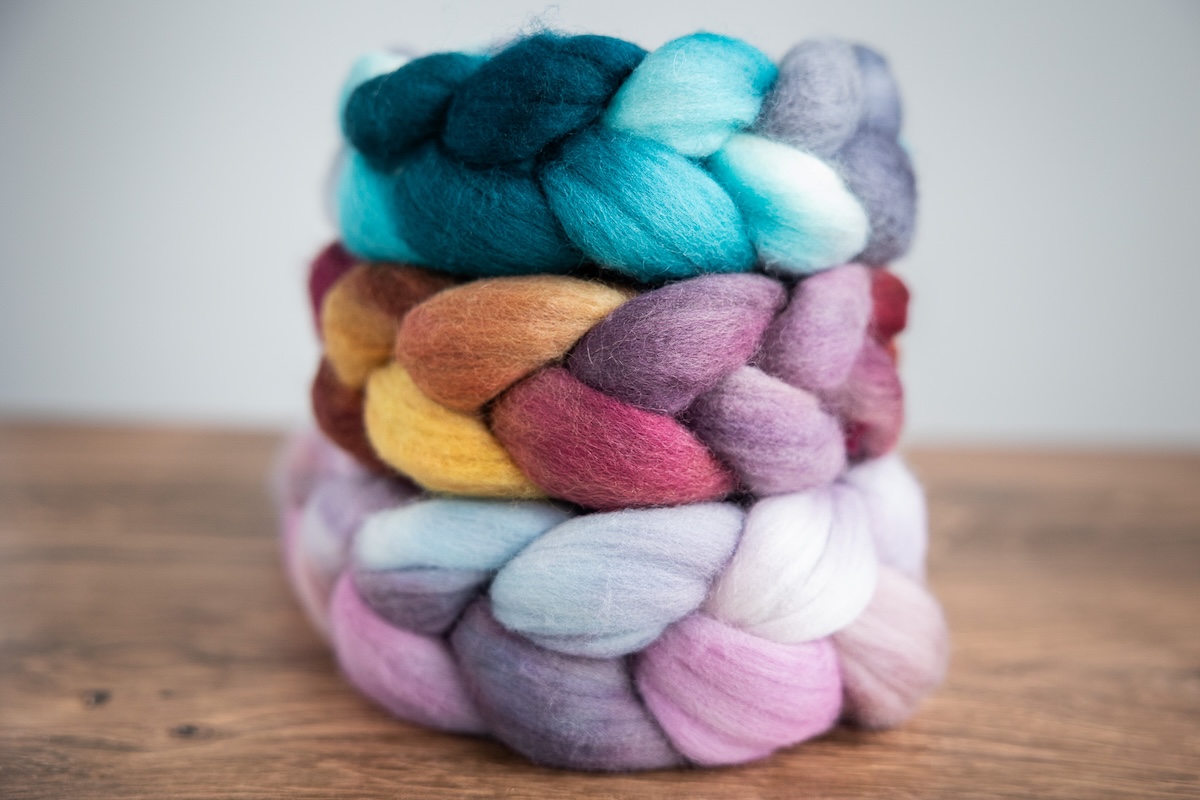
The Focus
A question I often come back to is:
Do I want the yarn to be the focus, or the fabric?
Highly variegated or high-contrast combo spins can create a lot of visual movement. This can be wonderful, but it can also compete with more complex stitch patterns. In those cases, I often look for ways to soften the colour transitions—either by choosing braids with shared colours or by lightly blending the fibre during preparation. Even a single pass on the drum carder can shift the palette slightly, creating a more unified tone and giving the eye places to rest in the finished fabric. Combo spinning is not just about yarn — it’s about fabric. The more complex the yarn, the simpler the fabric often needs to be.
As you look through your own stash, notice which colours naturally relate to one another. You might find braids that share a common hue, or that sit comfortably together even if they aren’t exact matches. These relationships often become the foundation for a successful combo spin.
Fibre Content
While colour often takes centre stage in combo spinning, fibre content plays an equally important role in how the yarn behaves—both during spinning and in the finished fabric.
When combining braids, I tend to think about three things:
- How the fibres behave while drafting
- How they interact structurally in the yarn
- How they will respond during finishing
Fibre Behaviour
Different fibres bring different qualities to a yarn, and these become more noticeable when combined.
Wool is often the easiest place to start. Fine wools tend to be elastic, with strong memory and noticeable bloom after finishing. Medium wools are slightly more stable, often with a bit more structure, while longwools offer smooth drafting, strength, and lustre, but less elasticity.
When combining different wools, it can be helpful to choose fibres with similar characteristics—particularly in terms of crimp, bounce, and staple length. This helps the fibres draft more evenly and creates a more cohesive yarn.
Beyond wool, many braids include other protein fibres such as silk, alpaca, or llama. These fibres introduce qualities like drape, strength, and sheen, and can shift the overall feel of the yarn quite significantly. Silk, in particular, can enhance lustre and fluidity, while the camelids contribute warmth and softness, often with less elasticity.
These additions can be wonderful, but they do change how the yarn behaves. A blend that includes multiple fibre types may feel very different from a wool-only yarn, both at the wheel and in the finished fabric.
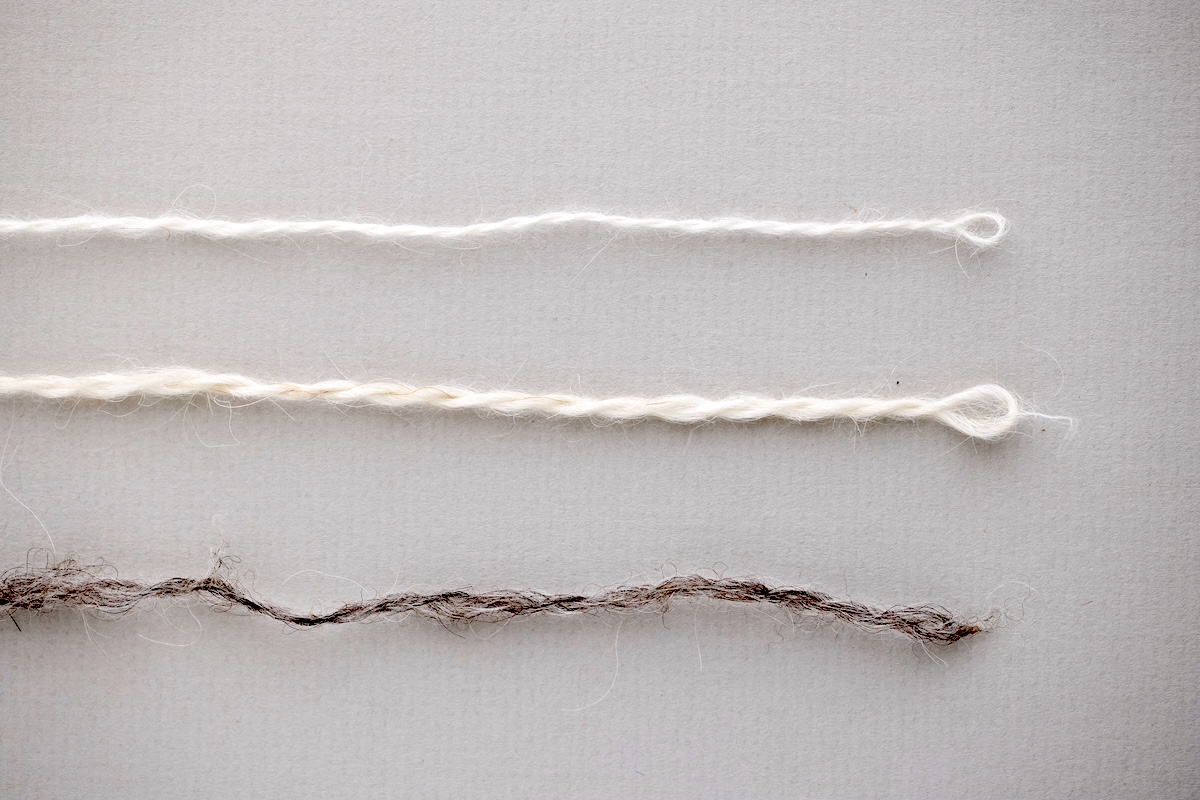
The picture is from Rachel’s Spinning Sheep Breeds course at the School of SweetGeorgia.
Staple Length
Staple length is one of the most practical considerations in combo spinning.
When fibres have very different staple lengths, drafting can become inconsistent. You may find yourself constantly adjusting your hand position or struggling to establish a steady rhythm. In some cases, this results in a yarn that is more uneven than intended.
If your goal is a smoother, more consistent yarn, it helps to choose fibres with similar staple lengths. A simple way to check is to pull small samples from each braid and compare them side by side.
If you’d like to include fibres with varying staple lengths, adjusting your drafting style can help. A more woollen-style draft, such as long draw, can accommodate a wider range of fibre lengths by allowing them to blend more freely during drafting.
Blending and Preparation
There are several ways to combine fibres, and each approach affects both colour and texture.
In traditional combo drafting, multiple strips of fibre are held together and drafted simultaneously. This preserves more of the original colour variation and can create lively, high-contrast yarns.
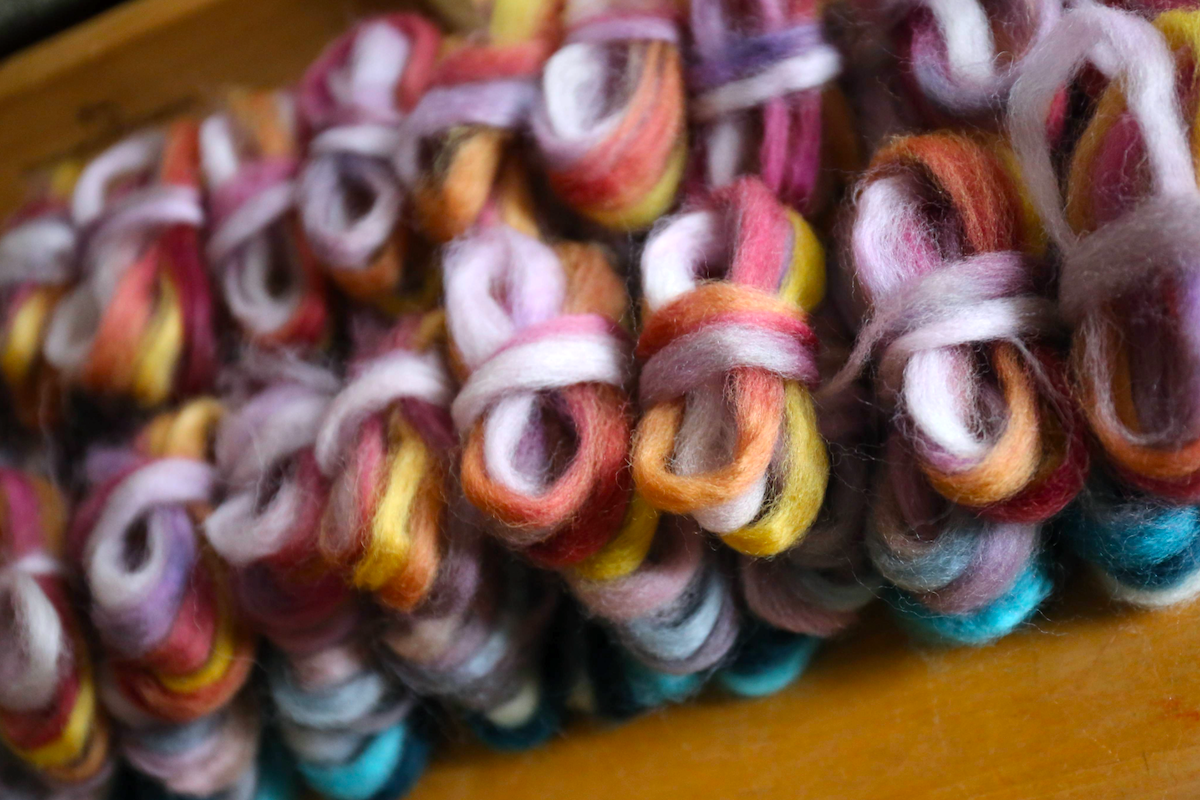
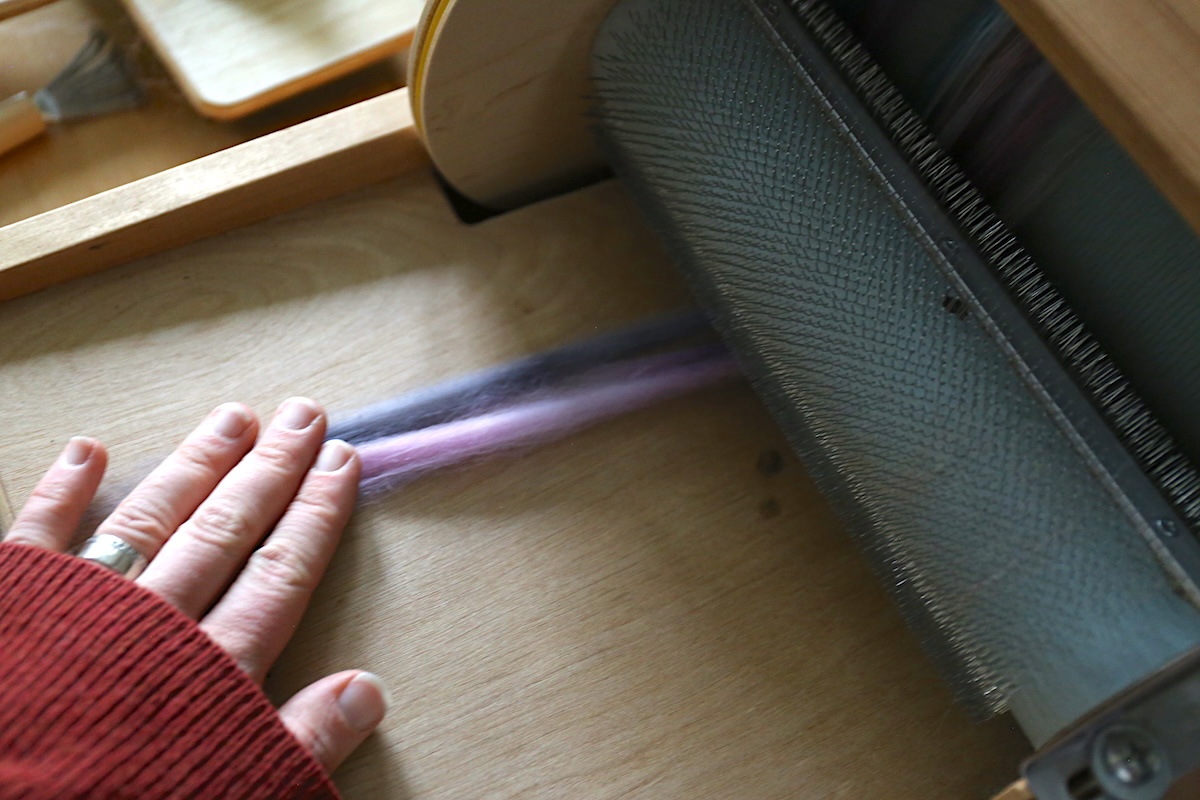
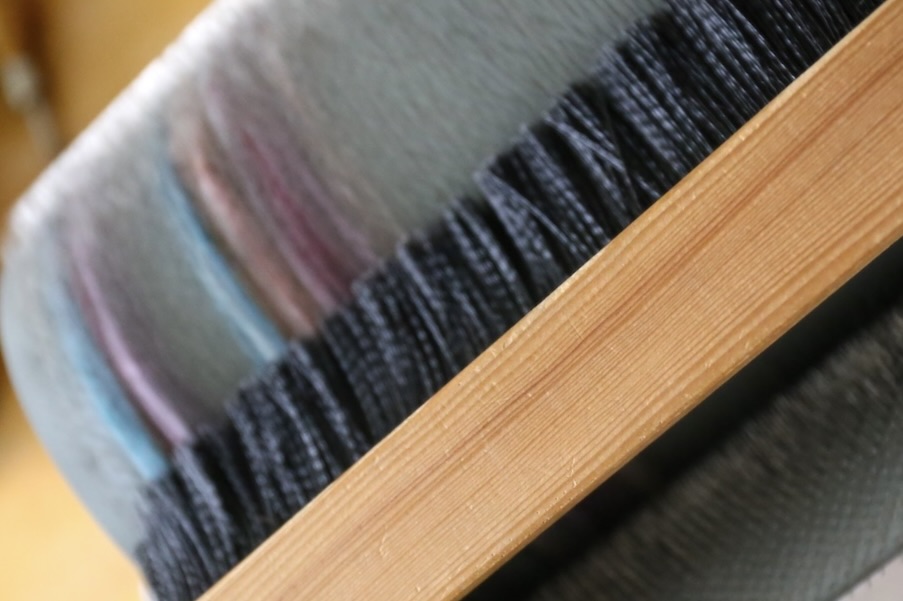
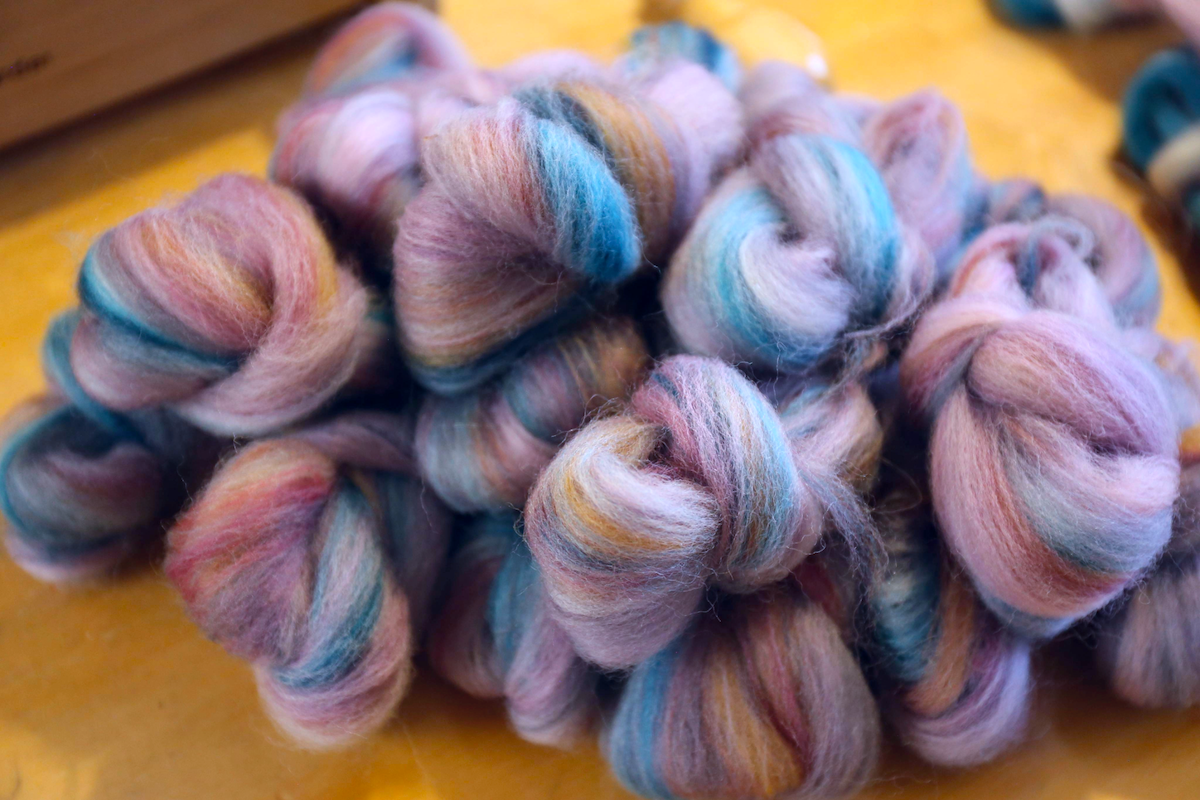
For this project, I chose to strip the braids into small sections and card them together with a single pass on the drum carder. This created cohesive nests of fibre with a slight degree of blending, softening the overall palette while still maintaining variation.
Alternatively, fibres can be spun separately and combined during plying. This approach offers more control during spinning and can be especially helpful when working with fibres that behave differently.
There is no single correct method—each approach offers a different balance between control and variation.
Fibre Compatibility
Not all fibres combine easily.
Some fibres resist blending, especially when their structures differ significantly. For example, very smooth fibres may not hold shorter or more textured fibres well, which can result in uneven distribution or fibres sitting on the surface of the yarn and fabric rather than integrating fully. Sometimes, for example, cotton can act this way.
It’s also worth considering how fibres will behave in the finished fabric. Fibres with more elasticity and memory will respond differently from those with more drape. Combining these can create interesting effects, but may not always suit the intended project.
Finishing Considerations
Different fibres also require different finishing approaches.
Wool is generally forgiving, often requiring only a gentle wash to allow the fibres to bloom and settle. Other fibres, particularly plant fibres, may require more intensive processing, such as scouring or higher temperatures. Some fibres, like silk, can be sensitive to heat and agitation.
When combining fibres, it’s helpful to think ahead about how the yarn will be finished, and whether all included fibres will respond well to the same process.
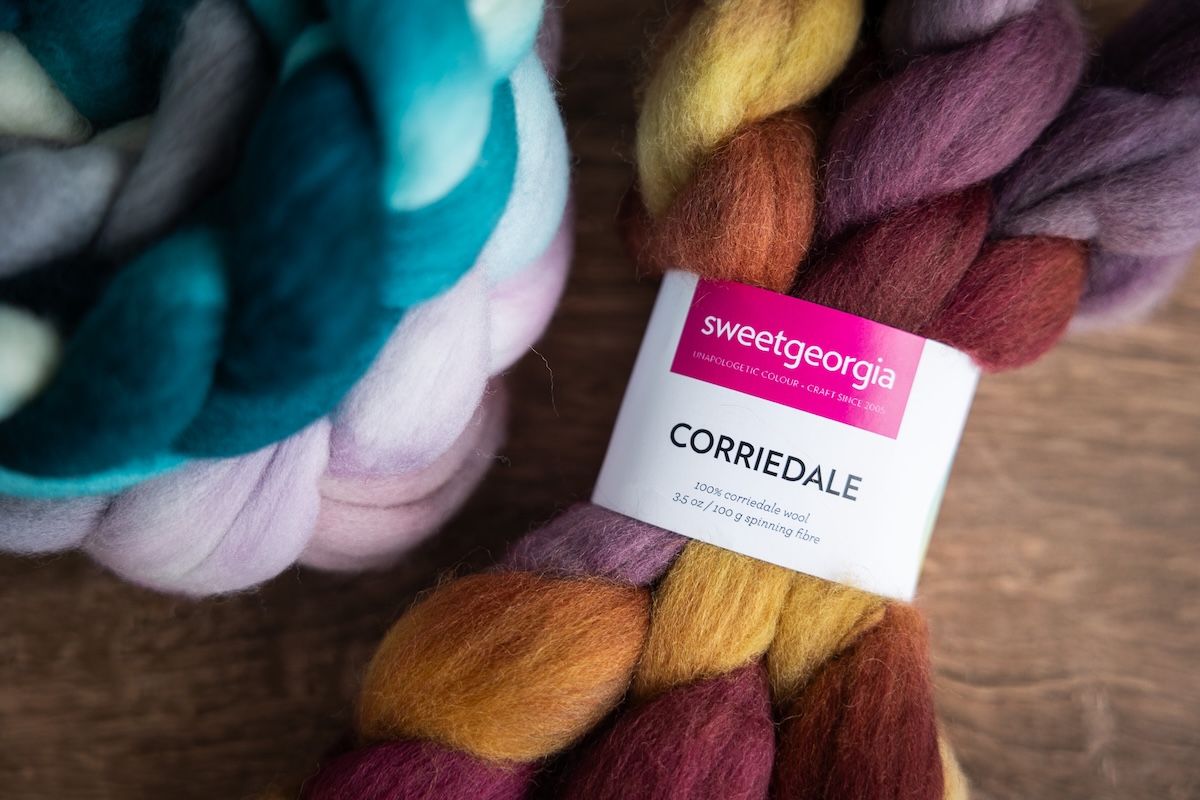
For this combo spin, I chose to work with Corriedale—a versatile medium wool with a consistent staple length and balanced characteristics. It drafts easily, wears well, and produces a durable fabric, making it an ideal foundation for a multi-braid project.
Yarn Structure
The final element to consider in a combo spin is yarn structure. While colour and fibre often guide our initial choices, structure determines how those elements come together in the finished yarn—and ultimately, the fabric.
There is no single “best” structure for combo spinning. Instead, each choice shifts how colour appears, how the yarn wears, and how the fabric behaves.
One thing to keep in mind is that combo spins will almost always produce some degree of striping or colour variation, simply due to the changing colours in the fibre supply. Yarn structure determines how visible—or softened—those changes will be.
Singles
Singles yarns allow colour to remain the most intact. Without plying, there is less opportunity for colours to mix, which can result in clearer, more distinct colour transitions.
This can be especially effective when working with complex or highly variegated braids, as the colours remain closer to their original sequence. However, singles are less durable, more prone to pilling, and may bias in the finished fabric due to unbalanced twist.
Two-Ply
A 2-ply yarn offers a balance between structure and colour clarity.
With two singles twisting together, some colour blending occurs, often creating subtle barber-pole effects or gentle marling. This adds visual interest without overwhelming the yarn.
For combo spins with multiple colours, a 2-ply can help maintain definition while still improving strength and usability compared to singles.
Three-Ply and Beyond
As more plies are added, the yarn becomes rounder, stronger, and more durable—but also more visually complex.
With three or more singles interacting, colours mix more frequently along the length of the yarn. This can create depth and richness, but may also increase contrast or visual busyness, depending on the colour combination.
For projects where durability and structure are important—such as garments or high-wear items—a 3-ply can be an excellent choice.
Beyond Traditional Structures
Combo spinning also lends itself well to more experimental yarn structures.
Cable yarns, crepe yarns, corespun, or mismatched plies (for example, combining thick and thin singles) can all create unique textures and colour effects. These approaches can be a way to explore fibre in new ways, especially when working through stash.
Blending to Eliminate Striping
If reducing striping is the goal, the fibre must be blended more thoroughly before spinning. Carding or combing the braids together until the colours are fully integrated will produce a more uniform yarn.
In this case, the yarn structure becomes less about managing colour and more about supporting the intended fabric—whether that’s strength, drape, or stitch definition.
Conclusion
There is no single right way to approach combo spinning. Instead, it offers a range of possibilities shaped by the choices we make around colour, fibre, and structure.
As you explore your stash, start with what draws your attention—whether that’s colour, fibre, or simply curiosity. From there, consider how those elements might work together: which colours relate, which fibres will draft well together, and what kind of yarn you’d like to create.
Working backwards from the intended fabric can be especially helpful. A soft, cohesive sweater yarn may call for closely related colours and balanced structure, while a more experimental yarn might embrace contrast, variation, and texture.
If you’re unsure, start small. Sampling allows you to test combinations, explore structure, and see how the yarn behaves in finishing before committing to a larger project.
Combo spinning is, at its core, an exploration. It offers a way to revisit fibres in your stash with a fresh perspective, to experiment with colour and structure, and to create something entirely new from what you already have.
The post Combo Spinning: A Different Way to Work Through Stash appeared first on SweetGeorgia Yarns.


