
I’ve been knitting for nearly two decades, exploring different styles of knitting (stockinette, lace, cables), and it has brought me great joy. Over the years, I have become comfortable adjusting sizes or modifying patterns to work with the gauge and fabric I prefer for my chosen yarns.
It got me thinking: could I design my own patterns? You may be experiencing something similar, where you want to design a project to your own specifications. Where do you start? Well, let me take you on my journey!
Look for Inspiration
Sometimes, inspiration comes from a beautiful new skein of yarn or a combination of yarns; a perfect palette of colours. Working at SweetGeorgia in an environment full of knitted samples intrigues me to explore colour and gauge combinations even further.
Allow Time to Play
And by play, I mean swatch…I know, I know, it seems like I’m always recommending people to swatch. But nothing compares to actually working with a yarn to learn how it behaves as fabric. I always think of swatching as a bit like speed dating. I take notes to see which combination of stitches and gauge really excites me. Then I ask myself, Do I want to ‘date’ this combo again?
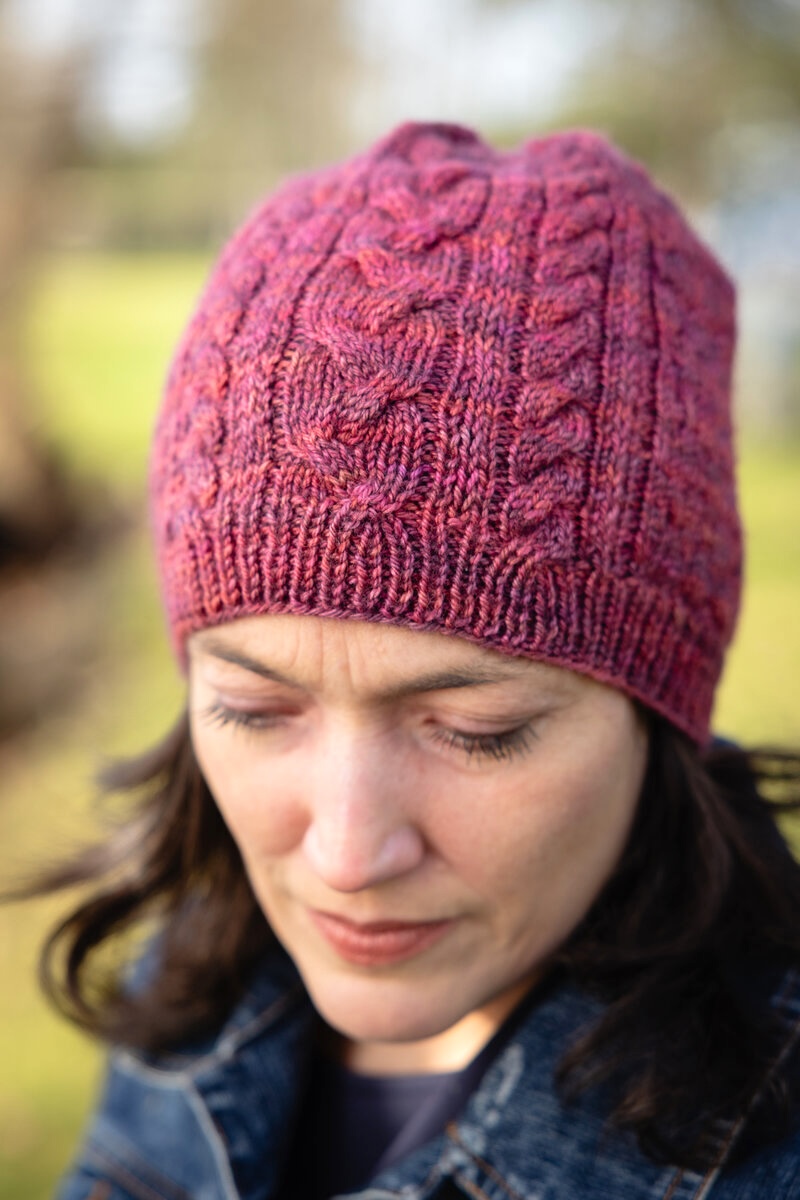
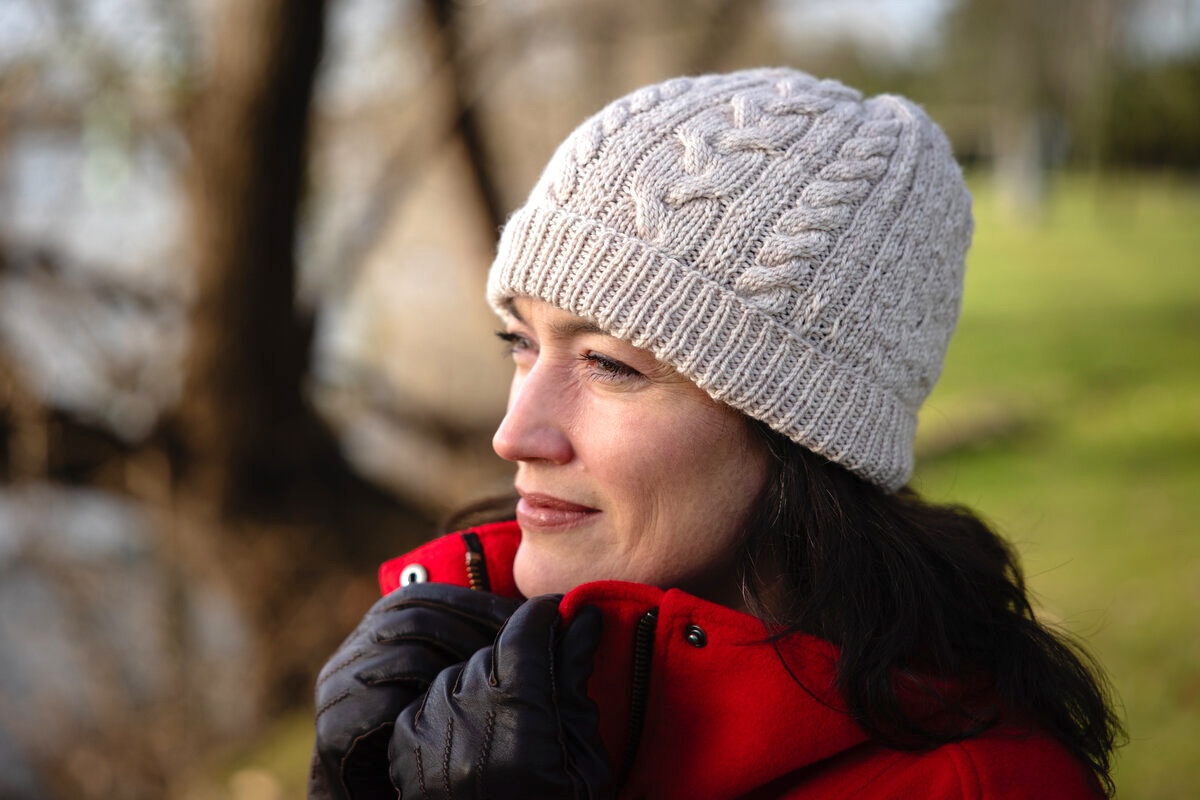
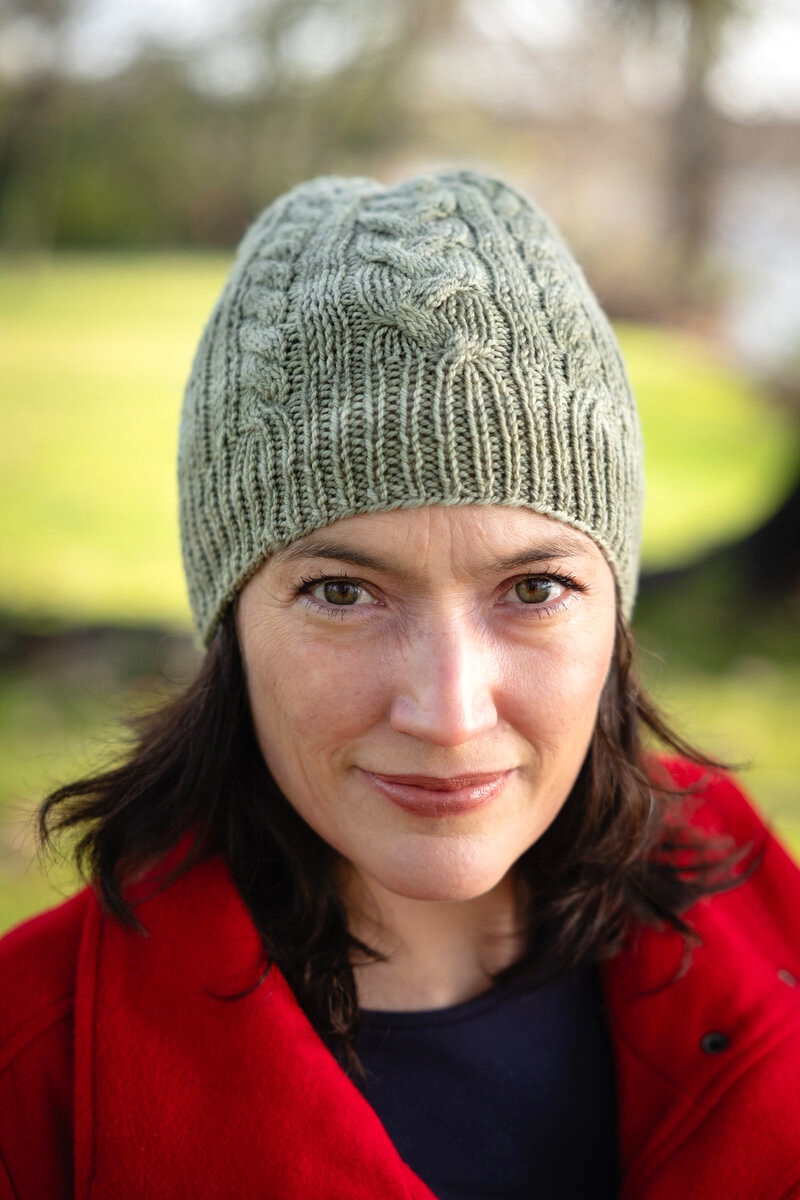
When designing, a hat is an approachable accessory while getting used to a new yarn. For the Horseshoe Bay Toque, I was swooning over the Knitted Cable Sourcebook. I really wanted to design a hat with a central cable, so I started swatching. My first attempts didn’t look balanced, so I added a flat braid in the middle, which looked much more attractive to me.
For the body of the hat, I wanted a beautiful, textured appearance. While looking in the Nordic Sailors’ & Fishermen’s Sweater book, I found the bubble stitch. To my surprise, the fabric was very elastic and worked really well for the hat I was envisioning.
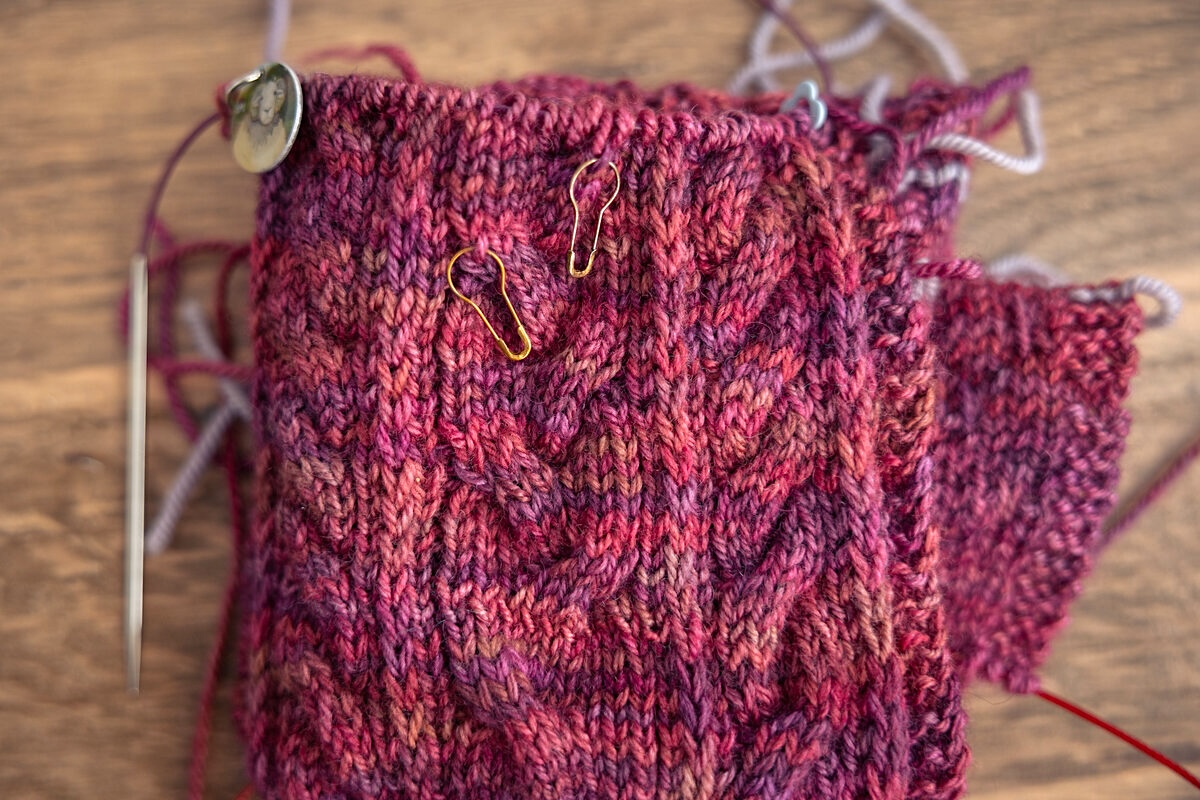
Since I am a big fan of SweetGeorgia Trifecta Fine, I was eager to start swatching.
Swatches to Samples
With the gauges for both the bubble stitch and cables, I knit a swatch and modified the original charts so the cables would align, making it easier to remember while knitting the hat.
Sampling for Personal Use
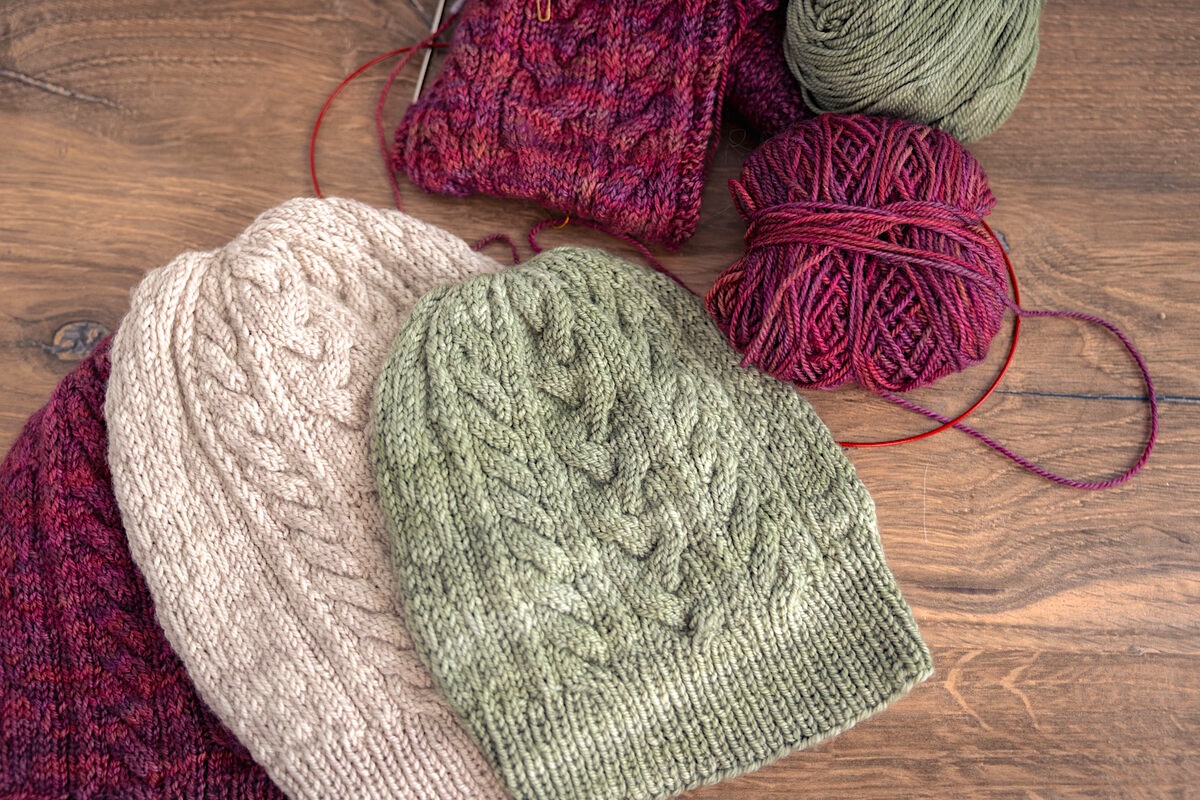
I used the sample hat from the Switch & Knit Stitch Dictionary for my initial sample hat. For my first sample, I found the gauge produced a larger hat than the medium size I was hoping for. With this information, I adjusted my basic pattern numbers to knit another sample, but smaller.
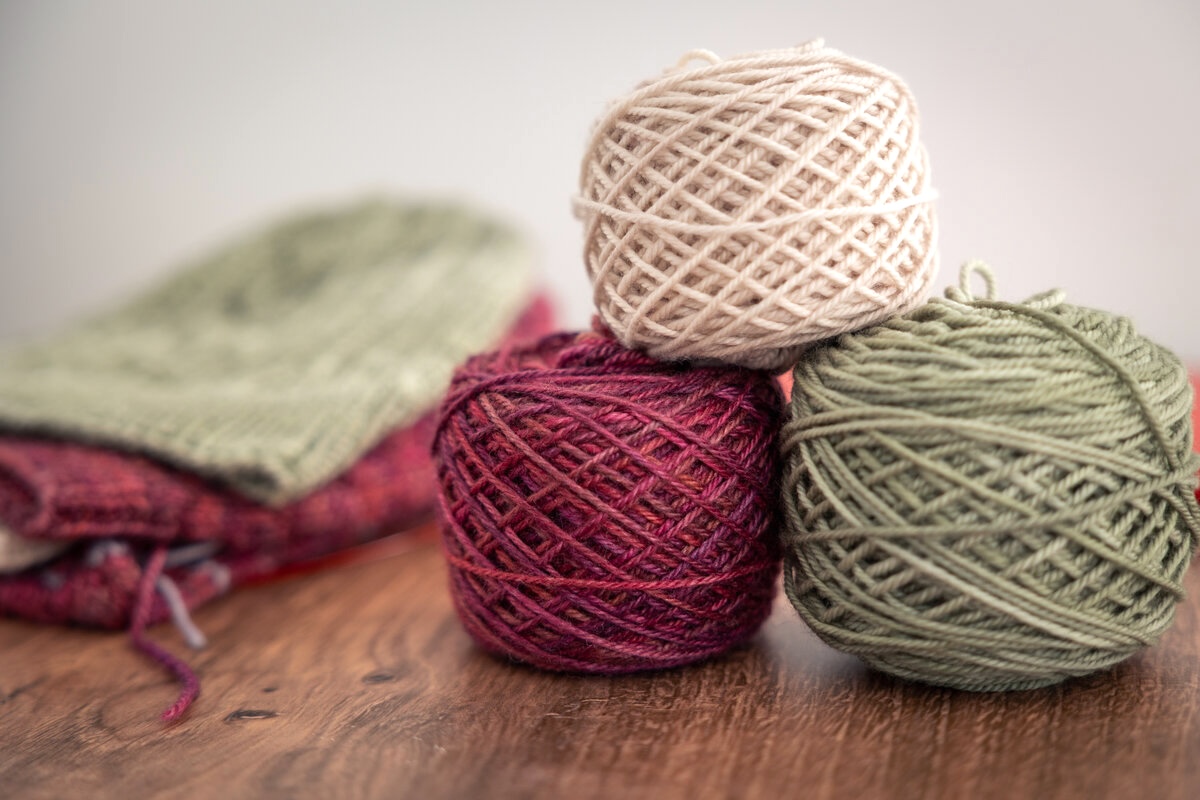
I knit the second sample in SweetGeorgia Merino DK, an Easy-Care yarn which gives a very different fabric and slightly different gauge. (Remember that just because you get a certain result with one yarn doesn’t mean it will translate to the same gauge with another yarn of the same weight.)
When considering pattern features, even in something as simple as a hat, small changes, like the length of the brim, can completely alter the design’s style. Luckily, on a small item like a hat, it’s relatively easy to knit another sample to test different ideas.
Making Samples for Publication
Now, if you are planning to publish your pattern or sell it for publication, you need to start from scratch. First, make a schematic of your design with your desired measurements. Next, make your calculations based on the gauge(s) from your swatch(es). You may need to knit a few prototypes before you get it right, just as I did with my first sample hat. Then, you need to grade it for multiple sizes.
If you want more information on how to design a hat, check out Andrea Rangel’s course Design Stranded Colourwork: Hats. The sample patterns in many stitchionaries are for personal use only, which was my plan for this hat, but now I have been bitten by the design bug, so you can expect more patterns from me in the future!
Sample to Pattern
Although I am not publishing this pattern, I wanted to see the process through to the end to get an idea of how much work is involved.
Photography
Once the samples were completed, it was time to get good photographs. Brigid (our fabulous photographer) and I chose the clothes for the photoshoot to showcase the mood and environment in which this hat would be worn. We pencilled in a couple of days for the photography, just in case the first day’s natural light was not ideal, then we could pivot to a different day if needed.
Because of my role at the School of SweetGeorgia, I have learned that photography can make or break a design. Even if the pattern is only for you and your friends, there’s great satisfaction in having a well-explained pattern with beautiful pictures to show off the features and fit.
Pattern Writing
With samples knit and photos taken, it’s important to clearly explain the instructions in the form of a pattern. Once the first draft was ready, I sent it to a few friends to test the pattern.
If I were publishing it, I would take their feedback, adjust my pattern, and make another sample if needed. Then I would send it to a Tech Editor to correct any mistakes in my calculations and add clarity in the instructions. The last step would be to send it to a group of test knitters to confirm that the pattern was easy to follow and find any additional mistakes.
Once my friend’s comments came back, I prepared a final version of the pattern. I am so happy with my final pattern and the design process. Having had a stunning yarn like SweetGeorgia Trifecta DK was great motivation to dip my toes into designing, and I am confident I can move forward with future patterns!
Resources
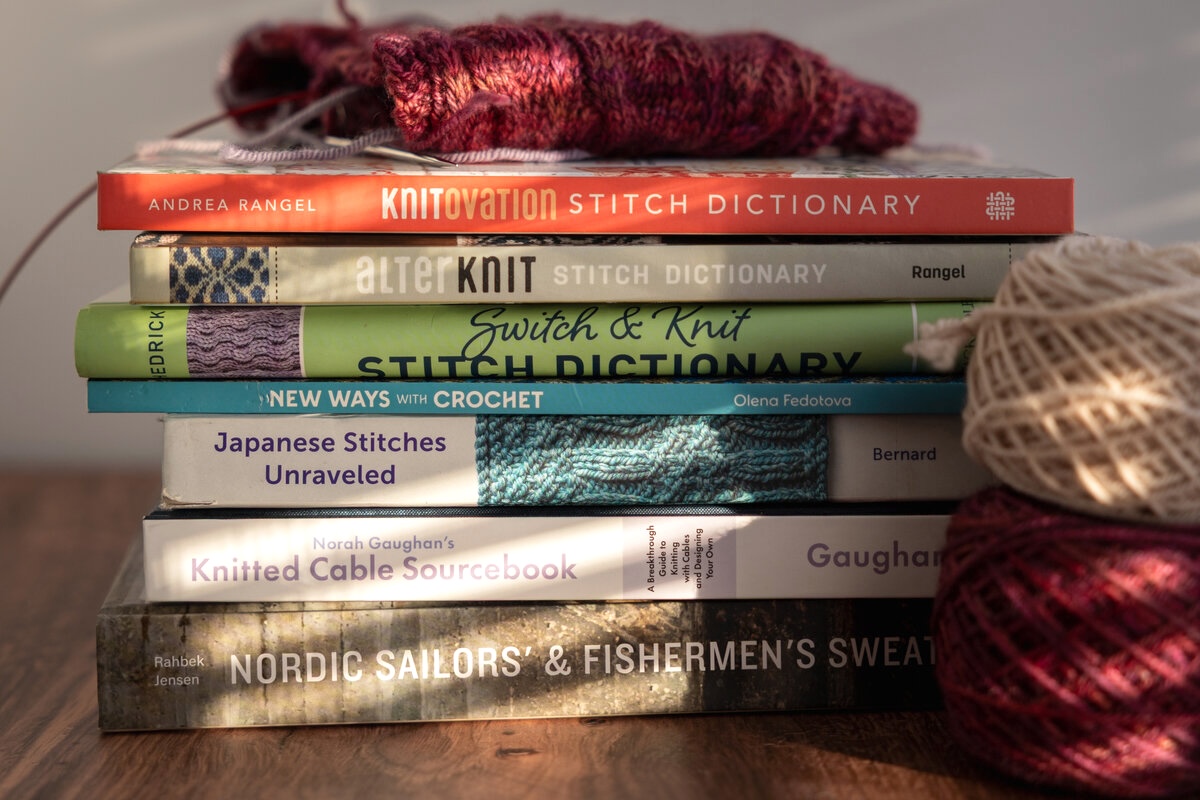
These days, we have plenty of stitchionaries covering every technique imaginable. Some books may not be stitchionaries per se, but are filled with gorgeous patterns and photos. And for even more support on your design journey, we have some exceptional courses at the School of SweetGeorgia. I have listed some of my favourites below:
Books That I Love
- Knitovation Stitch Dictionary, Andrea Rangel
- Alterknit Stitch Dictionary, Andrea Rangel
- Switch & Knit Stitch Dictionary, Tabetha Hedrick
- New Ways with Crochet, Olena Fedotova
- Japanese Stitches Unraveled, Wendy Bernard
- Knitted Cable Sourcebook, Norah Gaughan
- Nordic Sailors’ & Fishermen’s Sweater, Lotte Rahbek
School of SweetGeorgia Courses
- Perfect Fit
- Leah Learns Design
- Grading Knitwear for Beginners
- Design Stranded Colourwork: Hats
- Design Stranded Colourwork: Sweaters
- Design Your Own Triangular Shawl
I hope my journey has helped you get started on your own. Happy designing!
Find more of Greta’s articles here>>
The post Leaping from Adventurous Knitter to Designing My Own Patterns appeared first on SweetGeorgia Yarns.


