
There are many reasons why fibre artists take a do-it-yourself (DIY) approach to the tools and equipment used in spinning, knitting, weaving, felting, and other crafts. One reason is practical: over time, we crafters have developed and adapted countless tools that make our creative lives easier, and it simply isn’t possible—or necessary—to run to a shop every time a need arises.
Sometimes though, we fall into the trap of believing that a tool must be purchased from a specialty supplier to be legitimate or effective. This is not a put-down of specialty suppliers, but a reminder to all of us that some problems can be solved at the home and local level. Some of the most useful tools in the fibre arts are homemade, repurposed, or creatively adapted from everyday household items.
In this blog post, we’ll explore the DIY mindset and look at several examples from my world of spinning and knitting that demonstrate how resourcefulness and creativity can often be just as valuable as specialized equipment.
Cultivating A DIY Mindset
Do It Yourself (DIY) is fundamentally about self-reliance. It refers to the practice of constructing, modifying, or repairing objects independently, without the assistance of professionals or experts. It’s the delightful independent spirit of “I’ll do it myself!”
People embrace DIY for many reasons. Some motivations are practical: reducing costs, making do with what is at hand, improving products, or creating customized solutions. Others are more personal and include the satisfaction of craftsmanship, a sense of empowerment, and the desire to create something unique.
For fibre artists, DIY often combines both practical and personal motivations. Homemade or repurposed tools can save money—especially when learning a new craft—but they also encourage experimentation, creativity, and problem-solving.
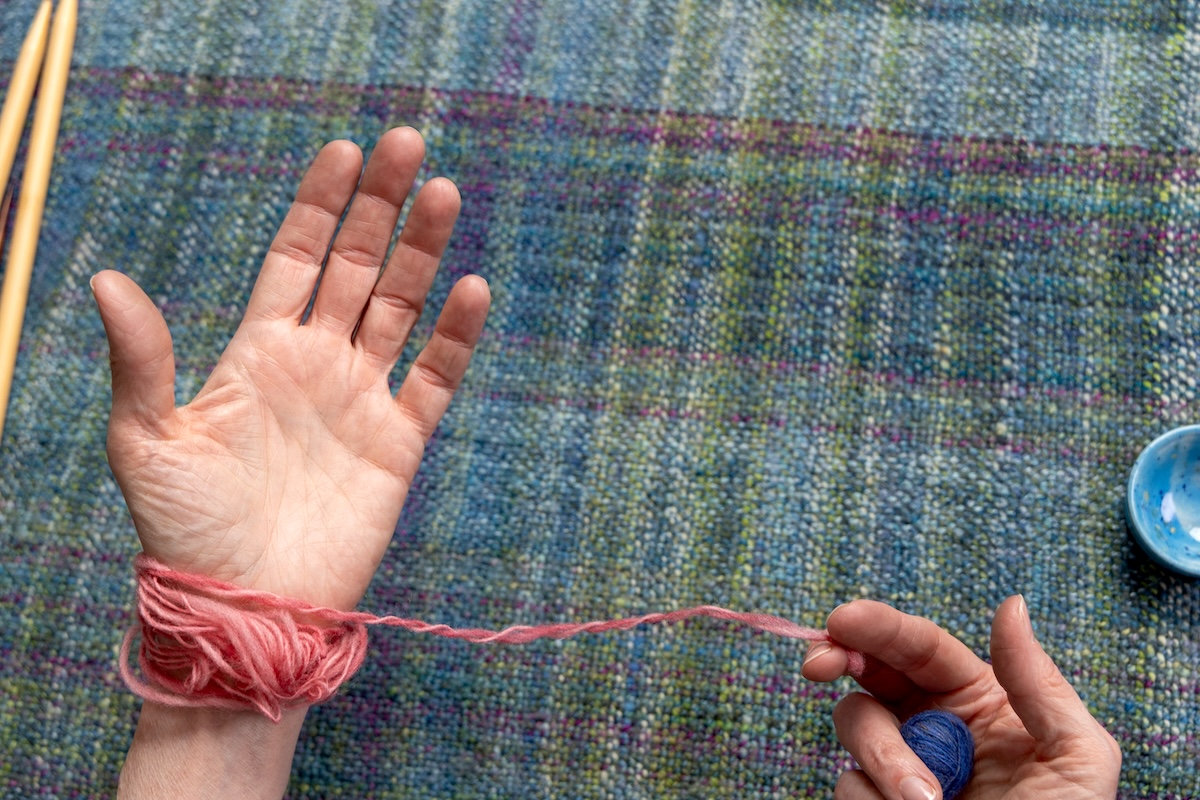
Before we even had tools, we had our own bodies. We have found many ways to use various parts of our bodies to aid in textile production. Here are some examples of this: winding a skein using the length of our arm – hand to elbow and around again – as the niddy noddy; winding a centre-pull ball using our thumb as the core; winding a plying bracelet* for a two-strand preparation; having a friend or willing family member hold up their hands to support a skein of yarn being wound into a ball.
DIY Tools for Spinners
Here are some examples of things that I have created or repurposed to make my spinning tasks easier.
Fibre Preparation Tools
While I cannot champion DIY blending boards, hand carders, and even drum carders, as I have never made one myself, there are people who have successfully made their own pieces of equipment, so it’s worth looking up. My DIYs are mostly in the range of those “handy” tools that may not yet have a name or a substitute for the official piece of equipment.
Cat & Dog Brushes
Easily obtained for a fraction of the cost of true flick and hand carders, pet grooming brushes work surprisingly well for flicking locks, opening fibre, and even doffing fibre from a drum carder.
Cork & Double-Pointed Needle (DPN)
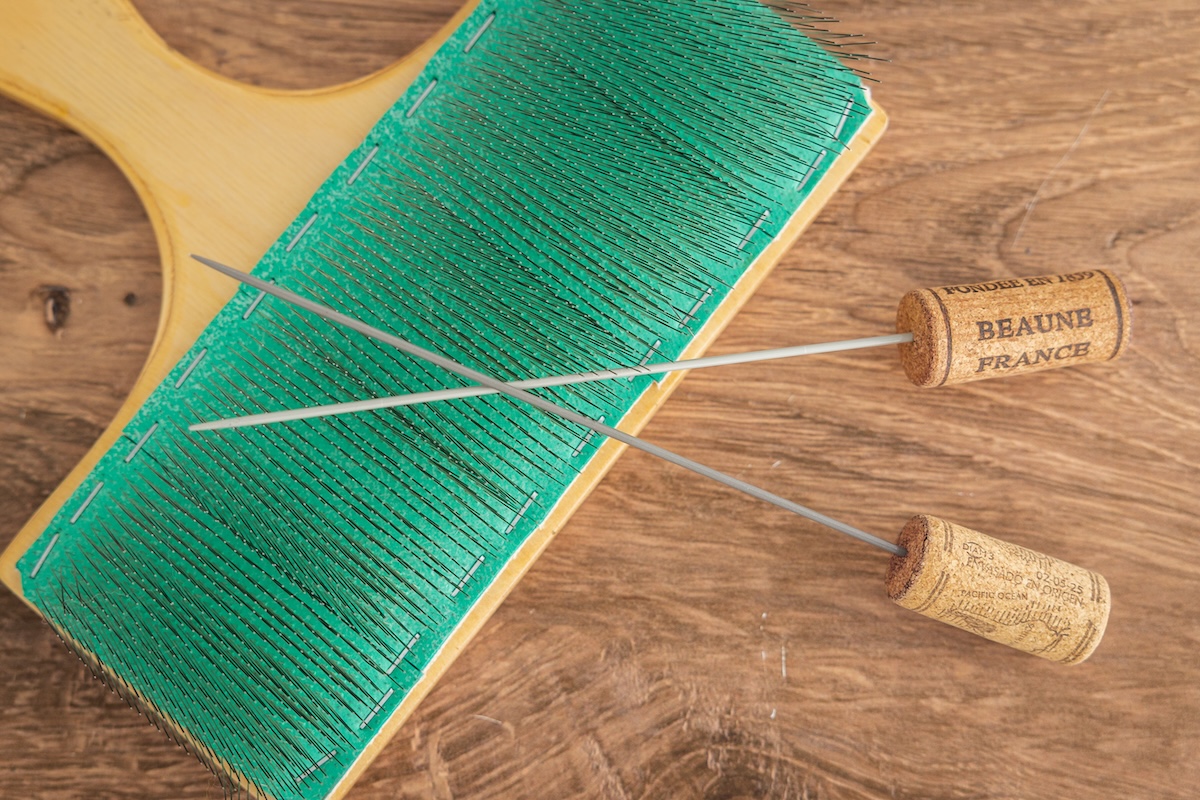
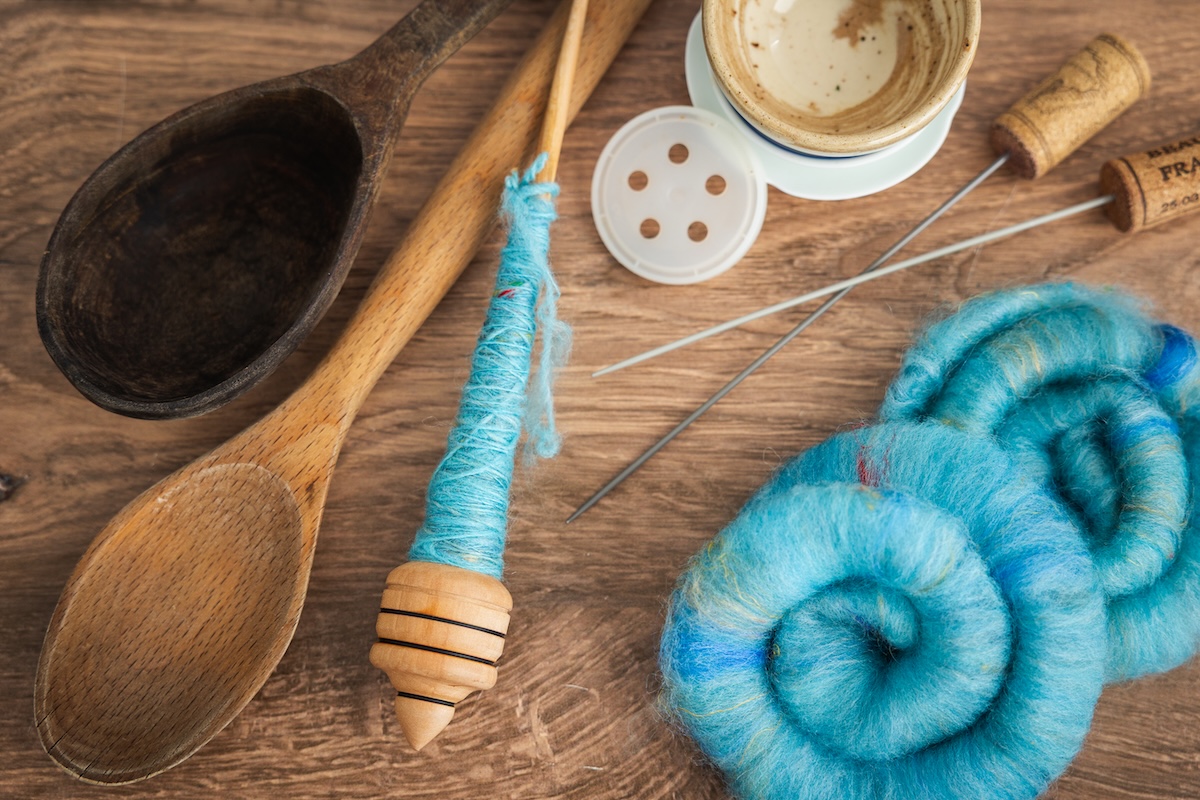
A simple wine cork with a fine 000 DPN stabbed into it can become a specialized doffing tool for clearing fibre off blending boards and drum carders. Simply the best tool to help remove fibres from carding cloth.
Homemade Dizzes
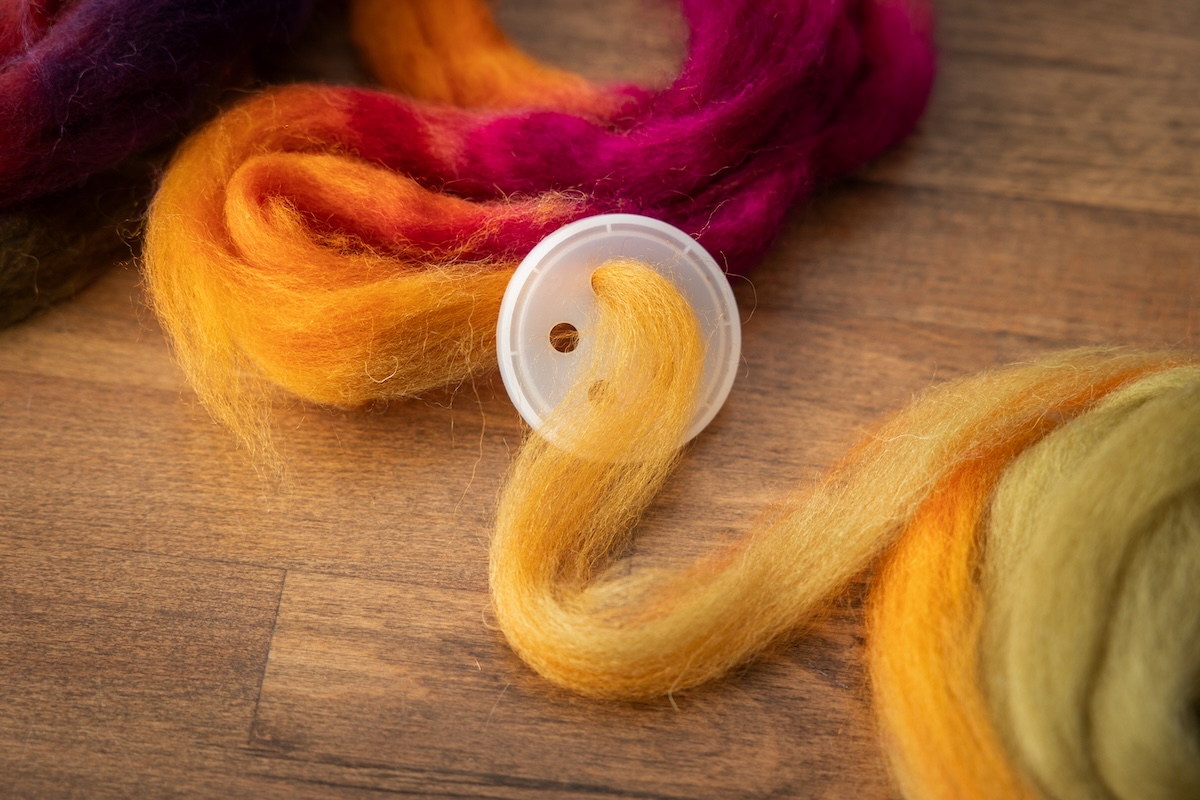
A diz is a small, slightly concave disc with one or more holes used to draw wool or other fibres off a comb, drum, or hand card. It helps pull out a continuous, smooth strand of fibre to create roving. Any concave item, like a circle of PVC pipe with small holes drilled into it, can serve. I’ve even used a large button for this task.
Prepared Fibre Storage
Many things can serve as a fibre storage host. I have found that the best things to store my prepped fibre in are things that I can see through and things that can stack. While you can buy these kinds of things, you probably have things around the house. You can repurpose the tins (with clear lids) that come with our favourite (and still affordable) frozen cakes. I’ve also been surprised at the quality of plastic used by some food operations for take-away foods. For their own reasons, the lids are clear or nearly clear plastic. The lids securely seal and allow you to see what is inside.
Yarn Management Tools
The Ubiquitous Toilet Paper Roll
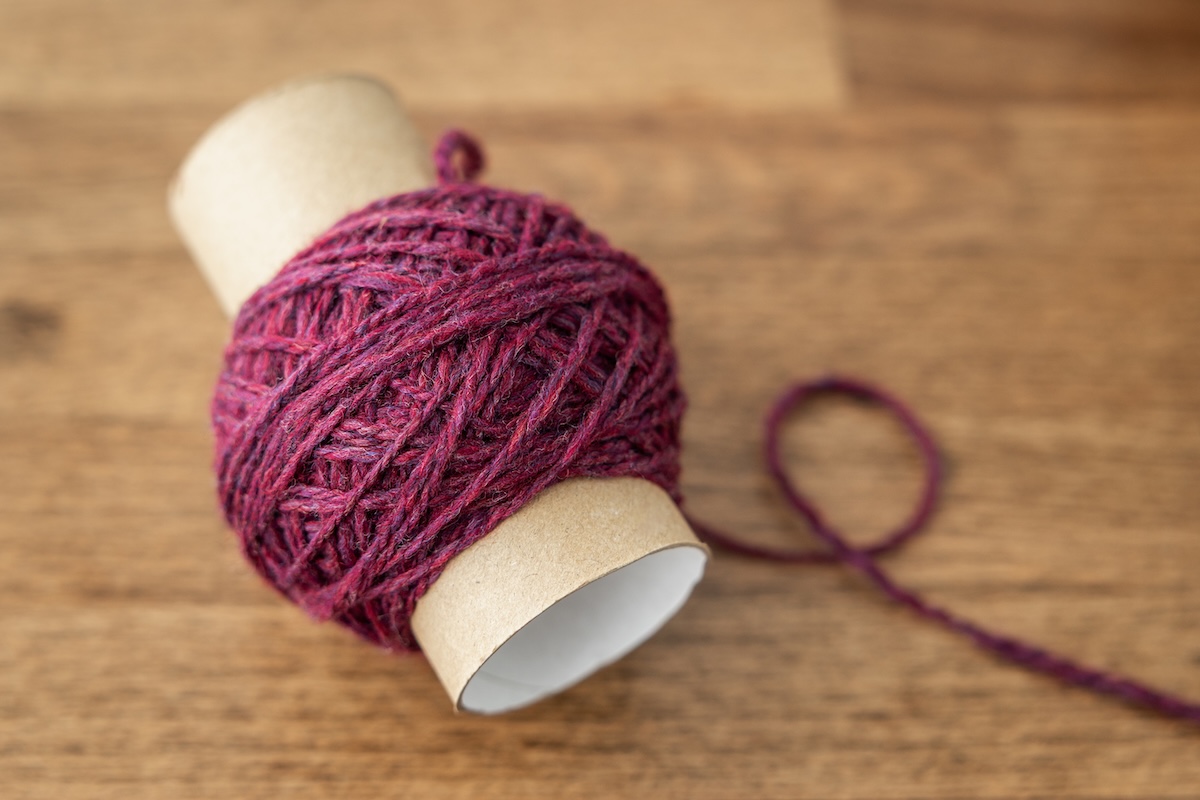
An empty toilet paper roll (TPR) can function as a simple nostepinne for winding centre-pull balls by hand. Once you’ve wound your singles yarn onto a TPR, you can make a centre-pull ball, or you can store the yarn and leave all options open.
If you have a ball winder, place a TPR over the yarn holder, insert a small shim such as half of a wooden clothespin to make sure it is tight, and wind your singles onto the roll. Remove the roll.
In both instances, whether you wound the singles by hand or via a ball winder, the top of the TPR provides a convenient place to record fibre information and spinning notes.
Niddy Noddy For Making Skeins
My favourite DIY tool will forever be the niddy noddy my children made for me from three cut pieces of hockey stick and duct tape. A truly Canadian item! Made with love and worked surprisingly well for many years. For the more adventurous, I have seen many DIY niddy noddys made from PVC pipe and fixtures, easily obtained at the local hardware store.
Swifts For Holding Skeins
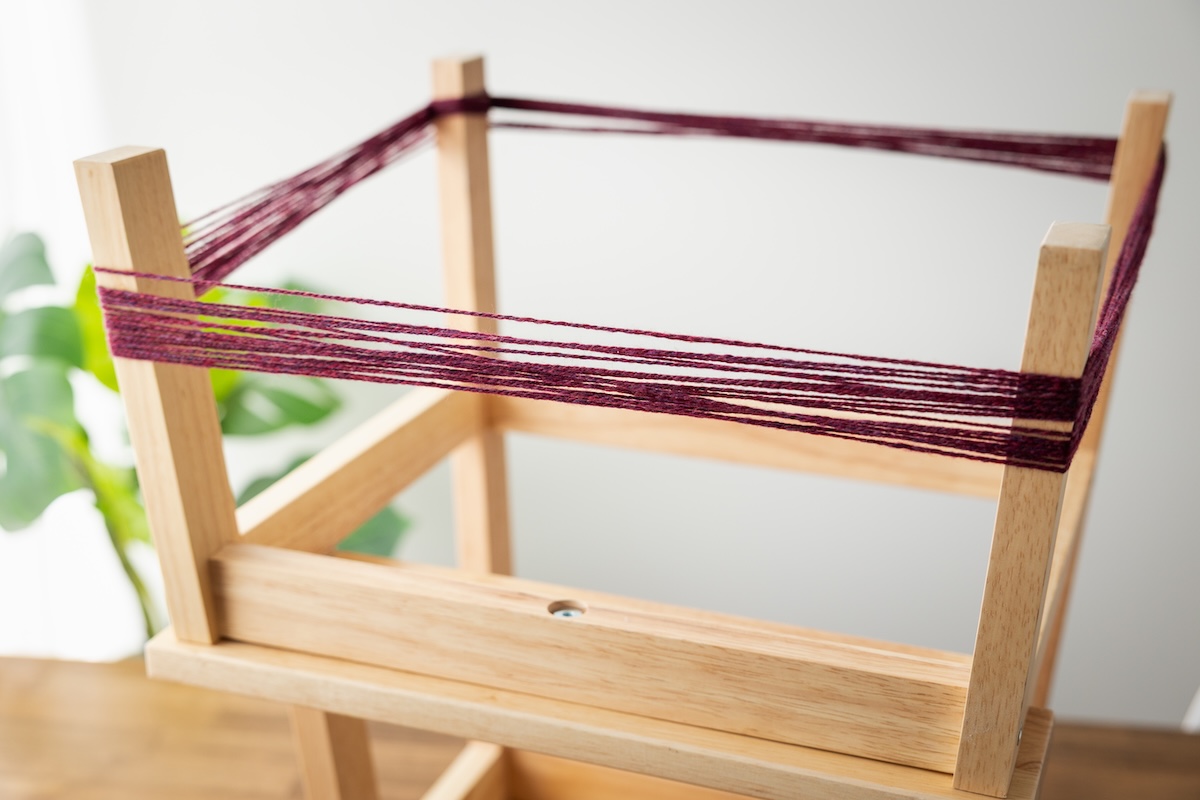
In the absence of a niddy noddy, I have wound my yarn around the back of chairs (or two chairs back-to-back to create tension) or have inverted the chair and used all four legs to get a larger skein.
Spinning
Many Things Can Be A Distaff
A distaff doesn’t need to be purpose-built. A whisk, tree branch, dowel, knitting needle, or other long object can serve the same purpose. Additionally, any kind of loose thing around your wrist (bracelet, cuff, watchstrap) can also serve as a spot for holding fibre while spinning, especially spindle spinning.
Household Items For Support Spindle Spinning
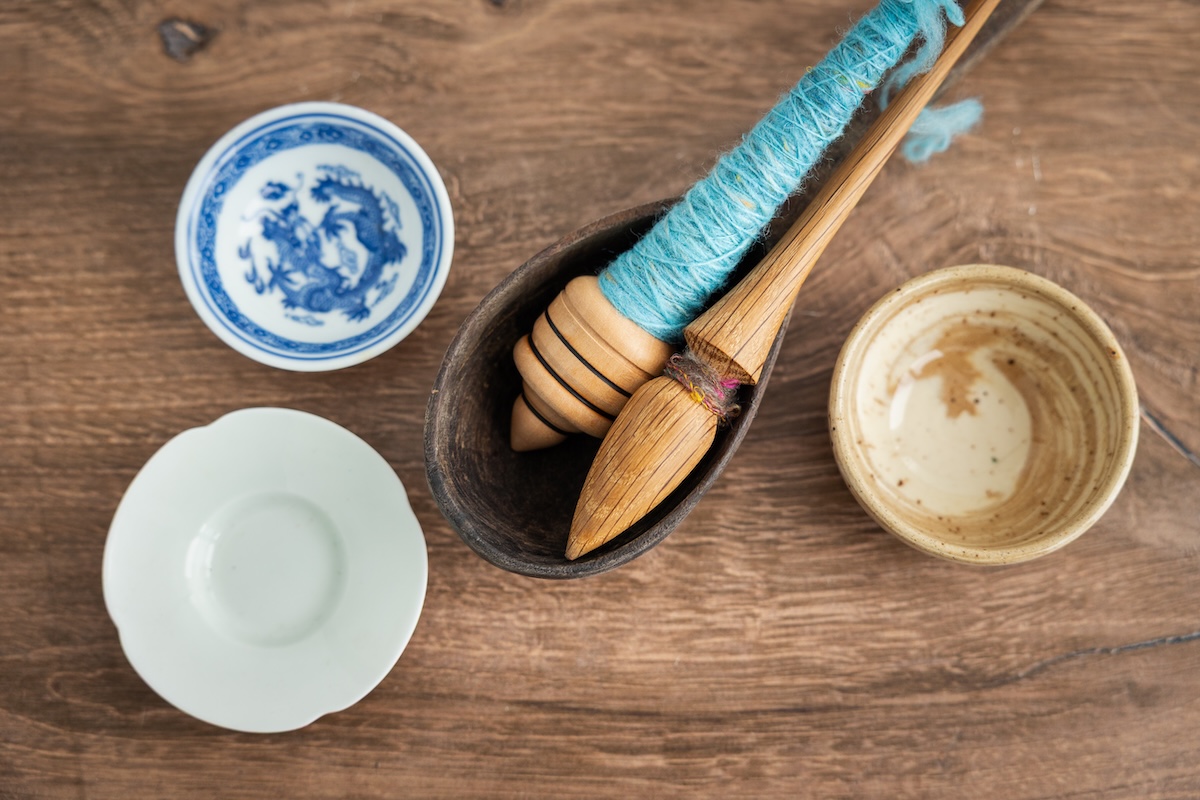
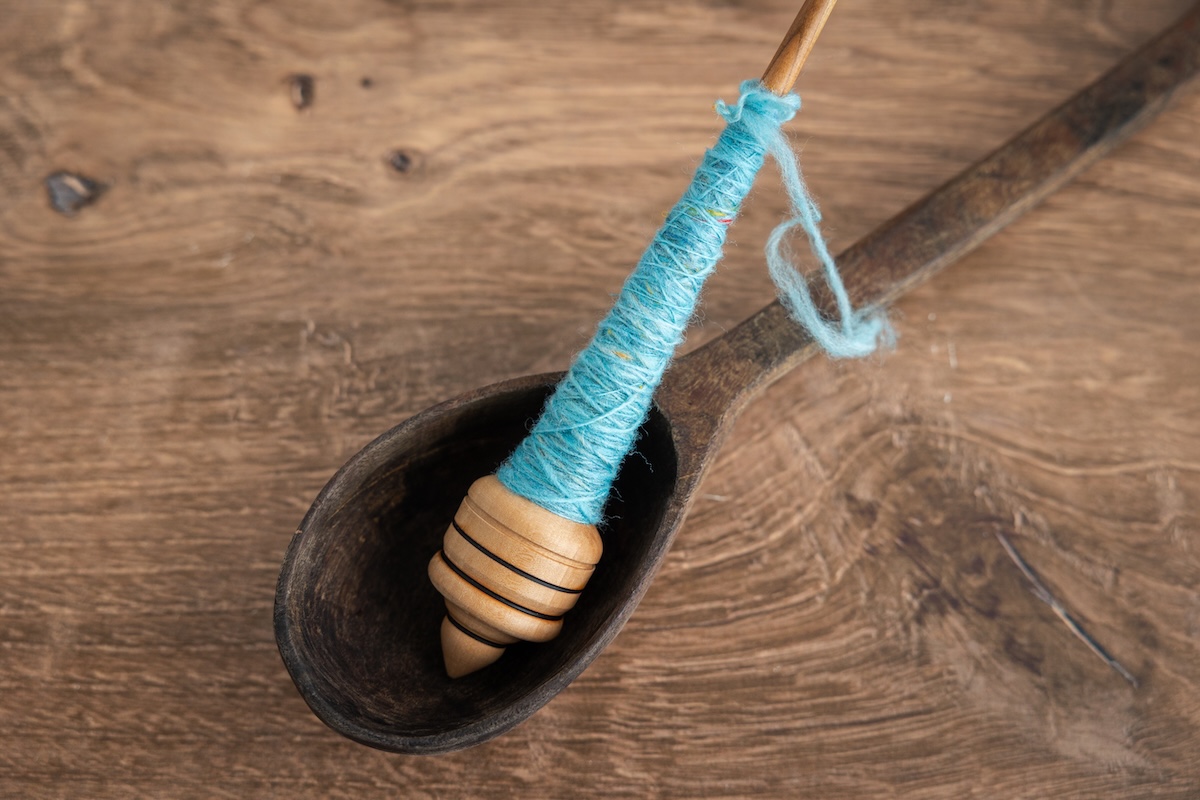
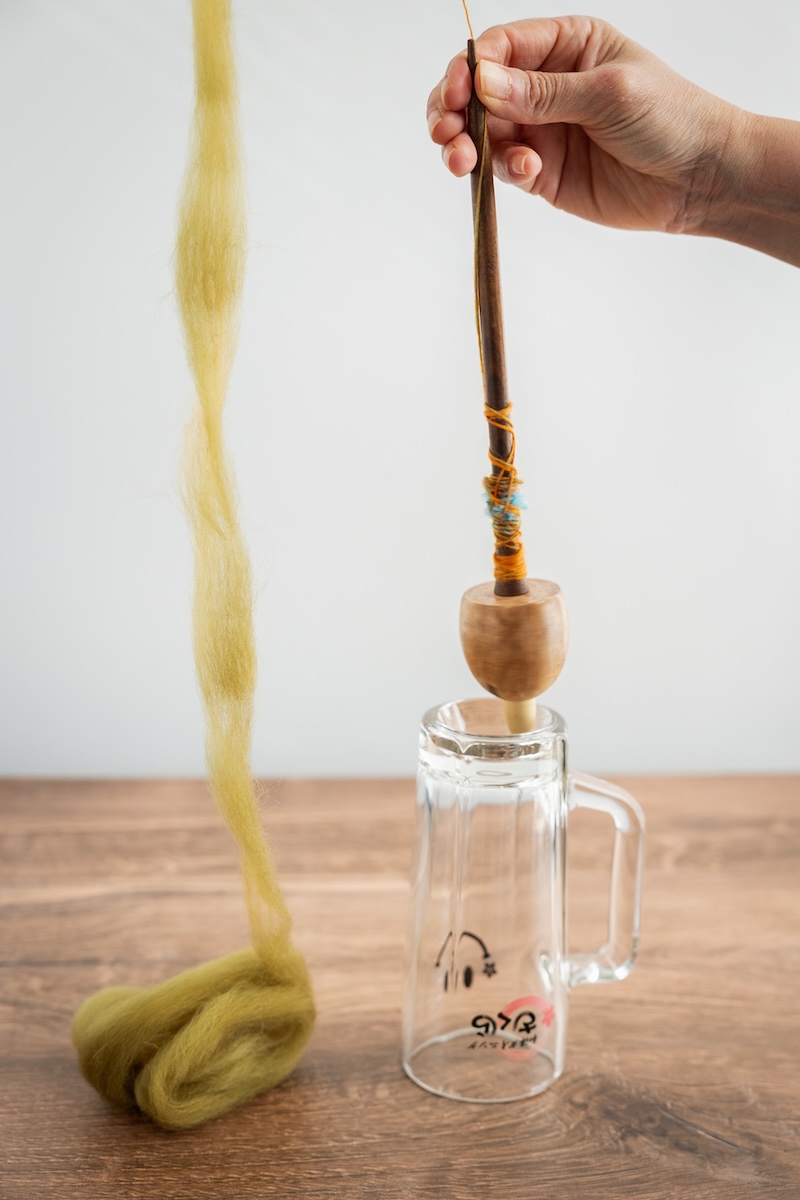
Large wooden spoons, small bowls, cups, jars, and other household items can provide excellent supports for spindle spinning. You just need to look at them in a different way. Turn the jar upside down, and you may find the perfect shallow bowl for spindle spinning. You can store your fibre in the jar and flip the jar for spindle spinning. The same thing applies to wooden spoons. I love using a spindle spoon when support spindle spinning. Large wooden spoons can be wonderfully repurposed for spindle spinning.
A student gifted me with a pair of crystal salt cellars (who uses salt cellars these days?) to be used for support spindling. They are beautiful items, and to see them in use brings me great joy. Along those same lines are fancy China teacups with saucers that some of us have. The bottom of the cup and the dip in the saucer both serve well to support spindles. Another one in my collection is an egg cup (who uses egg cups these days?). The shape of it fits between my thighs, and the egg shape supports the spindle.
Creative Spindle Storage
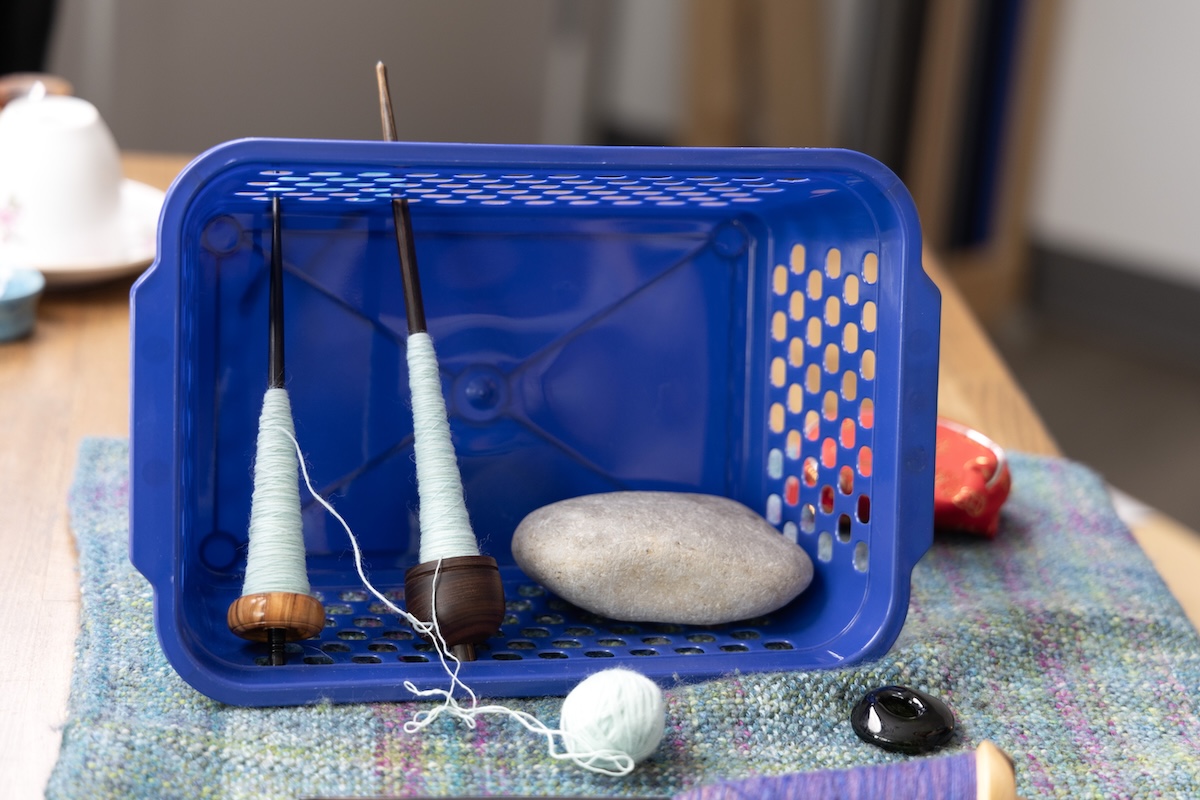
Plastic baskets, shoeboxes, cookie tins, decorative tubes that Scotch and other spirits come in, and other containers with firm sides make excellent spindle storage solutions. Bonus points if they can double as a lazy kate, allowing you to keep spindles under tension while winding off singles.
Lazy Kates
Baskets, shoeboxes, and other strong boxes that can have holes drilled or inserted in the side to hold spindles or wire for bobbins make terrific candidates as lazy kates**. My favourite one is a plastic basket that has ready-made holes along the walls. The top and bottom of most of my spindles sit in place, supported by the holes. This basket provides great storage and, when the spindle is held under tension, holds the spindle in place while I wind the yarn off it.
Some DIY tools for Knitters
Many Things Can Serve As Stitch Markers
Small rings, safety pins, paper clips, scraps of yarn, and countless other objects can serve as effective stitch markers.
A Contrasting Strand Of Yarn For Row Counting
A simple strand of brightly coloured yarn can help track rows and pattern repeats without the need for a specialized row counter.
Everyday Bowl Elevated To Yarn Bowl
While purpose-made yarn bowls are beautiful, almost any heavy and deep bowl can perform the same function by keeping your yarn contained and preventing it from rolling away. It’s the weight of the bowl that matters the most. If you want to guide the yarn, you can attach a binder clip to the edge and use the arms to guide the yarn.
Any Bag Can Be A Project Bag
And that is the very danger of it. There is no bag safe from the potential of being “a project bag.” If the bag has inside pockets or a zippered or closing top, that moves it higher up the ladder of having desirable project bag features.
Final Thoughts on DIY Tools
One of the joys of fibre arts is discovering creative solutions to everyday challenges. Developing a DIY mindset not only saves money but also encourages experimentation and ingenuity. Before purchasing a specialized tool, look around your home—you may already have exactly what you need. After all, we fibre artists have been adapting, repurposing, and inventing tools for centuries. Remember, some of the best solutions are often the simplest.
Find Diana’s articles here and her School of SweetGeorgia courses here!
The post Do-It-Yourself Tools for Hand Spinners & Knitters appeared first on SweetGeorgia Yarns.


