
One of the most common questions new weavers ask is how to tell if a draft is written for a rising shed or a sinking shed loom. We thought we would share a short guide to help you quickly recognize the difference so you can approach your projects with confidence.
The X’s & O’s
First of all, we should say that most of the time, tying up your sheds the opposite way will not ruin your project. The opposite side of the cloth simply becomes the face of the fabric. However, there are a few structures where the correct side matters, such as certain inlay techniques. If you are weaving something straightforward, you will usually be fine.
The O’s / Rising Shed
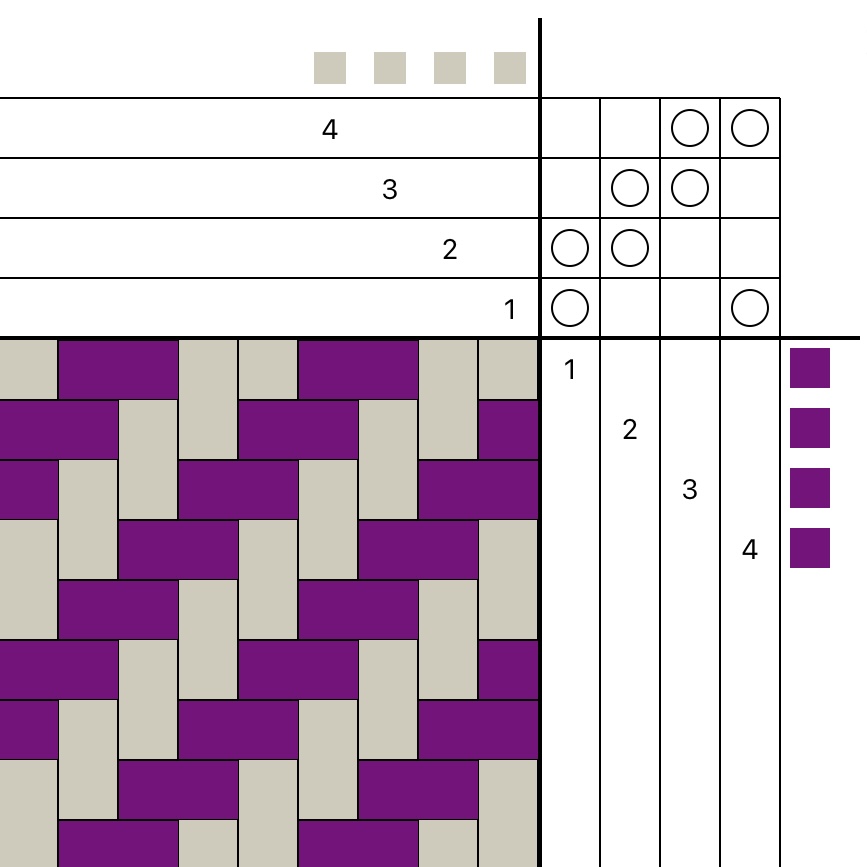
Whenever you see an O, like in the example below, the draft is written for a rising shaft loom. These are also known as jack looms. When you press a treadle or use a lever, the shafts move upward.
All table looms are also rising shed looms. Of course, loom design may evolve in the future, but for now, table looms are jack looms.
The X’s / Sinking Shed
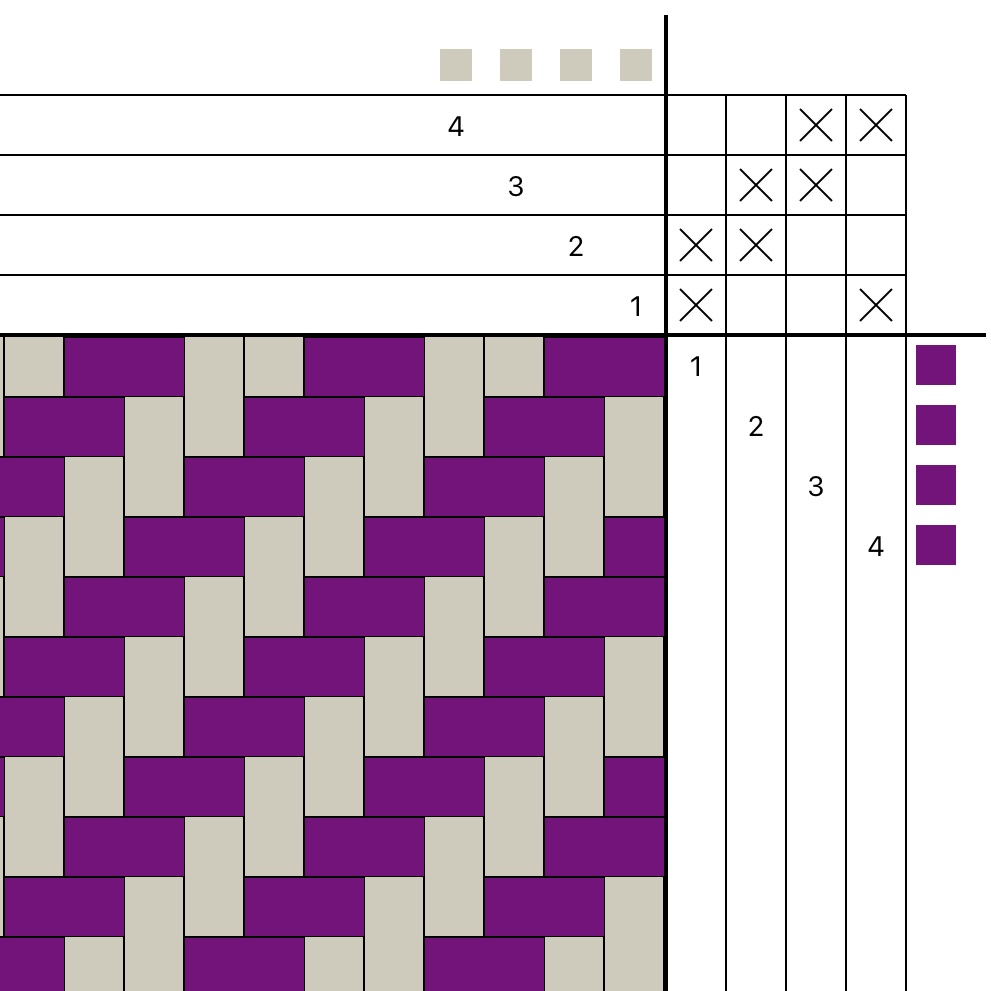
Whenever you see an X, the draft is written for a sinking shed loom. This includes counterbalance, countermarch, and the Louët David loom.*
This can feel a little confusing at first because when you press a treadle on these looms, some shafts move up while others move down. However, when you begin weaving, you will notice that the pattern appears opposite to what you would see on a rising shed loom. This happens because the sinking sheds are the ones that dominate what you see in the cloth.
*The Louët David loom does not move all the shafts like a counterbalance or countermarch loom. Instead, it lowers only the shafts tied to the treadles.
Here is a small trick to help remember:
When you see an O, think of it as a balloon that floats upward (rising shed). When you see an X, think of X marks the spot where you dig down (sinking shed).
Slashes and Blacked-Out Cells
Sometimes drafts use different symbols, such as slashes or blacked-out cells, instead of X’s and O’s. These appear in many patterns and in well-known weaving books, including Anne Dixon’s Handweaver’s Pattern Directory.
In these cases, it helps to read the introduction of the book or pattern. Most authors explain which loom type their drafts are written for. For example, Anne Dixon notes in her introduction that the drafts in her book are written for jack looms, or rising shed looms.
If you cannot find any information about the draft/loom recommended, it is always a good idea to reach out to the author, designer, or publisher. Patterns are written so others can successfully recreate them, and most designers are happy to clarify if something is missing.
A Few Examples
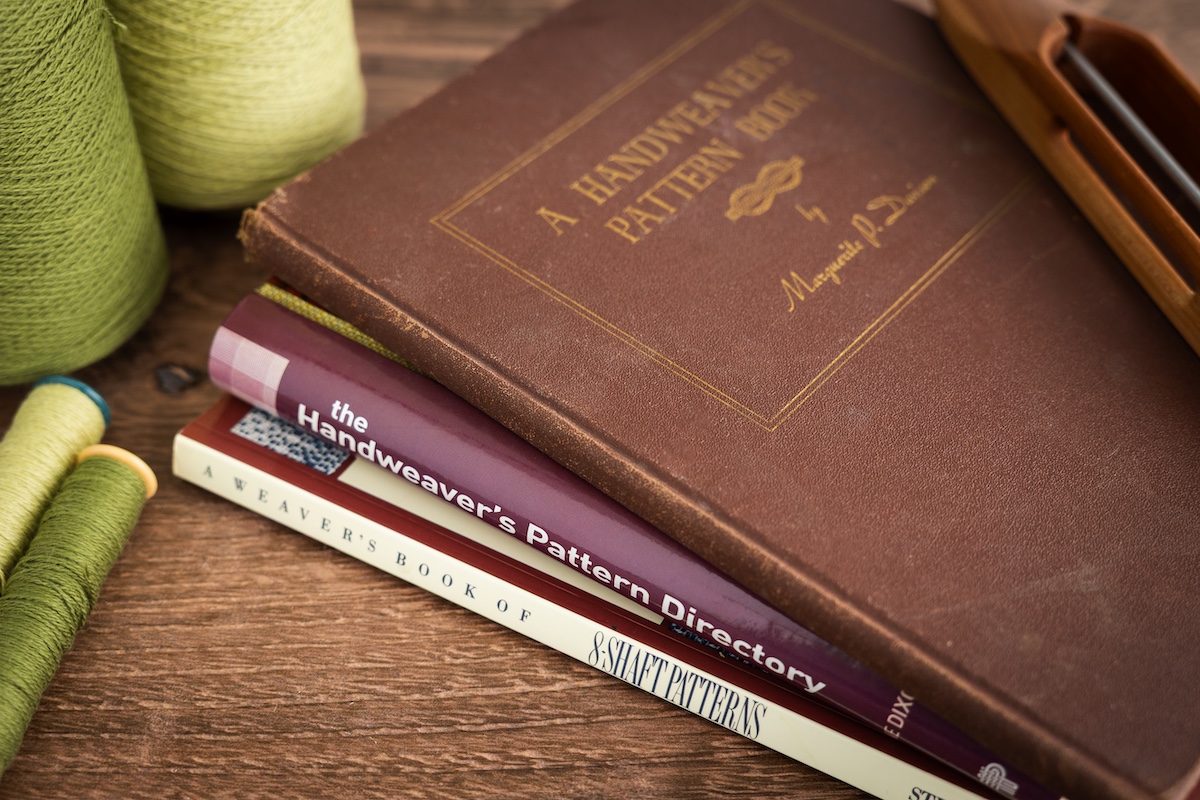
Let’s look at a few familiar books and see if they have O’s, X’s, or anything different in the drafts.
- Anne Dixon’s Handweaver’s Pattern Directory, the drafts use blacked-out cells intended for rising shed looms, as mentioned in the introduction.
- Marguerite Porter Davison’s A Handweaver’s Pattern Book, both green and orange versions, the drafts use X’s, indicating they are written for sinking shed looms such as counterbalance or countermarch looms.
- Carol Strickler’s 8-Shaft Patterns, the drafts use O’s, which indicates they are written for rising shed, or jack looms.
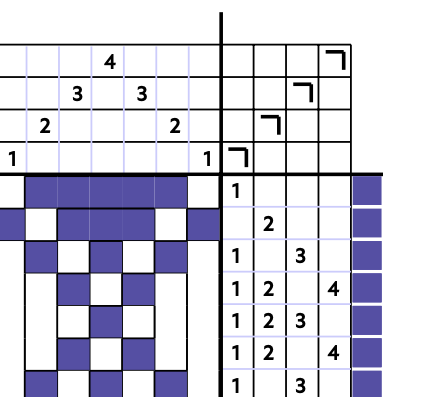
You may also see drafts like the ones Felicia Lo uses in her Weaving Waffle Weave course in the School of SweetGeorgia. In this example below, each symbol represents a single shaft, and multiple shafts are used at the same time. This type of draft is called a skeleton draft, and it works especially well for looms with individual shaft control, such as table looms with levers. In this case, you may want to read the full pattern to see what it was written for.
Final Thoughts
We hope this guide helps make reading weaving drafts a little easier to understand when you see an O, X, or something else.
And if you ever feel unsure, do not hesitate to ask for help. Many publishers list contact information if you cannot find the designer directly. You can also ask your local weaving guild or an online community such as SweetGeorgia + Co. Having a supportive weaving community makes learning so much easier!
Check out our Weaving Craft Guide for more helpful tips and tricks!
The post The X’s & O’s in Tie-Up Drafts & How They Translate to Our Looms appeared first on SweetGeorgia Yarns.


