
The Inspiration
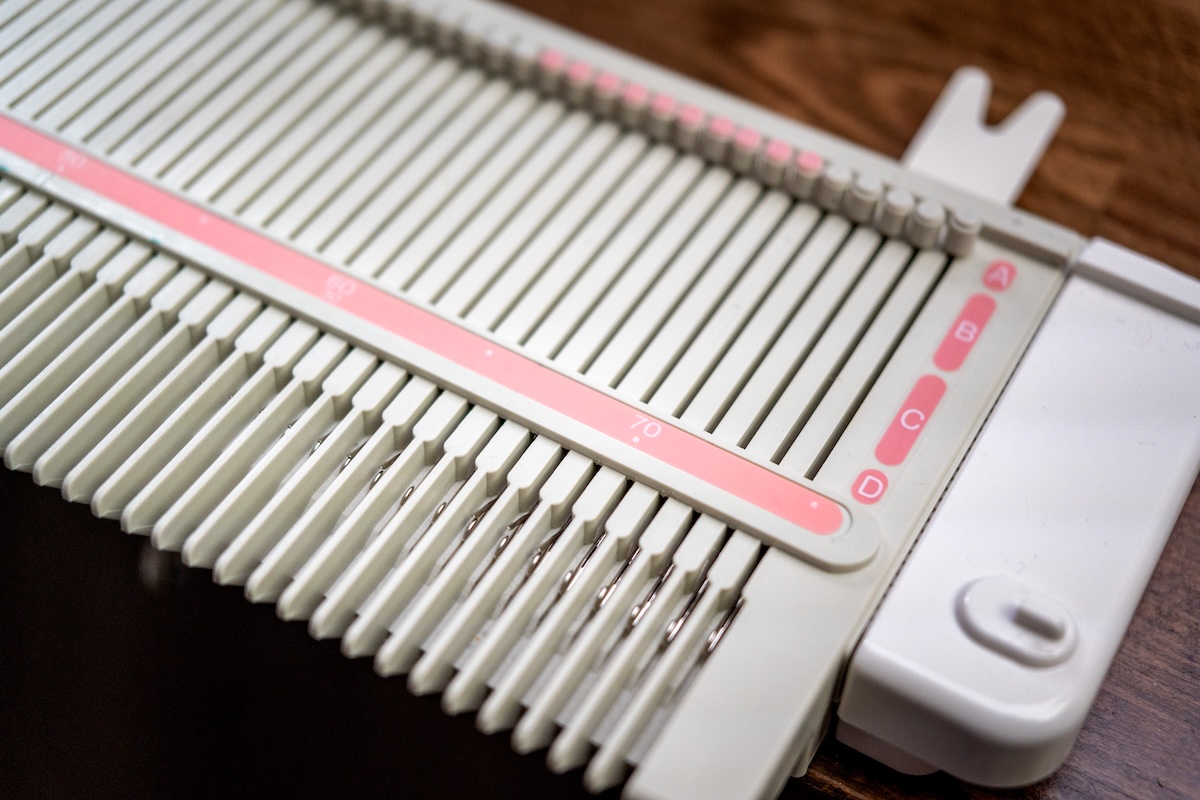
As an avid knitter and a curious multicraftual aficionado, I have grown an interest in the recent machine knitting courses at the School of SweetGeorgia. Seeing the proficiency and beautiful fabric that Barb Barone, our machine knitting instructor, is able to produce with the knitting machines has inspired me to integrate the Silver Reed LK 150 into my knitting practice.
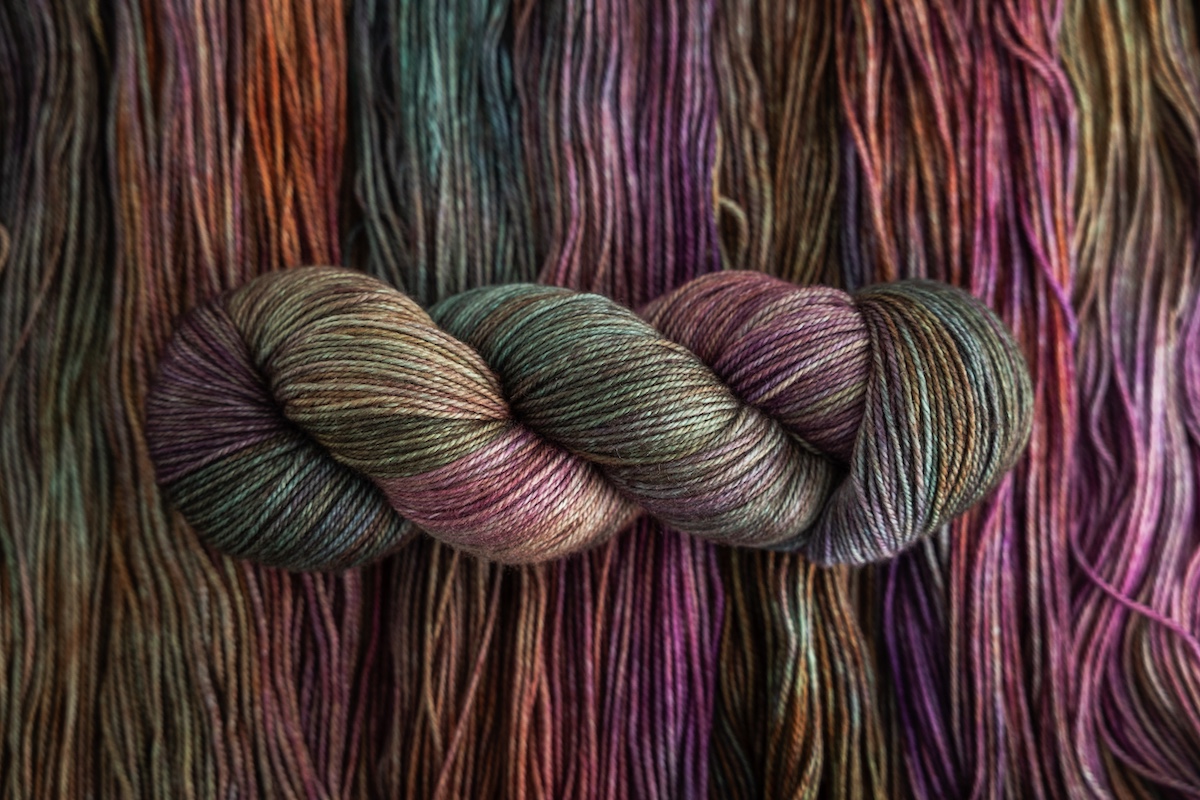
In November 2025, we released the SweetGeorgia Secret Stash Yarn Club, Life in the Woods colourway. It got many of us at the studio interested in exploring this complex colour by holding it with a strand of SweetGeorgia Silk Mist. Since we all chose different colourways, it produced different colours in the knitted fabric. It had us all swooning and dreaming up new possibilities, discoveries that were just a swatch away.
I have been wanting to knit another version of the Musselburgh Hat. With the pattern’s unique construction, this felt like the perfect opportunity to practice my beginner skills on the LK 150 knitting machine. (And the pattern comes with 6 different gauges, making it very versatile for different yarn weights and gauges.)
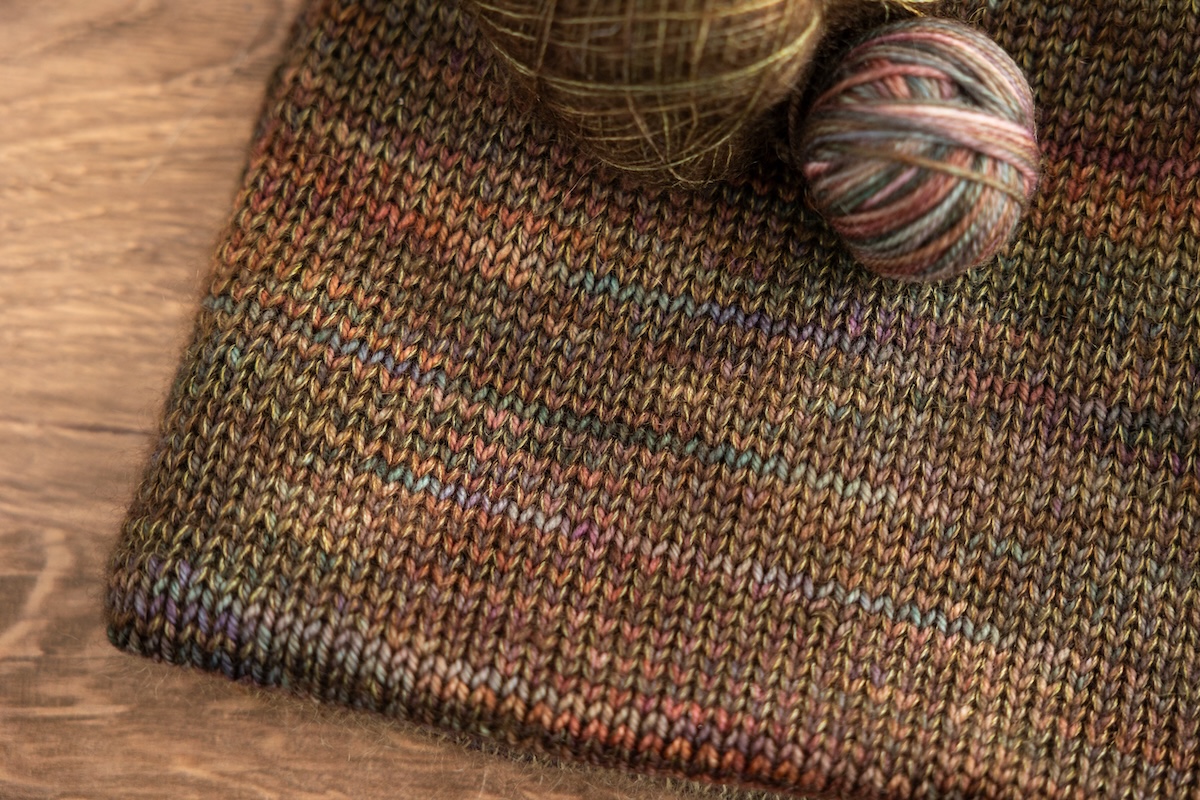
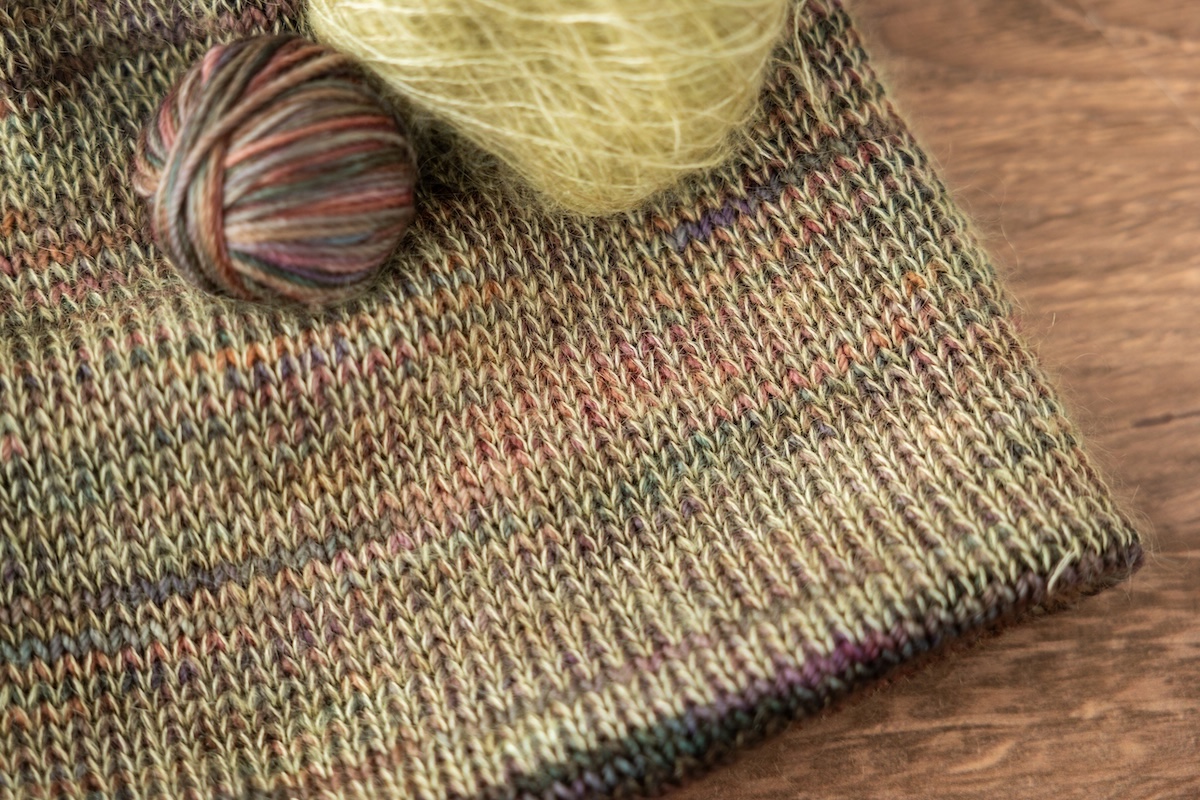
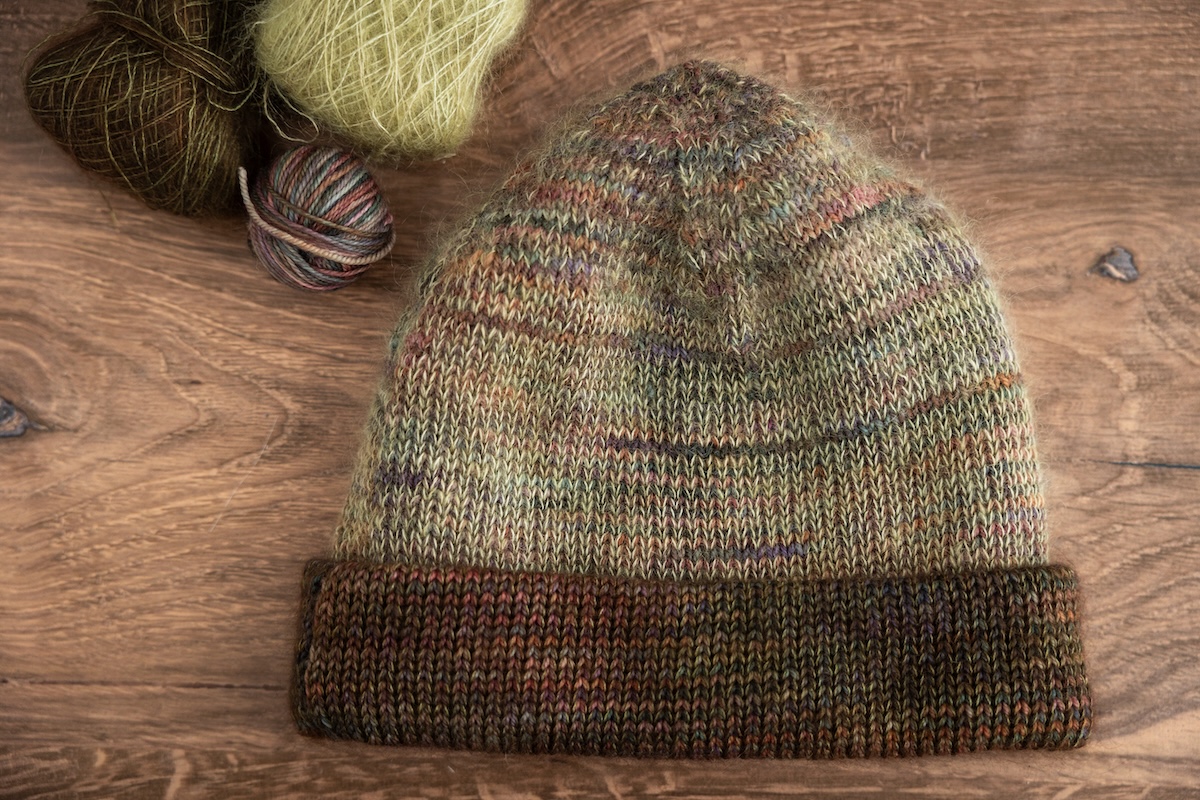
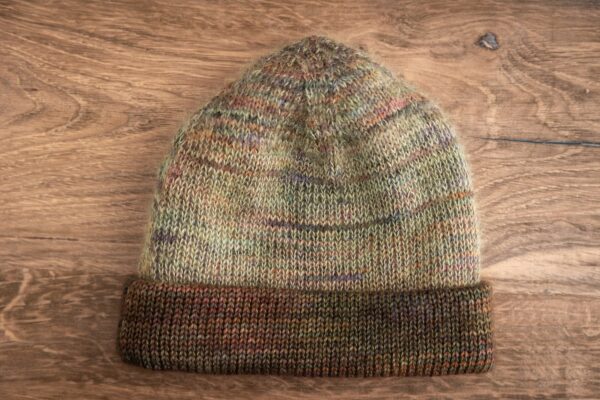
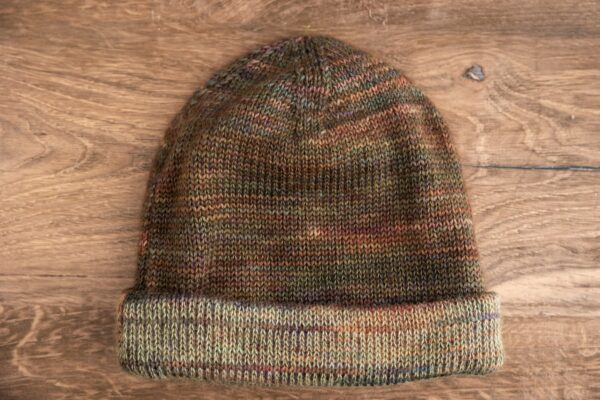
I decided to use the SweetGeorgia Secret Stash Yarn Club colourway Life in the Woods for the entire Musselburgh Hat, while holding the SweetGeorgia Silk Mist in Lichen for the first half of the hat, and the second half with Fresh Air. I find the way the colour changes when holding two yarns together fascinating.
Adapting This Pattern for Machine Knitting
Swatching
The first step needed to adapt a pattern to the knitting machine is to make a gauge swatch. The original pattern has you cast on and knit to determine the gauge to use; the steps for a knitting machine are different.
The stitches are pulled down by the weights, so you are unable to check the gauge while on the machine. Because of this weight, it is important to remove the fabric from the machine, wash, block, and dry the swatch before checking the gauge.
Seaming Stitches Needed
Since this pattern will be knit flat on the machine, you need to add 2 stitches to account for the mattress stitch needed to seam the Musselburgh Hat.
Hand-Knitting Is Still Required
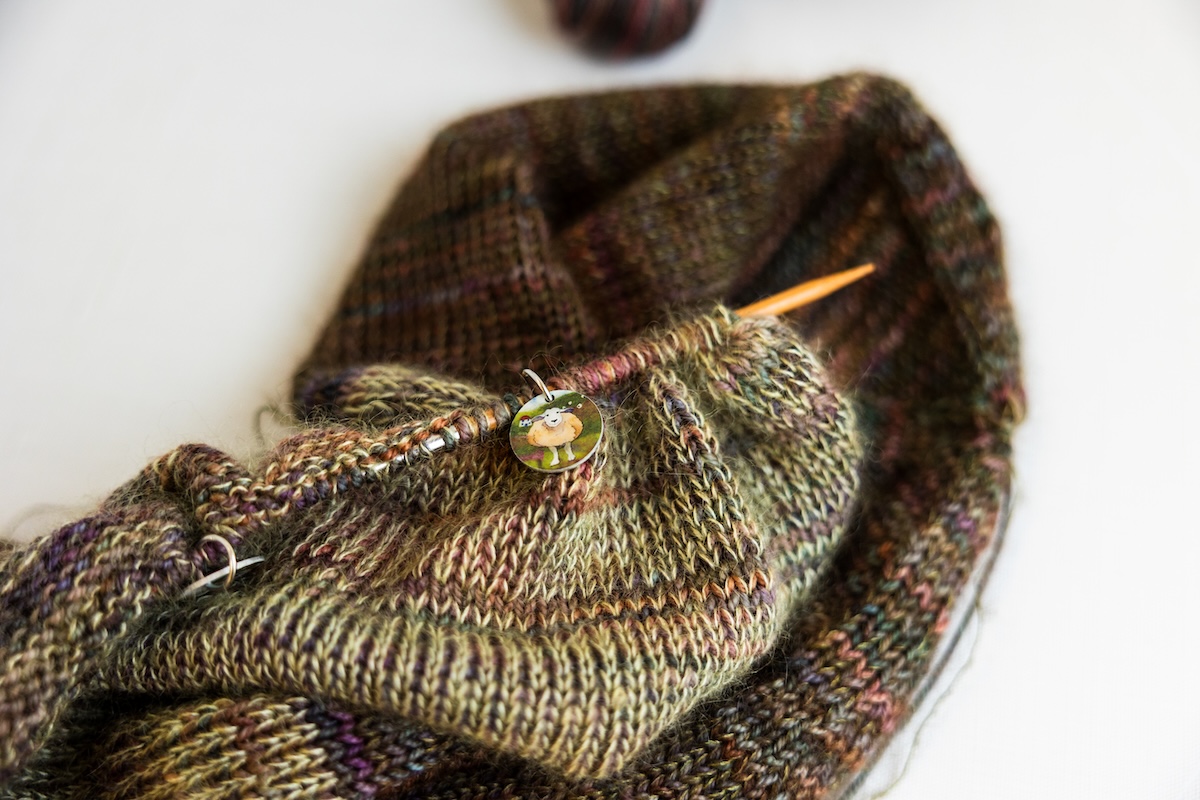
Initially, I thought I was going to knit the increases by hand and hang the fabric on the machine to knit the body. However, in this pattern, the stitch increase is quite steep, and the hand-knit stitches cannot stretch enough to be hung from the machine. Also, repositioning the stitches for every decreasing row didn’t sound appealing to me.
I decided to knit the beginning and end of the hat by hand after the body was knit on the machine. Knitting these sections by hand was enjoyable and didn’t take too long.
Colour Dominance
Another thing to note is that when knitting with two yarns by hand, the yarns will naturally change positions. One yarn will be more prominent, then a stitch or two later, the other yarn becomes dominant. In machine knitting, the yarns (for the most part) stay in the same position, with one yarn being prominent on the right side of the fabric, while the other is more dominant on the other side.
Because you will be machine and hand-knitting, you will see both displayed on the right side of the fabric, although this is more noticeable when both yarns have a larger colour difference. I don’t mind how this looks. But if this bugs you, you could intentionally add stripes or colour changes in the transitions between machine and hand-knitted fabric to hide it.
I would love to know if you have adapted hat patterns for the knitting machine. Please share all your machine-knit projects with us in our SweetGeorgia Community or the School of SweetGeorgia!
Read more of Greta’s articles to spark your curiosity!
Knitting the Musselburgh Hat on the Silver Reed LK 150
Equipment
-
Knitting Needles to match LK 150 gauge
Materials
- 1 skein SweetGeorgia CashLuxe Fine
- 2 skeins SweetGeorgia Yarns Silk Mist
Instructions
Before You Begin Knitting
-
Download the Musselburgh Hat pattern from Ravelry.
-
Make a gauge swatch with the yarn(s) you will be using.
-
Determine your gauge and choose your hat size.
-
Prepared your yarn as loosely wound centre-pulled balls.
-
Tension each yarn separately and add both yarns to the yarn carrier.
Knitting on the LK 150
-
Using waste yarn, cast on the stitches for your size and gauge. Don’t forget to add two stitches for the mattress seam at the end.
-
Knit one row of ravel cord.
-
Start knitting with both yarns on the entire body of the hat. If you choose to swap yarns halfway through, as I did, make sure to: -Calculate the halfway mark by using your gauge swatch -Record how many rows you knit so you can duplicate them for the second half of the hat.
-
When you have completed knitting all the hat body rows, add one row of ravel cord and a few rows of waste yarn before removing the body hat from the machine.
-
Wash, block and dry the fabric. Once it is dry, remeasure to confirm it was the right length.
Knitting By Hand
-
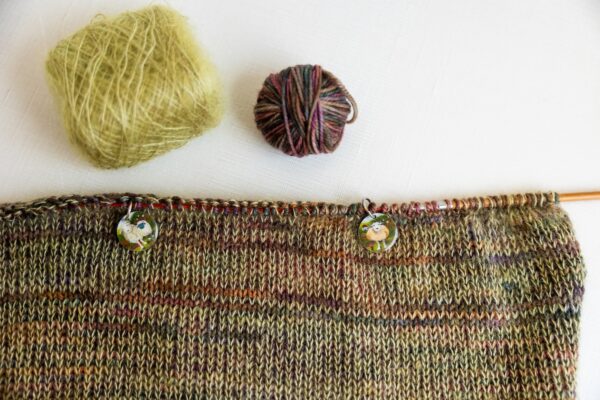
Pick up stitches from the ravel cord.
-
Added stitch markers. The pattern explains how many stitches will be between each stitch marker.
-
Follow the instructions for decreasing for the hat, but we must maintain the flat fabric, so purl every second row instead of knitting it in the round.
-
Repeat this on the other side of the hat.
-
Wash, block, and dry the hat again before finishing.
-
Weave in the ends, and mattress seam the hat closed. Weave in the last ends, turn the hat into itself and wear it out!
Join Our Community!
- At the School of SweetGeorgia, we’ve built a vibrant and welcoming community of fibre-loving makers, passionate instructors, and dedicated staff. Whether you’re looking for guidance on a new technique or just need a little creative encouragement, we’re here to support you every step of the way.
- Not yet a member of the School? We invite you to come and see what it is all about! Use the code: EXPLORETHESCHOOL to save 15% on an All-Access monthly membership!
- We welcome you to join us in our SweetGeorgia Community. This is where we share projects that inspire, have fibre-filled conversations, host make-alongs, and participate in a variety of virtual meetings! We discuss all things knitting, crocheting, spinning, weaving, machine knitting, and more!
- Want to stay in the loop? Subscribe to our newsletter! It’s a simple way to stay updated on what’s new at SweetGeorgia and the School of SweetGeorgia, catch up on the latest articles, watch new SweetGeorgia YouTube videos, and be a part of our community without any pressure to post. We value your presence, no matter how you choose to connect with us!
The post Adapting the Musselburgh Hat for the LK 150 Knitting Machine appeared first on SweetGeorgia Yarns.


