
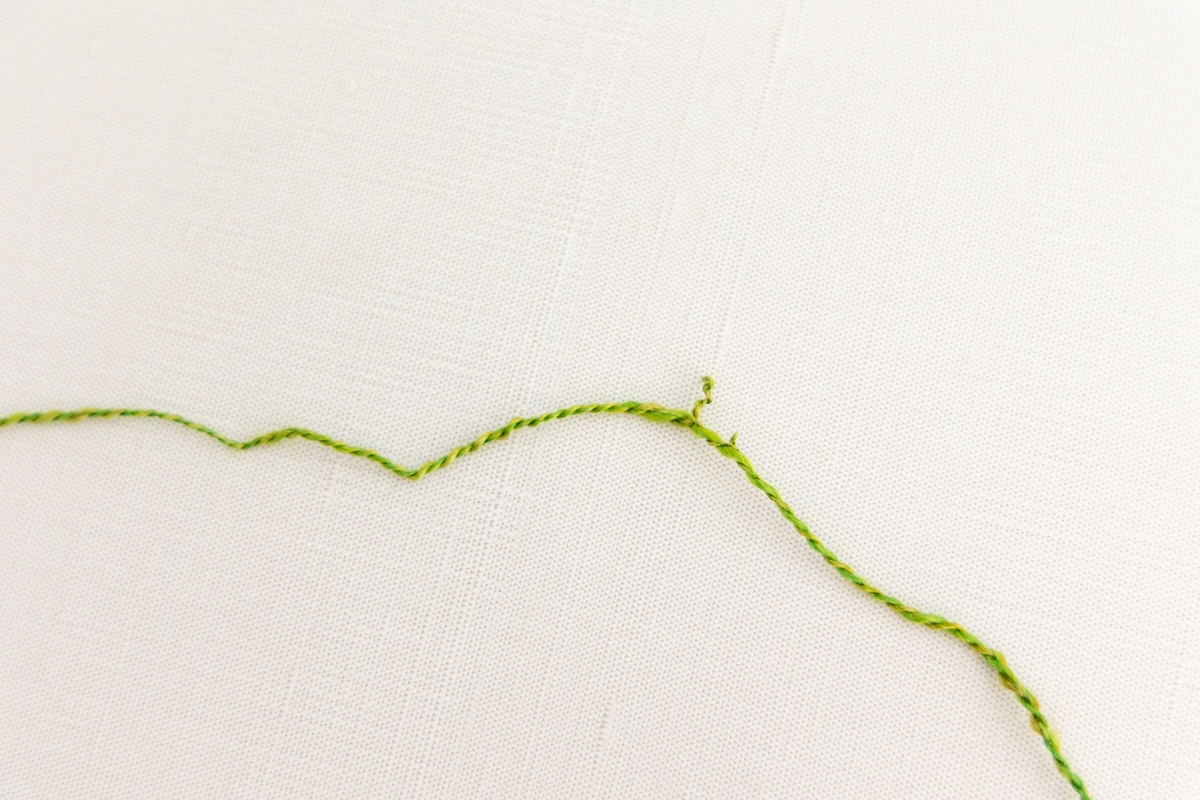
It’s happened to all of us at some point… you’re gleefully admiring your latest hank of handspun only to notice an area or two where rebellious corkscrew-looking twists are breaking through the yarn’s surface, standing sentry. These wayward twists are known as pigtails. And while many imperfections in your handspun will indeed “block right out” in most of your knitting and weaving projects, unfortunately, pigtails are not among them, as they tend to work through your finished fabric in a most unfortunate way.
While a single pigtail is unlikely to derail your knitting project, knowing the causes of these rambunctious over-twists and how to best avoid them in your spinning can help circumvent the problem altogether.
Pigtails Defined and Their Causes
A pigtail is an area of either overtwist or escaped twist in a strand of your singles that’s very literally slipped through your fingers during plying, kinking back onto itself instead of nestling into the surface of the ply structure (think: an accidental plyback sticking up from your yarn’s surface). By its nature, a pigtail isn’t caught until after you’ve finished plying and/or possibly setting your yarn, when you see it standing up perpendicularly from your hank. However, not all pigtails are this conspicuous. Sometimes they appear as small neps or knots protruding from one ply strand in your set yarn, but on closer inspection reveal themselves to be this same “escaped overtwist” phenomenon—only here a shorter run of incongruous twist energy slipped past before tangling on itself, yielding a smaller and less striking pigtail.
Some yarns are more prone than others to result in a wayward pigtail or two. Smooth and/or fine yarns require more twist than other structures to hold together, so ultra-fine, high-twist singles will naturally contain more twist than a thicker and more woollen yarn. Also, since twist always gathers in the thinnest areas, inconsistent spinning will lead to sections of singles containing more twist energy than the rest. Not only are these sections more likely to wind onto your bobbin looking wiry or even already corkscrewed, they’d need to be plied at a different rate of speed and/or take-up comparatively, and odds are, they’ll slip right past you.
For all of these reasons, engaging in best spinning and plying practices will help you mitigate pigtailing in your finished handspun yarns, and ultimately make you a better spinner for it.
Best Practices For Avoiding Errant Pigtails When Spinning Singles
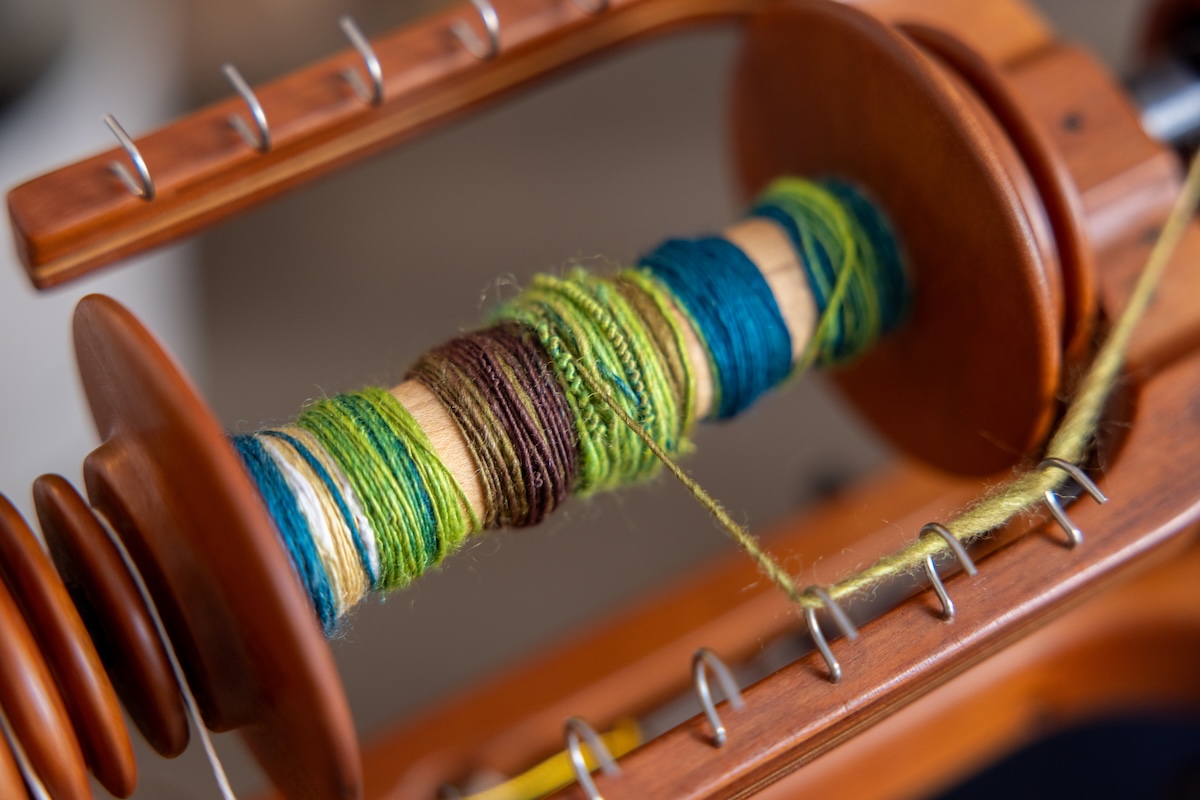
Take the time to trial your spin, setting up your wheel accordingly. Take control of your wheel or e-Spinner setup by utilizing ratios or speed options and your wheel’s tensioning system to ensure that your singles wind onto your bobbin neatly and without spiralling back on themselves as they do. If your singles “balloon” around the bobbin as the wheel slows, your tension is likely too low. Similarly, if your singles wind on but appear wirey and coiled, they’re holding too much twist as compared to the rest of your bobbin.
Pace yourself for success. It makes no difference how quickly you can spin 100 g of singles as compared to other spinners, so long as you feel pleased with your yarns and you’re capable of spinning the yarns you seek. Intentional yarns are not made by speed alone.
The same goes for plying… Since a standard, to-balance spin is typically plied using the same(ish) speeds/pulley range as your singles, it can be tempting to overspin your singles thinking you can just “unspin” them with an equally speedy ply in the opposite direction. This approach does make theoretical sense and can work for some, but unless you’re a professional or practiced production spinner, you’re forfeiting a whole lot of control and skill-building potential by going this route.
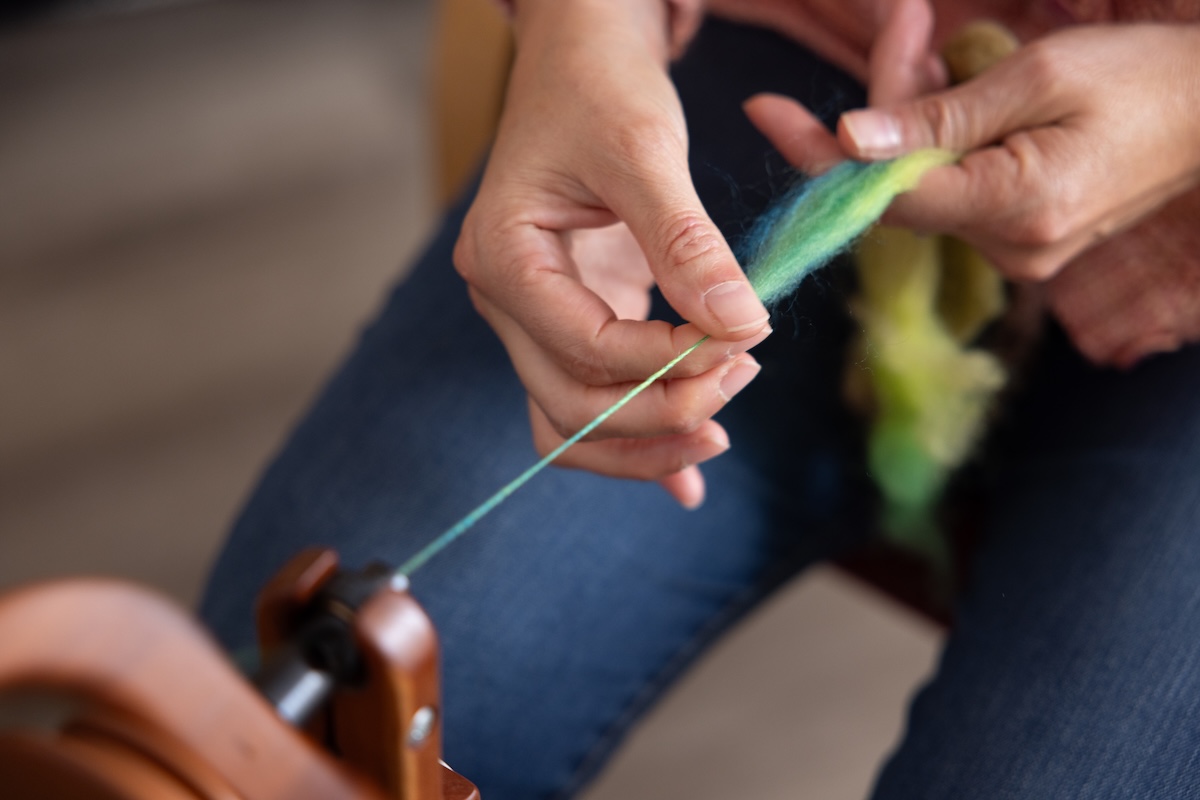
Pay attention to your spinning by checking your yarn and bobbin frequently. When spinning in Scotch tension especially, draw-in (aka take-up) decreases as the bobbin fills, thus allowing more time for twist to gather in the singles. To account for this change, slowly increase the tension/take-up as you spin, being sure to check the consistency of your plyback and twist angle against a sample frequently, no matter the drive system or wheel you spin on.
You should be able to look down at your bobbin filling, without neck strain. Most spinners sit too low to their spinning wheels, so reconsider your seating if you’re one of these spinners.
Remove notably overtwisted singles from your yarn or your bobbin as soon as you see them (if possible). These are pigtails just waiting to happen. If an area gets by you and makes itself known once it’s on the bobbin, stop and snap off the kinked yarn, all the way back to the soft yarn beneath (so you can make a strong join when you re-add your spinning fibre). If, as sometimes happens, you don’t see the problem area until you’ve spun several “good” layers atop a run of “bad,” you can remove these thin and wirey spots in your next steps while winding your singles off onto new bobbins.
There’s no sense taking the time and effort to spin your best singles only to then haphazardly ply them all willy-nilly. Putting some or all of the following best plying practices to use can help you spin better, more controlled yarns.
Tips for Avoiding Corkscrews When Plying
Let your singles rest. For some reason, resting singles are the bane of many a spinner’s existence. Is this step always necessary? No—especially for more experienced spinners. However, high-twist singles are always best left to rest for a minimum of 24 hours, particularly if your plan is to chain-ply and you’re not keen on rewinding. Twist energy from freshly spun singles needs time to settle down to make plying more manageable.
Wind off onto storage/weaving/temporary bobbins. The practice of rewinding from one bobbin to another makes a notable difference in dispersing pent-up twist energy throughout the entire run of singles. For the most significant results, make sure to a) wind with the bobbins parallel to each other (to avoid adding or removing twist from your yarn), and b) wind from a distance of as many feet as possible in your workspace. I’m an avid rewinder… I’ve seen noticeable results in my plied yarns, and I now consider these few moments spent rewinding to be an enjoyable part of my meditative spinning practice.
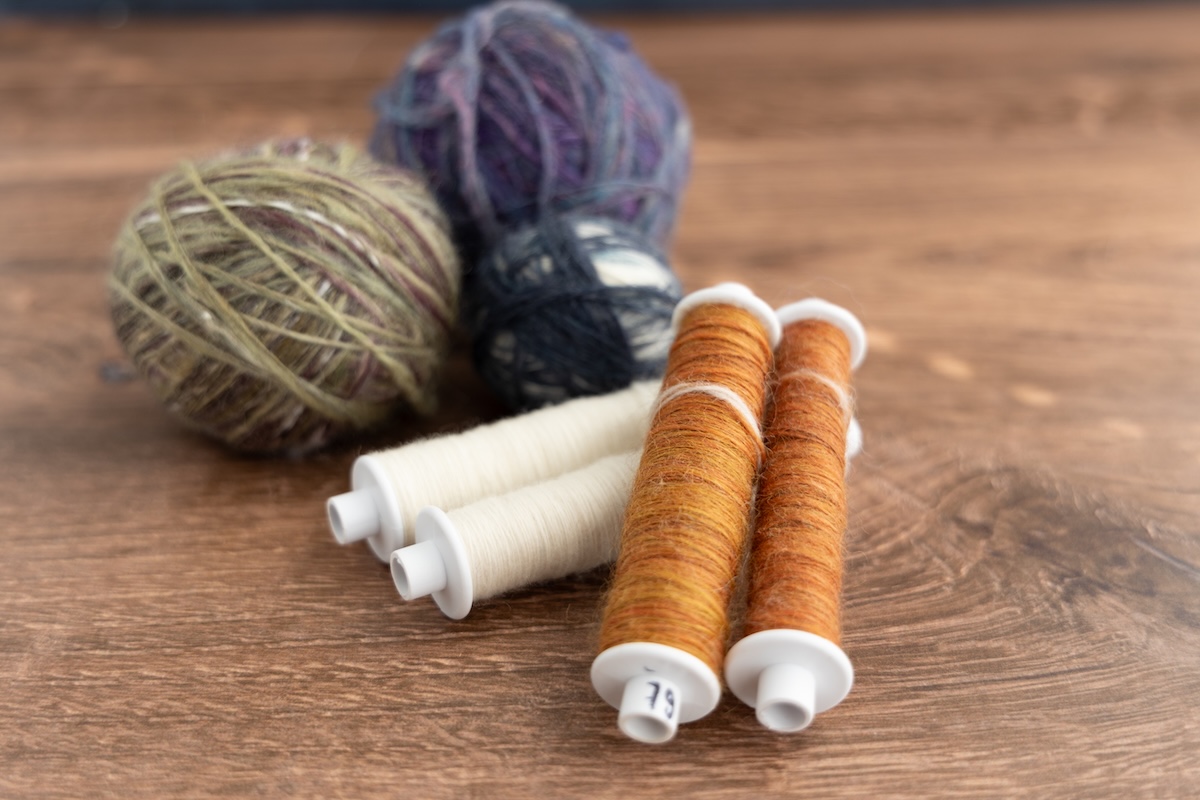
Shown here on Schacht weaving bobbins.
If you’re a spindle spinner, consider rewinding onto weaving bobbins or by hand around a core (e.g. ping pong ball, small rubber ball, etc.) for the same results, though you need not stand so far away. You can even wind your strands together into a ply ball to prepare them for plying in the opposite direction.
Ply from a distance. Set up your lazy kate (or ply ball, secured inside a heavy bowl) so that it’s also as many feet behind you (or behind you at an angle) as still manageable, again to assist in twist disbursement. Note: This is but one reason why on-board lazy kates are better used as bobbin storage than for actual plying.
Utilize your fingertips to “zip” your strands together. Don’t be a lazy plyer! Use your fingertips to purposefully guide your singles together before they’re taken up onto the bobbin. Remember, you’re in charge of your spinning—not the other way around.
Can You Fix a Pigtail?
Eeehh… kinda-sorta, depending on its length. If the pigtail isn’t too long you can pinch it between both hands, then work the area down in either direction until it’s more settled. Finish by resetting the twist in this area. This “fix” will affect the twist angle by making it sharper here than in the surrounding yarn… and that’s likely okay for most general knitting and crocheted applications.
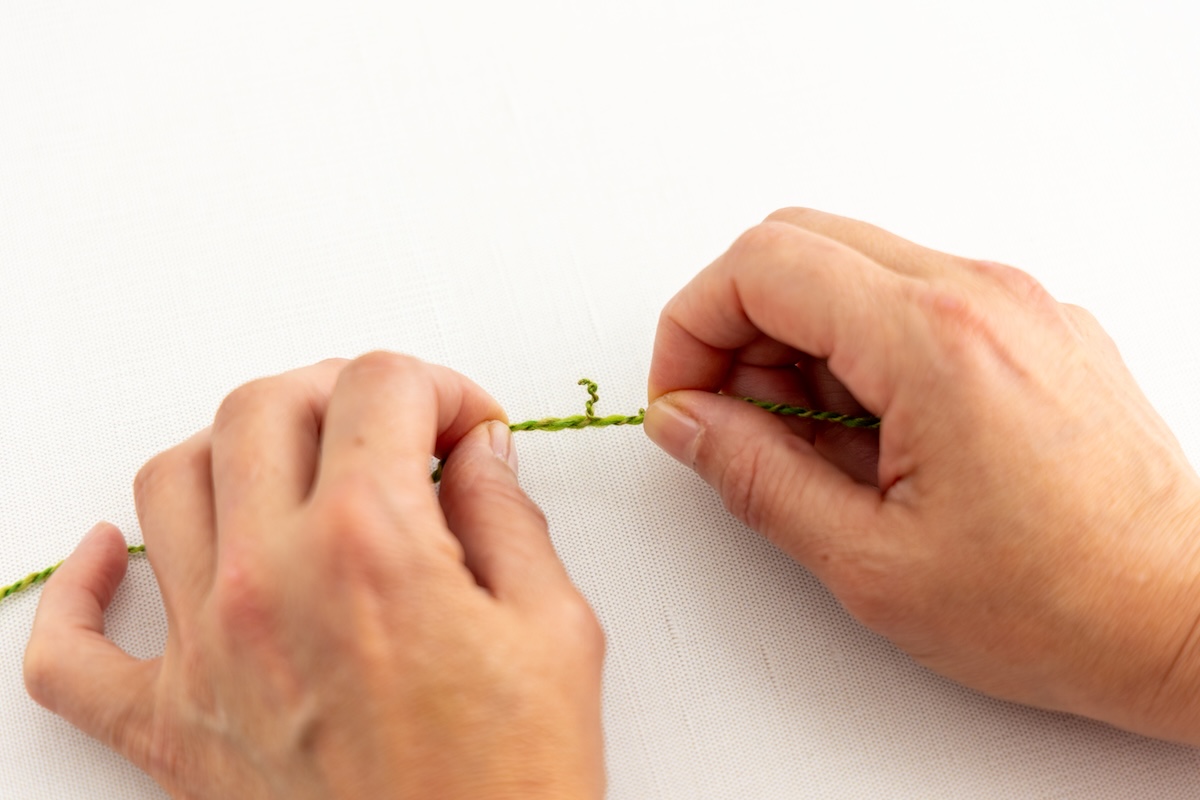
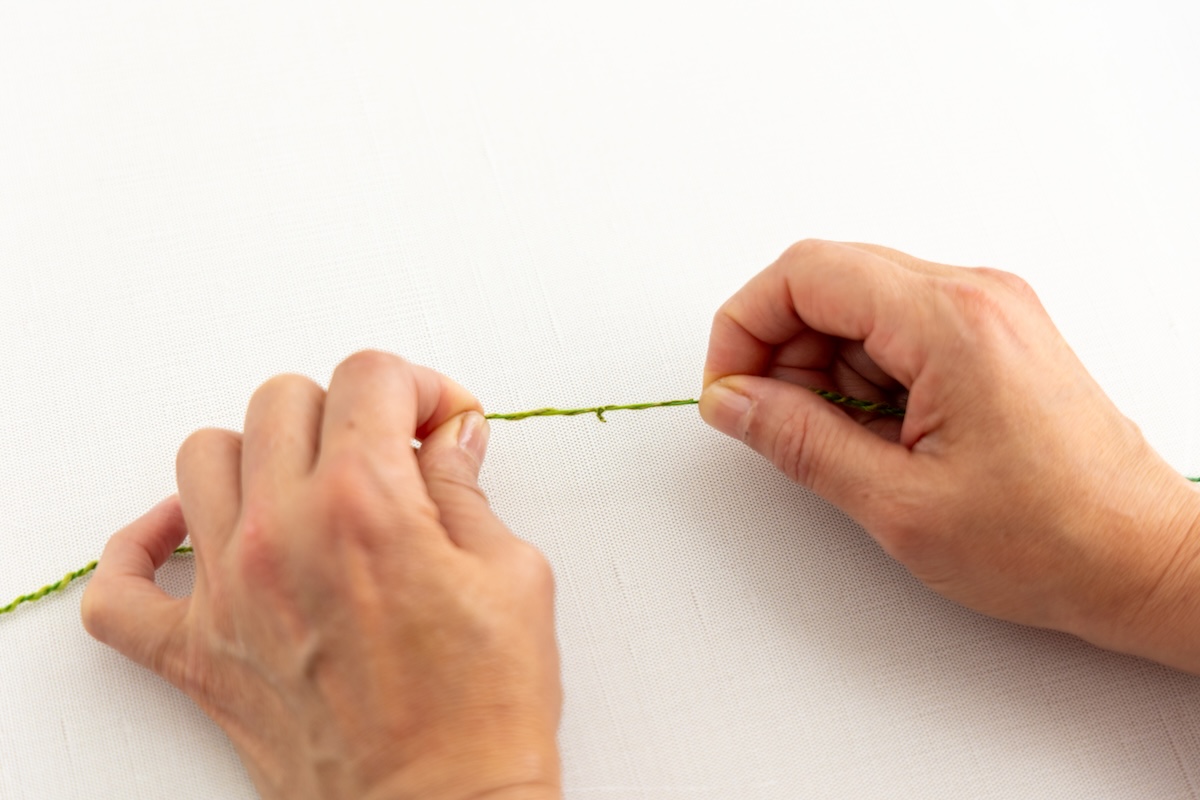
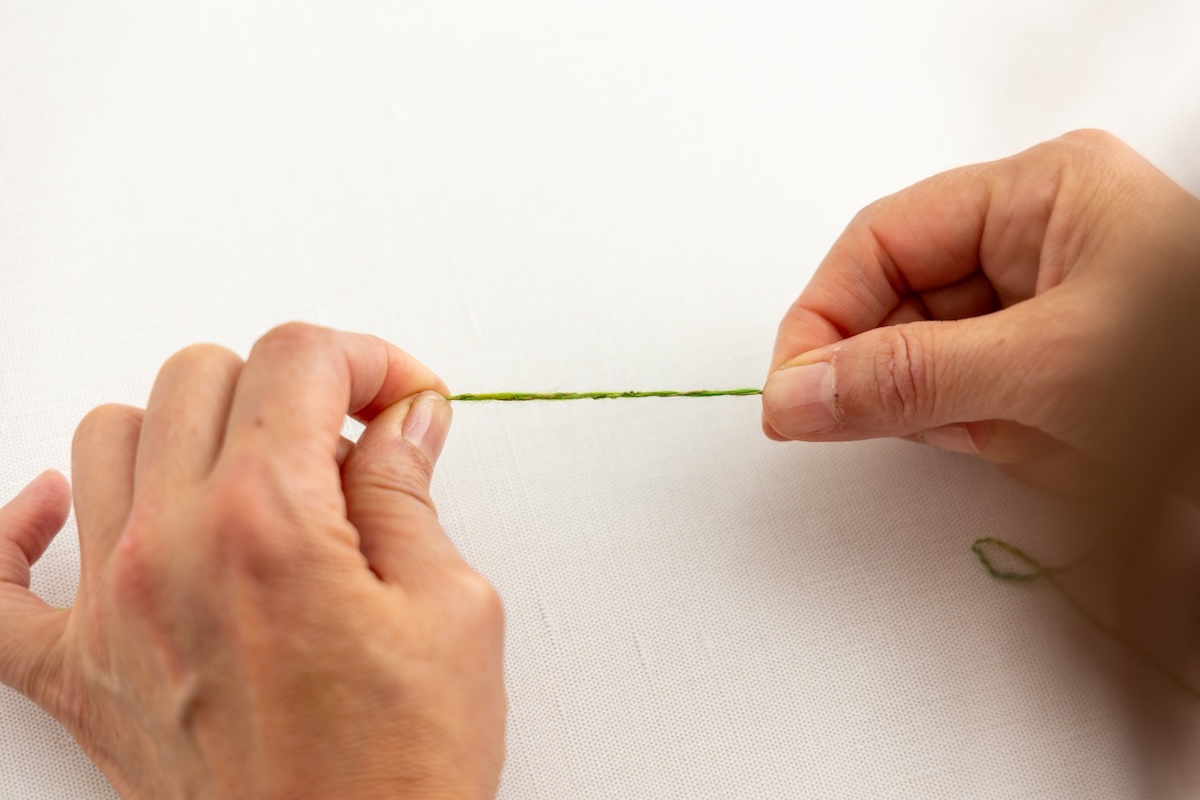
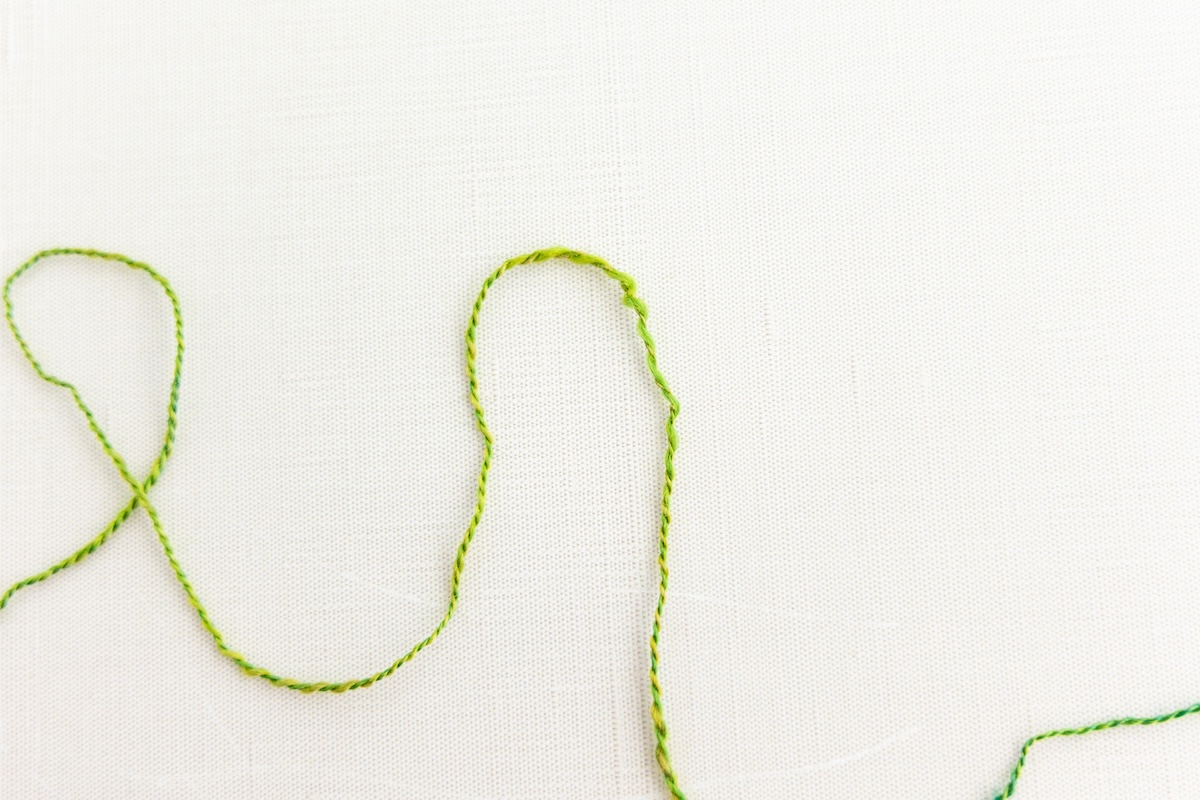
It can be tempting to cut away the coiled portion of your single ply in the hopes of rejoining the newly cut ends, but this is easier said than done and poses a risk to the integrity of your finished yarn. Instead, I suggest sacrificing these few inches of your yarn entirely when you’re ready to cake it up for use, thereby ensuring no future problems in your project.
Finally, consider this another reason to expand your spinning skills by exploring carded fibres and/or longer draws (from the fold, supported long draw, backward draw, etc). Yarns that fall more along the “woollen end” of the woollen-to-worsted spectrum require less twist to hold together, and their fuzzier surface is more forgiving of flaws.
In the end, no one is perfect, and mistakes like an accidental pigtail (yes, some spinners intentionally spin these corkscrews into art yarns) can serve as a terrific foundation for further learning.
Whether you’re just getting started with handspinning or expanding your skills, we invite you to come explore the range of online spinning courses at the School of SweetGeorgia! We’ve also compiled some helpful information in a downloadable PDF which can be used as a reference tool for anyone at the start of their spinning journey.
The post How to Avoid Those Irksome Pigtails in Your Spinning appeared first on SweetGeorgia Yarns.


